3-Panel Sliding Door Bottom Roller Replacement & Scrap Metal Guide
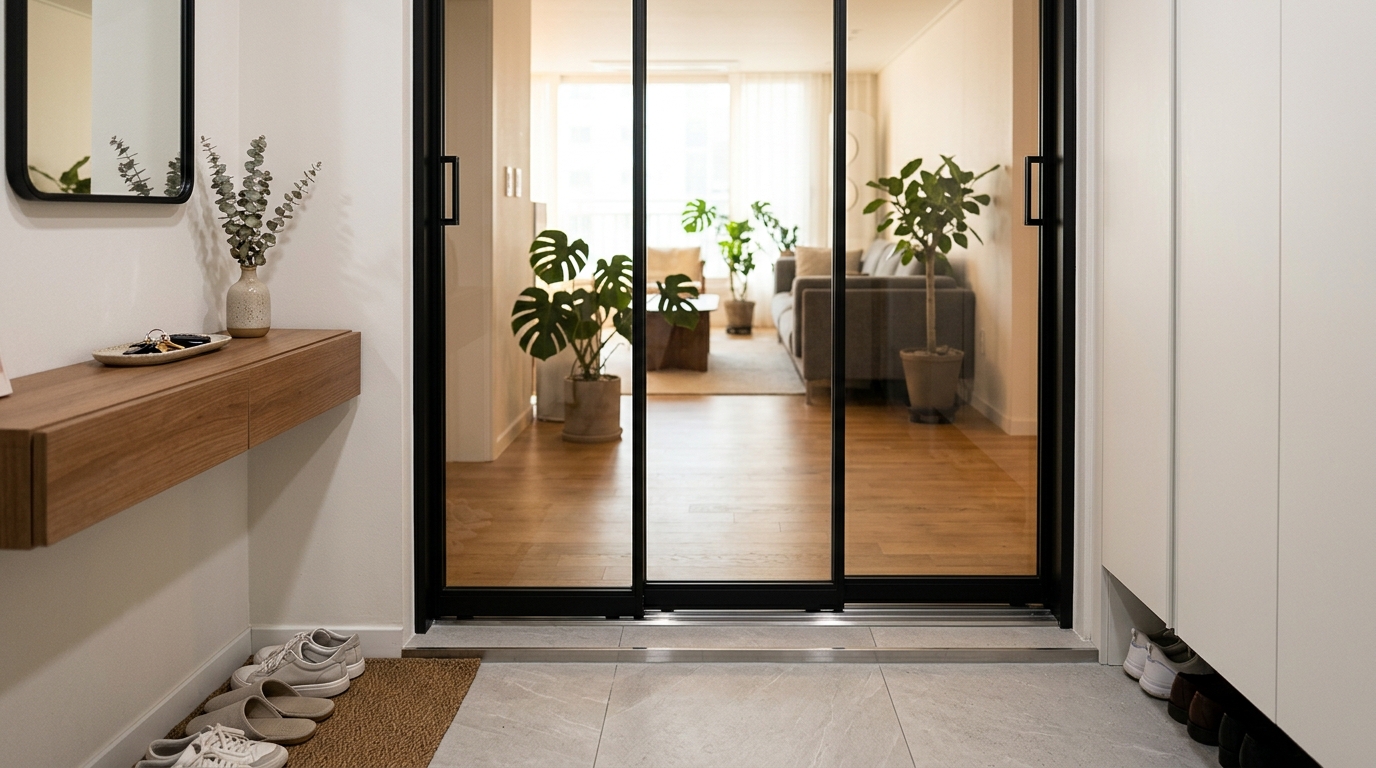
- 13-panel telescopic sliding entryway doors provide exceptional thermal insulation and spatial efficiency, yet daily friction inevitably wears down bottom nylon roller wheels or clogs internal bearings with dust and pet hair, causing jerky operation, grinding noises, and derailment.
- 2Selecting the precise matching wheel profile (V-groove for peaked tracks, U-groove for rounded tracks, or flat Omega tracks) and calibrating the lateral adjustment screws restores silky-smooth, silent sliding.
- ✓This guide details door unhinging safety, balance leveling, and eco-friendly separation of metallic bearing housings and worn plastic scrap.
Follow these steps
- 1
Inspect Floor Rail Profile and Roller Dimensions: Check whether your bottom track is a peaked V-groove, rounded convex U-groove, or flat Omega track, and measure the existing roller carriage cavity dimensions and wheel diameter (typically 28mm to 35mm) to procure compatible replacement units.
- 2
Safely Unhang Sliding Door Panels in Sequence: Beginning with the leading telescopic panel, firmly grip both sides of the door with two hands, lift straight upward into the upper ceiling channel to clear the bottom wheels from the rail, and angle the base outward onto a padded floor mat.
- 3
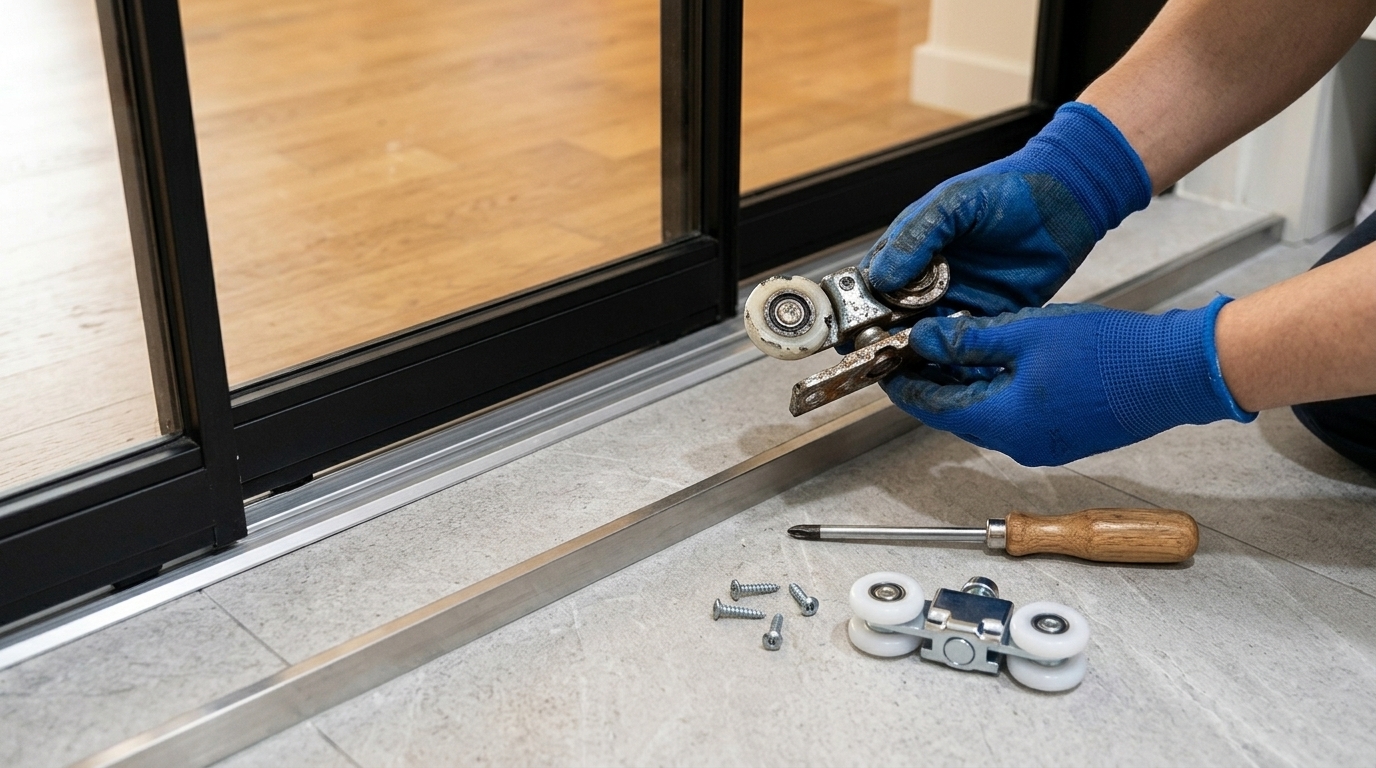
Unscrew Worn Roller Assembly and Clean Track Recesses: Loosen the Phillips retaining screws on the bottom edge and extract the worn roller carriage. Thoroughly vacuum and brush away compacted hair, lint sludge, and metal filings from both the floor rail and the door mortise pocket.
- 4
Mount New Roller Carriage and Rehang Door: Slide the new matching roller assembly into the door mortise and fasten the mounting screws securely. Rehang the door by guiding the top edge into the ceiling track first, then gently seating the bottom roller wheels directly into the center of the floor rail.
- 5
Fine-Tune Leveling Screws and Sort Scrap Waste: Turn the lateral height adjustment screw with a screwdriver to eliminate bottom rubbing and ensure a plumb, gap-free seal when shut. Discard the metallic carriage frames, steel bearing pins, and mounting screws into curbside scrap metal recycling, and throw brittle nylon wheel fragments into standard municipal trash.
Frequently asked question
How do I distinguish between V-groove, U-groove, and flat Omega door rollers?
Look closely at the cross-sectional shape of the raised floor rail track. If the rail peak is pointed like a triangle, it requires a V-groove wheel. If the track top is smoothly rounded, it uses a U-groove wheel. If the rail is broad and flat, an Omega flat roller is needed. Removing the old carriage and viewing the wheel groove straight-on visually confirms the notch profile.
Why is there a gap at the bottom while the top touches the frame when the door is closed?
This indicates a leveling tilt caused by uneven roller height settings. Insert a Phillips screwdriver into the lateral adjustment hole on the sagging side: turning it clockwise lowers the wheel relative to the carriage, thereby lifting that side of the door upward until the leading edge sits perfectly plumb against the wall jamb.
Can I just spray WD-40 lubricating oil to fix a stiff or jamming door roller?
It may provide a brief temporary improvement but causes severe long-term harm. General penetrating oils attract floor dust and hair into a sticky sludge within the bearing and can degrade or embrittle nylon wheels. Once an internal bearing has failed or the wheel flat-spotted, replacing the carriage unit is the only lasting cure.
Do I need to separate the plastic wheels from the metal frame when discarding old rollers?
The carriage chassis, rivet axles, and adjustment screws comprise over 90% of the unit weight in recyclable steel and zinc. Because extracting the small pressed nylon wheels is impractical, placing the entire disassembled assembly into curbside scrap metal recycling is standard; municipal reclamation facilities separate metals via magnetic eddy-current sorting.