DIY Interior Door Lever Handle Replacement & Scrap Metal Recycling Guide
- 1Over years of daily operation, interior tubular door handles often experience fatigue in the return spring causing sagging levers, or rounded internal spindle slots that spin freely without retracting the latch bolt, posing a serious risk of entrapment inside bedrooms or bathrooms.
- 2Replacing them with standard tubular lever locks (60mm backset, fitting 35-45mm door thickness) requires only a handheld screwdriver and takes under 10 minutes.
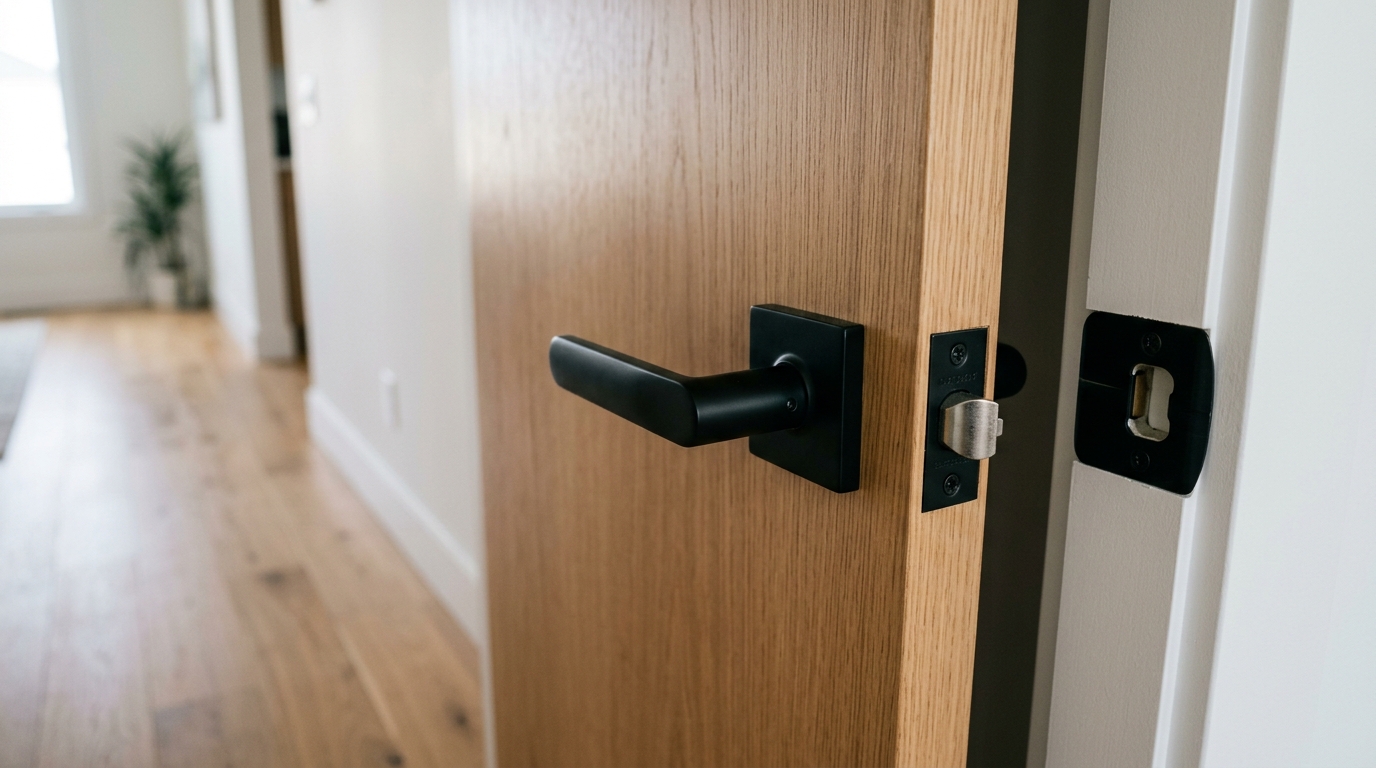
- 3The single most crucial step is orienting the curved bevel of the latch bolt toward the door jamb so the door latches effortlessly upon contact, while ensuring the push/turn lock pin hole faces the interior room side.
- ✓Old discarded handles, latch boxes, faceplates, and steel screws are recyclable zinc and steel alloys; snap off any interior plastic latch guides for general waste, and deposit all clean metallic hardware into curbside scrap metal recycling.
Follow these steps
- 1
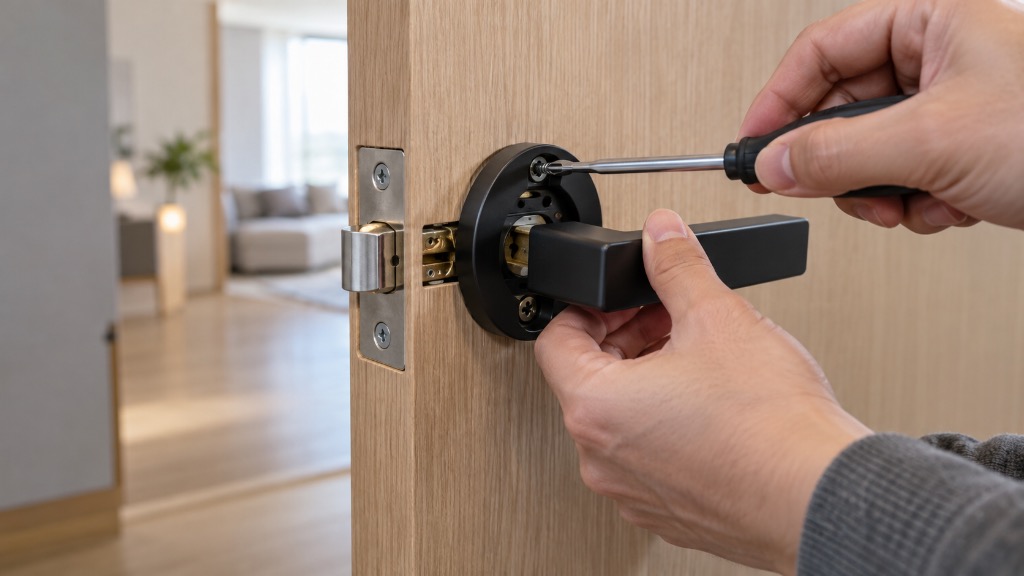
Unscrew the interior locking pin or button counterclockwise by hand. Pop off the decorative rosette escutcheon cover using your fingers or a flathead screwdriver to expose the mounting screws, then back out the two long through-bolts to pull both the interior and exterior lever assemblies straight out of the door.
- 2
Remove the two mounting screws on the latch faceplate along the door edge and slide out the old tubular latch mechanism. Back out the screws on the door jamb to remove the old strike plate and plastic dust box insert.
- 3
Check the orientation of the latch bolt: the slanted, curved bevel face MUST face the direction the door swings closed so it retracts smoothly against the strike plate. If it faces the wrong way, push the latch head inward and rotate it 180 degrees to flip the bevel, then secure the latch faceplate with the provided wood screws.
- 4
Slide the square spindle bar through the central latch hub. Ensure the lever assembly with the threaded lock pin hole is positioned on the interior room side. Align the long connecting bolts through the door holes into the exterior threaded posts, thread them by hand to prevent cross-threading, and tighten evenly with a manual screwdriver. Screw in the lock pin and test both latch action and locking function.
- 5
All removed metallic door levers, tubular latch mechanisms, spindle bars, strike plates, and steel screws are recyclable zinc and steel scrap; place them into the curbside scrap metal / can recycling bin. Any brittle plastic dust liners, nylon washers, or swept-up wood shavings should be tossed into standard municipal trash.
Frequently asked question
Why does my newly installed door bounce back and refuse to latch when pushed shut?
This happens when the latch bevel is installed backward. If the flat, squared-off face of the latch bolt hits the strike plate first, the bolt cannot retract and the door simply bounces open. Loosen the latch faceplate screws, pull the latch head out slightly, rotate it 180 degrees so the curved ramp faces the door frame, and retighten.
Why does my door lever sag downward loosely, and how do I fix it?
A sagging lever indicates that the internal torsional return spring within the rosette assembly has snapped or suffered fatigue failure. Because individual internal springs are rarely sold separately and vary by manufacturer, replacing the complete tubular lever handle set is the safest and most economical permanent fix.
How do I unlock an interior privacy door lock from the outside during an emergency lockout?
Look closely at the exterior lever rose or neck: modern privacy locks feature a small emergency release hole (roughly 2mm). Insert a straightened wire coat hanger, paperclip, or toothpick straight into the hole and push firmly until you feel a spring-loaded click; this immediately pops the interior lock pin and frees the door.
Can I recycle the old door handle, screws, and latch together in curbside scrap metal?
Yes, the lever handles (zinc die-cast), spindle rod (steel), latch housing (cold-rolled steel), strike plates, and mounting screws are all 100% recyclable ferrous and non-ferrous metals. Simply discard any small nylon buffer clips into regular trash, and drop all metallic components together into curbside scrap metal recycling.