Cordless Vacuum Dustbin & HEPA Filter Deep Cleaning Guide | Eliminate Bad Odor & Roller Brush Wash
Complete deep cleaning guide for cordless vacuum cleaners: dust bin disassembly, metal mesh cleaning, HEPA filter deodorization, and soft roller hair removal to restore maximum suction power.
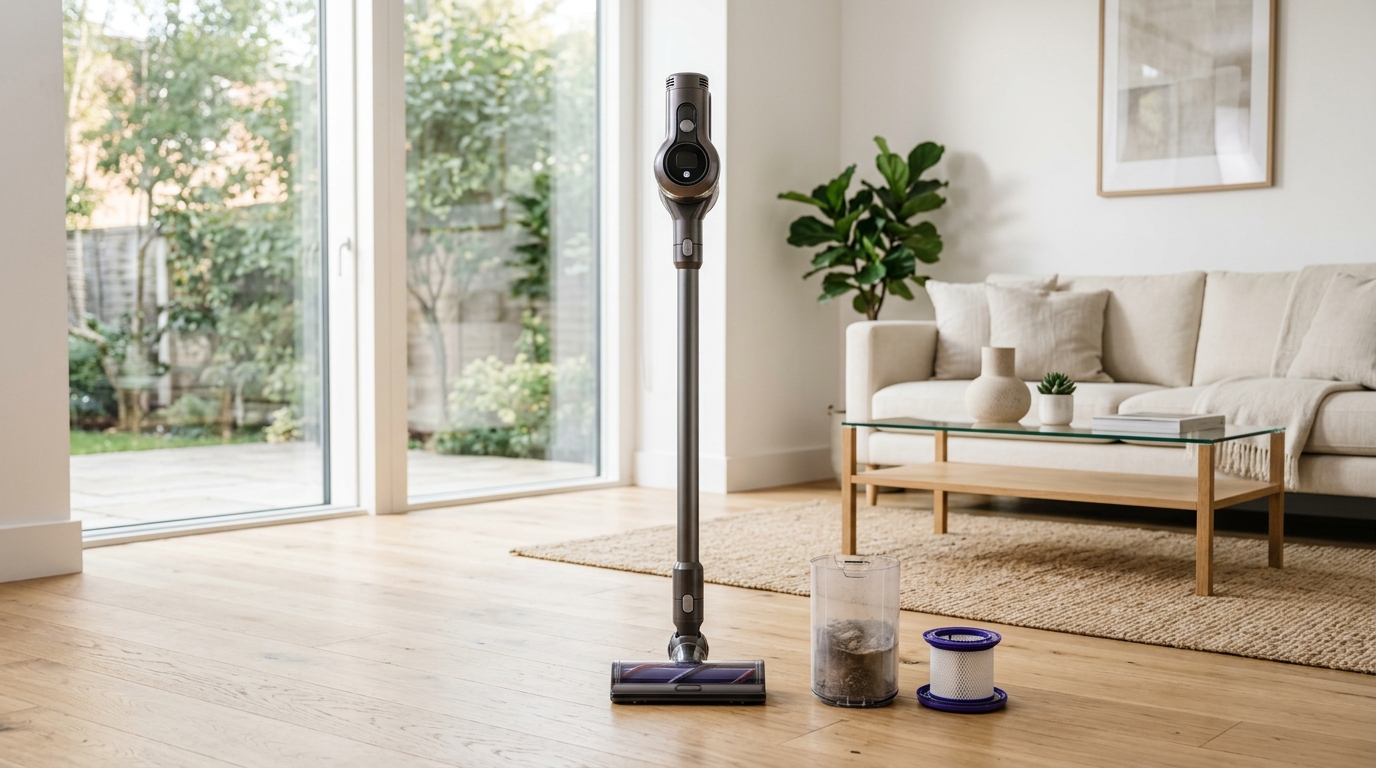
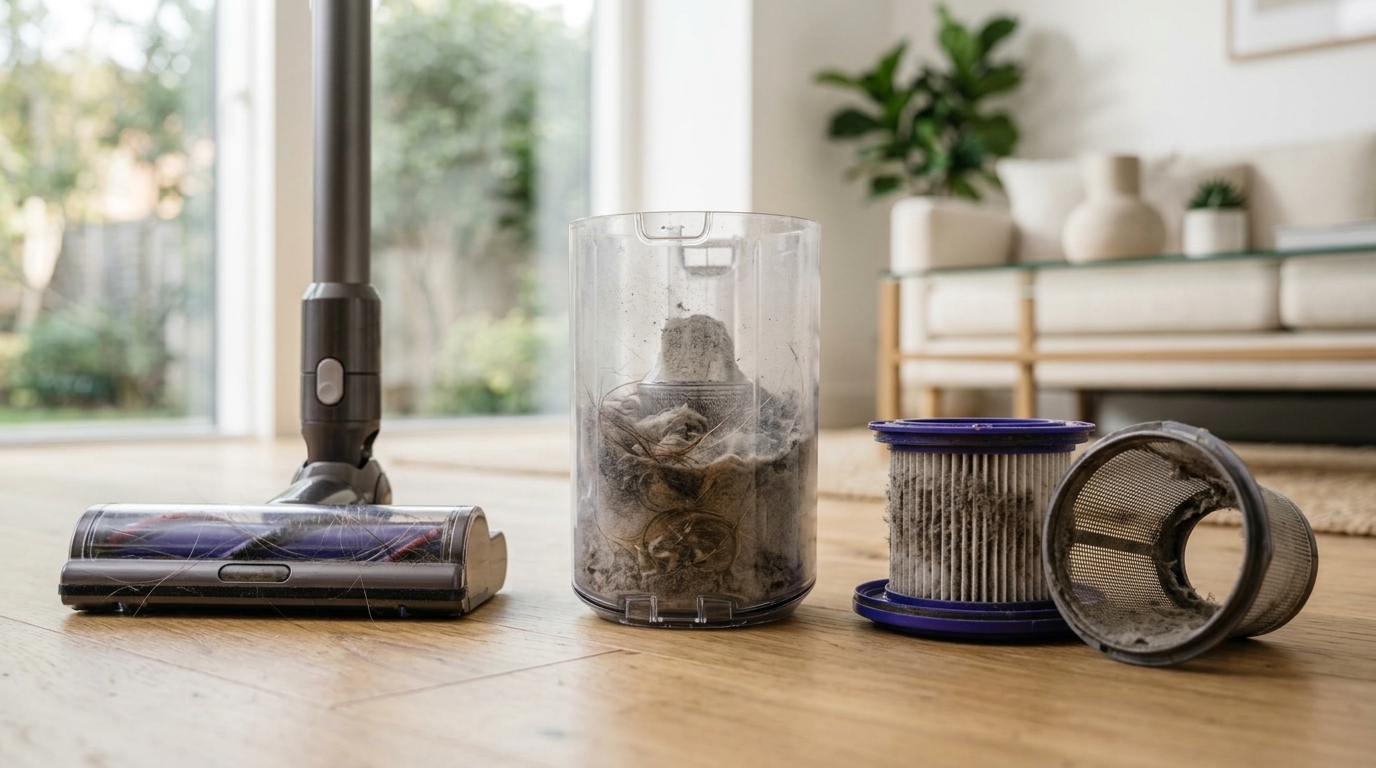
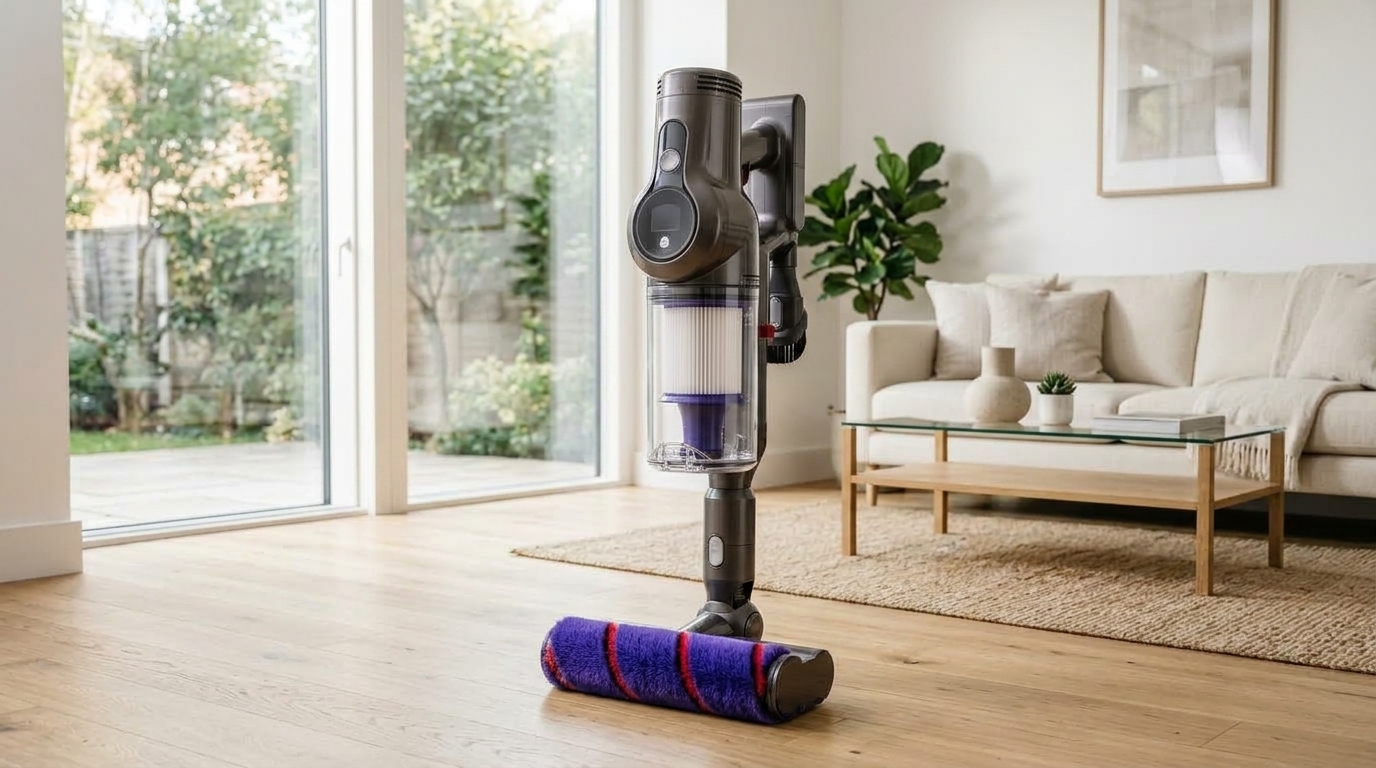
🛠️ Required Tools & Cleaning Agents
🔄 Alternative Detergents & Eco Tips
- Mild Dish Soap → Alt: 1% Citric Acid Dilution (Neutralizes stubborn stale odors and sour smells trapped in filters)
- Soft Cleaning Brush → Alt: Fine Bristle Toothbrush (Safely scrubs fine mesh perforations and delicate filter pleats)
- Scissors → Alt: Seam Ripper Tool (Quickly cuts tangled hair threads wound around the roller axle)
✨ Step-by-Step Care Instructions
Step 1: Disconnect Power & Fully Disassemble Dustbin and Filters
- Unplug from the charging dock and ensure the power trigger is fully disengaged.
- Press the release button to separate the dust container from the main motor body.
- Pull out the inner pre-motor micro filter and rear exhaust HEPA filter.
- Rotate the cyclone cover counterclockwise to release the metal mesh grille.
- Keep electrical motor terminals dry in a clean safe area.
Step 2: Inspect Dustbin Grime & Tangled Hair on Roller Brush
- Empty loose dust bunnies and large debris into the trash can.
- Inspect if fine dust is clogging the metal mesh perforations, causing suction loss.
- Check HEPA filter pleats for grey dust buildup and stale damp odors.
- Inspect the roller brush axle for tightly wound hair strands.
Step 3: Scrub Metal Mesh & Rinse HEPA Filter with Lukewarm Water
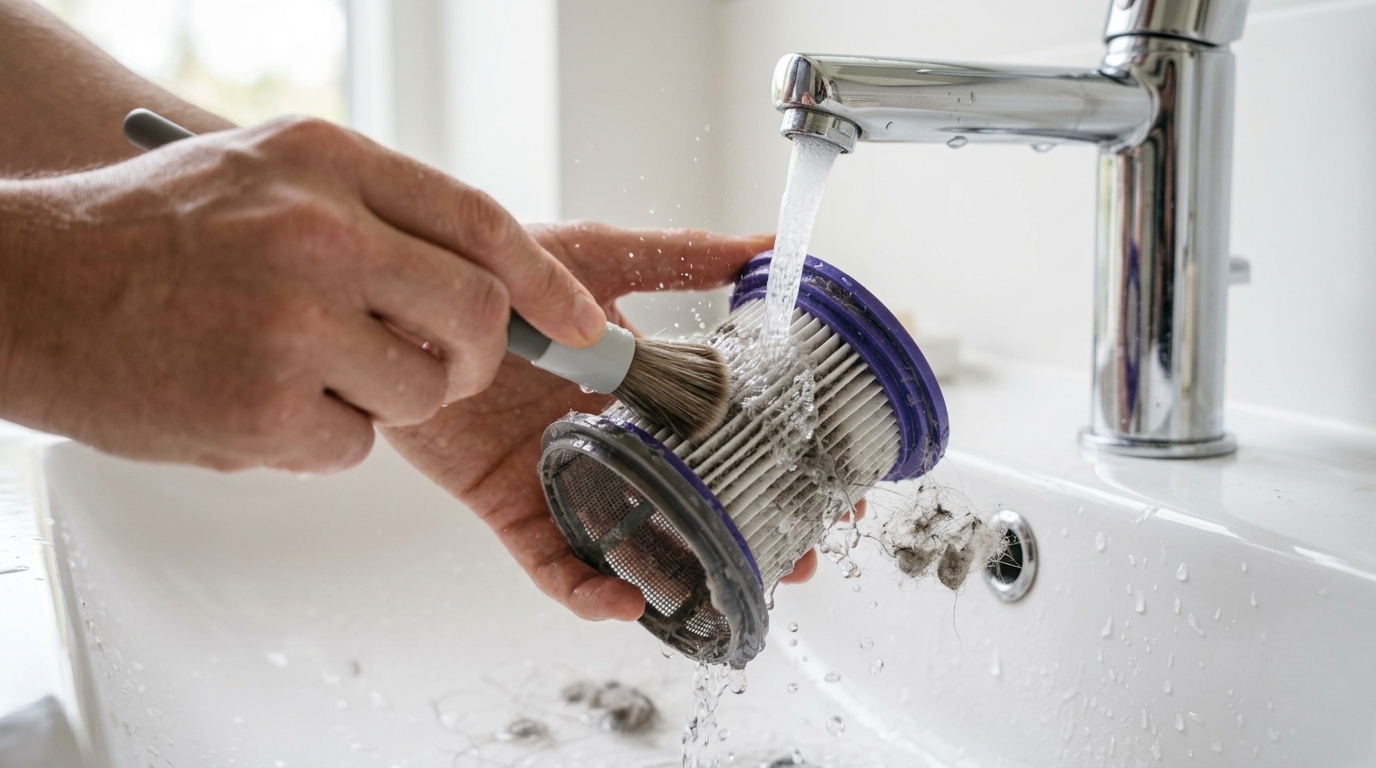
- Scrub fine dust trapped in the metal mesh using a soft brush under running lukewarm water (30-40°C).
- Wash clear plastic dust canister with mild dish soap and a soft sponge.
- Rinse the HEPA filter gently under tap water without wringing (rinse with diluted citric acid water if sour odors persist).
- Never use harsh bleach or hot water over 50°C to prevent filter membrane damage.
Step 4: Cut Tangled Hair on Roller Brush & Wipe Head Housing
- Turn the release lock or coin screw to slide the soft roller brush out.
- Use scissors or a utility knife along the brush groove to slice and remove tangled hairs.
- Never submerge the motorized cleaner head in water; wipe internal housing with a dry or damp cloth.
- Rinse the soft roller brush with cold water and reshape the fibers.
Step 5: 24-Hour Complete Shade Air Drying & Suction Power Restoration
- Air-dry all washable parts (filters, dustbin, roller brush) in a shaded, well-ventilated space for at least 24 hours.
- Reinstalling damp filters creates bacterial slime and terrible stale damp odors.
- Align and snap the metal cyclone grille, filters, and dustbin securely until they click.
- Turn on the vacuum to verify restored maximum suction airflow and odor-free exhaust.
🩺 Self-Diagnosis Guide
✅ Can be restored with care
- Cloudy grey dust layer accumulated inside the clear plastic dust canister
- Musty wet-dog or sour towel odor blown out from exhaust air vents during operation
- Hair and pet fur tightly wound around roller brush axle causing rotational drag
- Loss of suction power and motor overheating due to clogged metal mesh and micro filter
- Main motor runs normally and battery charges without error lights
❌ Reached end of lifespan (Proper disposal required)
- Severe burning smell, sparking, or grinding noise coming from the main motor unit
- Lithium-ion battery completely dead or showing permanent charging fault LEDs
- Cracked dustbin locking latch or broken rubber seals causing continuous vacuum leak
- Main circuit board water damage or corrosion causing complete power failure
⚠️ Important Safety Precautions
- Never submerge the main motor body or motorized cleaner head in water to prevent electrical fire and motor damage.
- Never operate the vacuum with damp filters, which triggers severe mildew odors and internal motor corrosion.
- Do NOT use chlorine bleach, benzene, or thinners (causes polycarbonate plastic cracking and clouding).
- Never wash filters in laundry washing machines or dishwashers (destroys micro-fiber pore structures).
- Do not vacuum broken glass shards, long string ribbons, or lit cigarette ashes.
💡 Cost Efficiency & Professional Inspection Guide
💡 Cordless Stick Vacuum Replacement Guide: 3 Key Technical Specs Before Buying
♻️ Reached end of lifespan?
Check local disposal regulations instead of forcing reuse.
❓ Frequently Asked Questions (FAQ)
Q. Why does my vacuum emit a severe stale wet-dog odor after washing the filter?
A. This happens when the high-density filter fibers were reinstalled before drying 100% completely. Moisture trapped inside breeds bacterial mildew within hours. Rinse the filter in diluted citric acid water and let it air-dry thoroughly in a shaded, well-ventilated space for at least 24 to 48 hours.
Q. Why is suction still weak with a high-pitched motor sound even after emptying the dustbin?
A. Fine dust is likely clogging the micro-perforations of the cyclone metal mesh, or an obstruction is trapped in the wand tube or cleaner head neck. Disassemble the metal mesh to scrub with a brush and check the extension wand with a flashlight.
Q. Can I wash and reuse the HEPA filter permanently?
A. While washable HEPA filters can be cleaned multiple times, microscopic fibers naturally degrade and loosen over time. For optimal filtration and zero fine dust leakage, replace the filter with a genuine OEM part every 12 to 24 months.
Q. Do Dyson, Samsung Jet, and LG CordZero have different detergent guidelines for washing filters?
A. Yes. Dyson officially specifies washing filters exclusively with cold running tap water without soap or detergents to protect the electrostatic micro-fiber layers. In contrast, Samsung Bespoke Jet and LG CordZero allow light washing with mild neutral dish soap in lukewarm water. However, bleach, hot water above 50°C, and dishwashers are strictly forbidden across all brands.