Balcony Rainwater Drain Trap Replacement & Strainer Disposal Guide
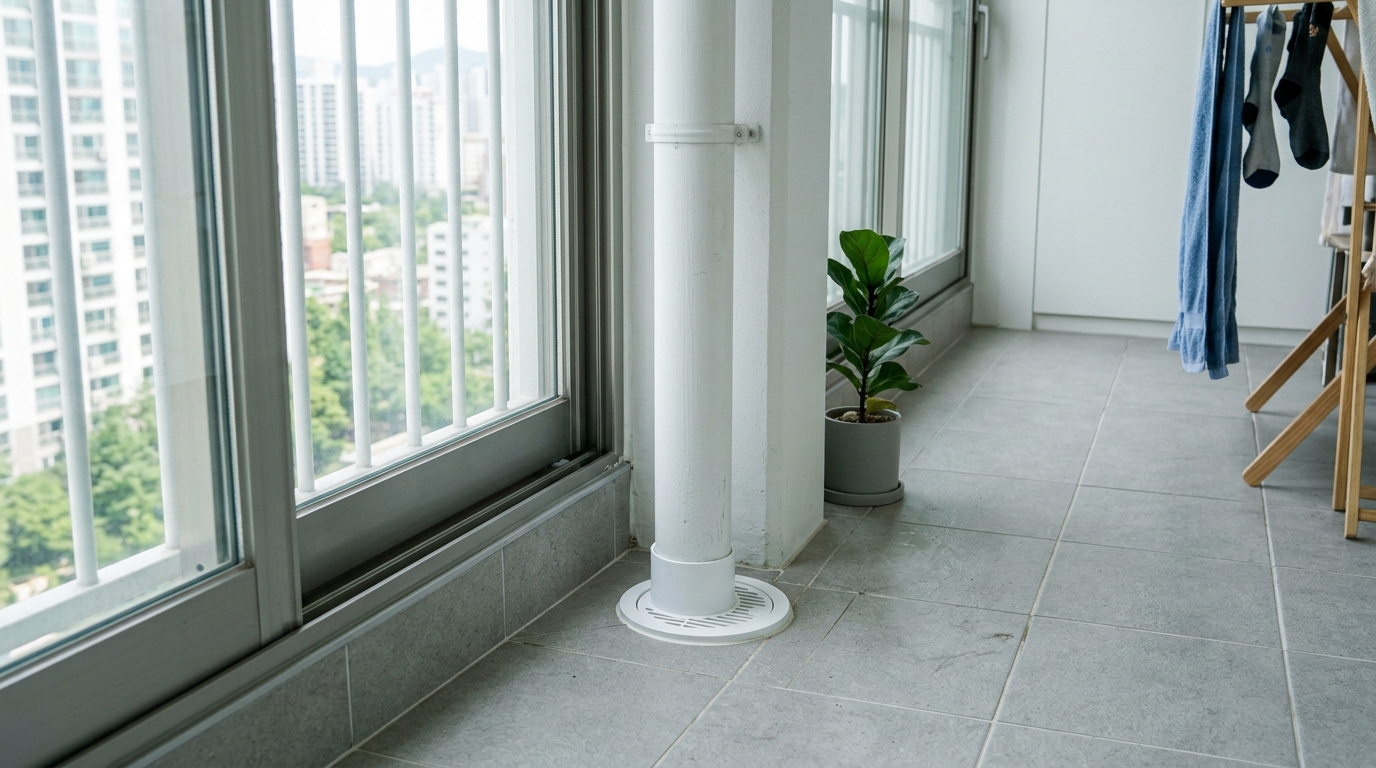
- 1Balcony rainwater downspouts in apartment buildings serve as vertical conduits draining rooftop precipitation.
- 2Traditional open grates frequently vent sewer odors, drain flies, and loud water gushing noises directly into home balconies.
- 3Installing a split-collar check-valve trap (engineered for 75mm or 100mm PVC pipes) automatically opens under drainage flow and seals shut at rest.
- ✓This guide covers exact pipe sizing, airtight trap assembly, perimeter silicone caulking, and eco-friendly disposal of deteriorated plastic strainers and corroded screws.
Follow these steps
- 1
Measure Downspout Pipe Diameter and Drain Bore: Use a tape measure to determine the outer diameter of the vertical PVC pipe (standard apartment sizes are 75mm or 100mm) and inspect the recessed drain recess to select a compatible split-body check-valve trap kit.
- 2
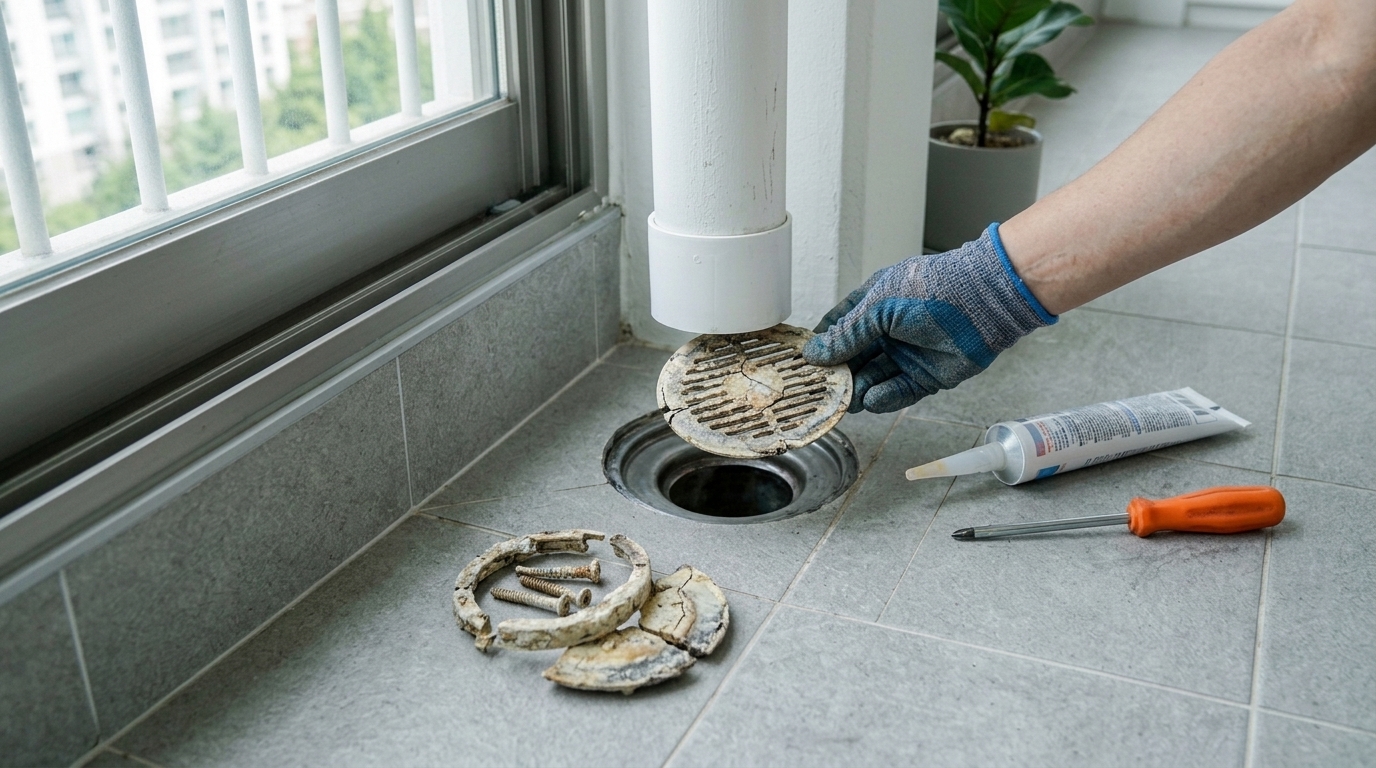
Remove Deteriorated Drain Grate and Rusty Screws: Unscrew any retaining screws with a manual screwdriver and carefully lift out the weathered, brittle plastic strainer grate. Clean away sludge, calcified deposits, and dust around the drainage rim with a brush and cloth to ensure a sterile, dry sealing seat.
- 3
Seat Check-Valve Trap Core and Apply Silicone Seal: Insert the gravity-ball or magnetic flap trap insert flush into the drain hole. To eliminate minute air gaps where sewer gases or drain flies could bypass, run a neat bead of mold-resistant bio-silicone or fit the supplied rubber gasket snugly around the rim.
- 4
Assemble Split Casing Around Pipe and Connect Waste Hose: Enclose the vertical rainwater pipe with the two interlocking semicircular collar halves, latching the snap joints or tightening assembly bolts. If using a washing machine or dehumidifier drain adapter, securely insert the ribbed drain hose into the side elbow barb and fasten with a hose clamp.
- 5
Separate and Dispose of Waste Components by Material: Rinse mud off the disassembled plastic strainer plate and discard it into curbside plastic recycling. Collect corroded metal screws and metal clips into the scrap metal bin. Scraped silicone residue and soiled cleaning wipes belong in standard municipal trash bags.
Frequently asked question
How do I determine whether my balcony downspout is 75mm or 100mm?
Measure the circumference around the pipe using a flexible tape measure. A circumference of approximately 23.5–24 cm corresponds to a 75mm nominal pipe (76mm actual outer diameter), whereas 35.5–36 cm corresponds to a 100mm nominal pipe (114mm actual OD). If you lack a tape measure, wrapping a standard letter/A4 sheet (21cm short edge) around the pipe that fails to meet indicates a 100mm downspout.
Will balcony floor wash water still drain quickly after installing this trap?
Yes. Modern downspout check-valve traps feature magnetic, gravity-ball, or silicone flappers that remain tightly sealed against vapor and bugs, but automatically swing wide open under the hydraulic weight of flowing floor water. Once drainage ceases, the flapper snaps back shut, allowing unobstructed floor washing.
Why is there still a faint smell leaking from the base even after installing the trap?
This minor leakage occurs through micro-gaps between the outer flange of the trap and the uneven tile drain collar. Apply a continuous bead of anti-mold sanitary silicone sealant completely around the perimeter rim before pressing the trap in place, or wrap waterproof silicone repair tape around the joint seam to achieve a 100% airtight seal.
How should the removed weathered plastic strainer grate be disposed of?
Rinse off accumulated silt and organic grime from the old plastic strainer and place it in the curbside plastic recycling bin. If severely rusted screws are seized into the plastic core and cannot be extracted, material separation is compromised; discard the fused assembly into non-combustible waste bags (or municipal trash based on local sorting rules).