Kitchen Flap Cabinet Gas Strut Replacement & Scrap Metal Disposal Guide
- 1Overhead kitchen cabinets with horizontal flip-up flap doors rely on sealed nitrogen gas struts (pneumatic lift supports) to stay securely propped open.
- 2After 3 to 5 years of routine kitchen use, internal hydraulic seals degrade, releasing pressurized gas and causing heavy cabinet doors to unexpectedly slam down onto users or twist upper concealed hinges.
- 3Matching the exact Newton rating (e.g., 70N, 100N, 120N or 7–12 kgf) and extended eye-to-eye length (typically 245mm–270mm) allows a direct 5-minute drop-in fix without removing the door.
- ✓This guide explains ball joint clip release technique, proper force sizing, and safe metal scrap disposal.
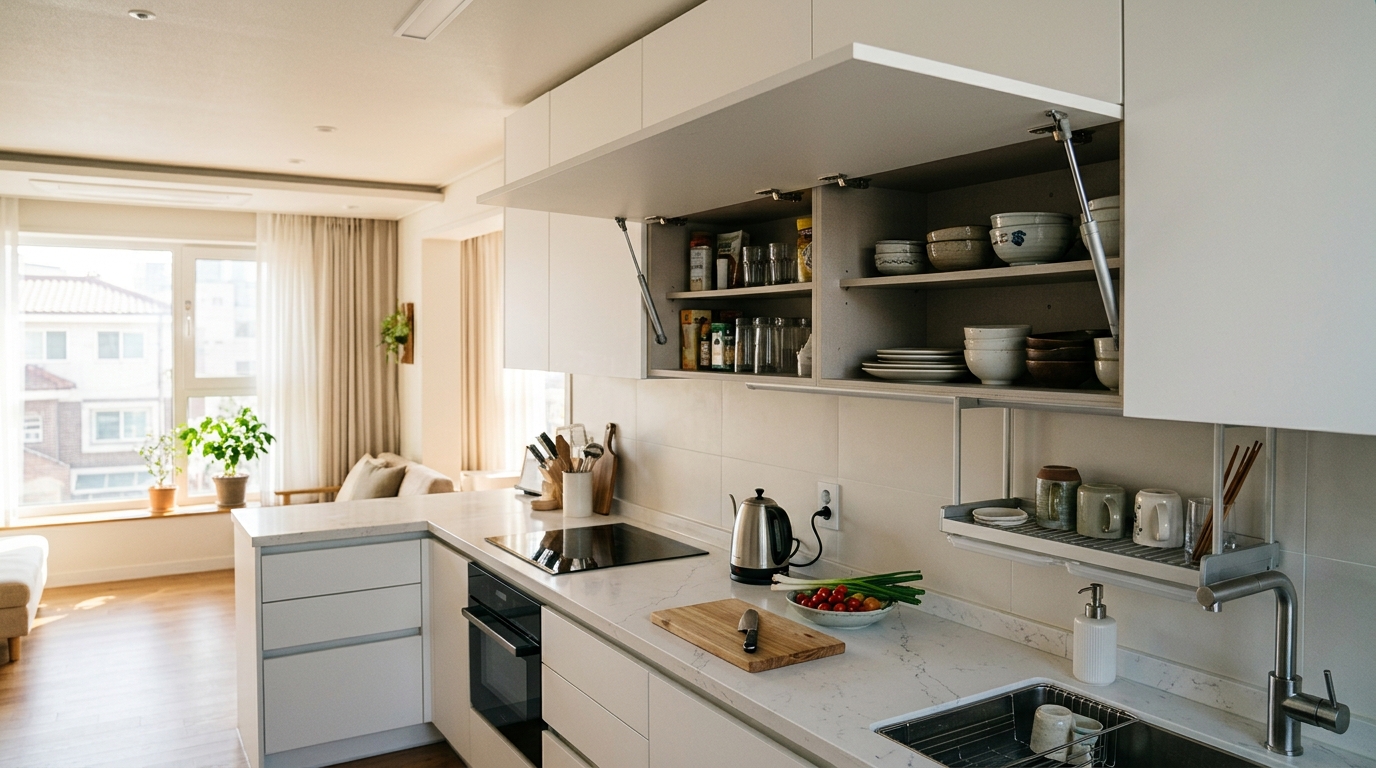
Follow these steps
- 1
Check Force Rating (N/kgf) and Extended Length: Prop the cabinet door fully open and read the printed specifications on the strut cylinder body (e.g., 80N, 100N, 120N) and measure extended pin-to-pin length (typically 245mm to 270mm) to select an exact replacement.
- 2
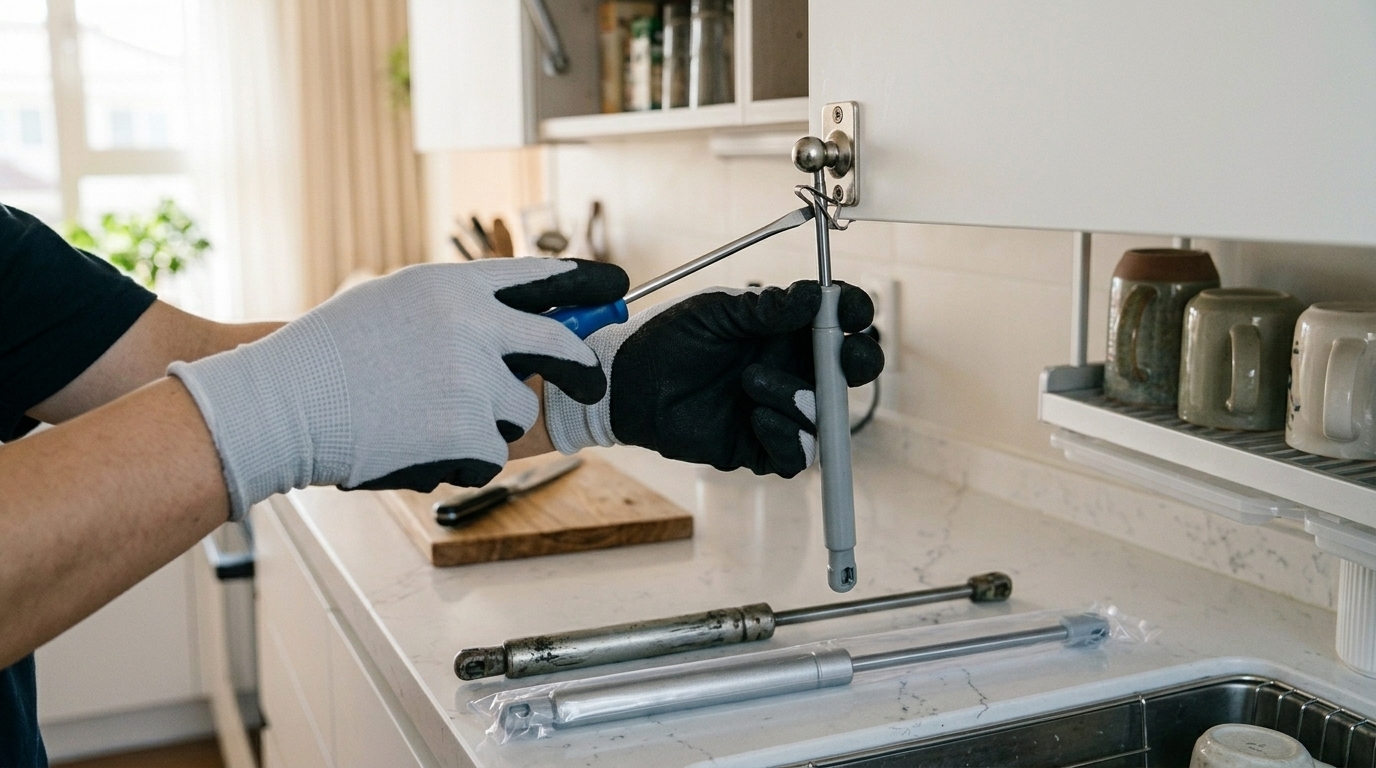
Safely Support Door and Release Retaining Spring Clips: Secure the heavy cabinet door upward using a prop rod or helper. Insert the blade of a small flathead screwdriver under the spring-steel band clip encircling the ball socket, prying it outward 2mm to unlock the internal retaining jaws.
- 3
Pop Strut Off Ball Studs and Inspect Mounting Plates: While holding the spring clip released, pull the strut head straight off the round ball stud. Check the cabinet and door mounting brackets; if the wood screws have worked loose, retighten them firmly with a Phillips screwdriver.
- 4
Snap New Gas Strut Sockets onto Ball Studs: Orient the strut with the thick cylinder body facing upward (or per manufacturer orientation). Align each socket directly over the corresponding ball stud and press firmly until the spring clip automatically snaps into place with a crisp click.
- 5
Test Open/Hold Balance and Recycle Metal Strut: Cycle the flap door several times to ensure it glides up smoothly and hovers firmly at full extension. The removed steel cylinder and piston rod are fully recyclable metals; NEVER attempt to puncture or drill into the pressurized cylinder, and simply discard the intact assembly into the curbside scrap metal recycling bin.
Frequently asked question
The N rating printed on my old strut is rubbed off; how do I determine the correct force?
For standard kitchen overhead flap doors (60–80 cm wide wood/MDF doors), 100N (approximately 10 kgf lifting force) is the universal apartment standard. Wide doors over 90 cm or heavy framed glass fronts require 120N, while small compact doors under 50 cm use 70N–80N. If your cabinet uses dual struts, always replace both simultaneously with matching ratings to prevent door warpage.
Do I need to unscrew and replace the metal mounting brackets attached to the cabinet?
No. Nearly all standardized replacement gas springs use identical 10mm ball stud sockets. As long as the existing mounting brackets remain securely anchored to the cabinet walls without play, leave them in place and simply pop the ball sockets off and on, completing the job in under a minute without drilling new holes.
Why is the cabinet door very stiff and difficult to close after installing the new strut?
This usually occurs if the strut force rating is excessively high for the door weight, or if the new cylinder seals need initial cycling. Firmly open and close the door completely 5 to 6 times to distribute the internal hydraulic damping oil. If it remains excessively stiff, step down one force grade (e.g., from 120N to 100N) to protect the top hinges.
Should I drill or puncture the old gas strut to depressurize it before discarding?
NEVER attempt to drill, puncture, or cut into a gas strut! Cylinders contain high-pressure nitrogen gas (100–150 bar) and hydraulic damping fluid. Drilling risks high-velocity projectile fragments and eye-injuring oil spray. Simply place the sealed, unaltered steel strut directly into curbside scrap metal recycling, where industrial shredding plants process them under controlled conditions.