Bathroom Sink Pull-Rod Drain & P-Trap Replacement and Scrap Brass Disposal Guide
- 1Bathroom washbasin pop-up stoppers and sub-sink drain traps (wall P-traps and floor S-traps) constantly endure acidic soap scum, toothpaste residue, and hair buildup, leading to severe corrosion and mechanical failure.
- 2Traditional mechanical pull-rod drain linkages frequently jam as pivot rods rust, while thin chrome-plated brass drain pipes corrode through within 5 to 7 years, dumping dirty wastewater across bathroom floors.
- 3Calling a licensed plumber typically costs $80–$150, but installing a modern push-button click-clack pop-up drain and matching bottle/flexible trap yourself costs under $15 and takes only 20 minutes with basic pliers.
- 4Contemporary pop-up units feature tool-free pull-out cores for instantaneous hair cleaning.
- ✓This guide covers pedestal shroud removal, overflow vs non-overflow selection, step-by-step rubber washer sealing, and eco-friendly scrap brass and stainless steel recycling.
Follow these steps
- 1
Remove Pedestal Shroud and Clear Workspace: For wall-hung semi-pedestal basins, pop off the side bolt caps with an awl, loosen the mounting bolts halfway with a socket or screwdriver, and gently slide the ceramic shroud down onto a padded mat.
- 2
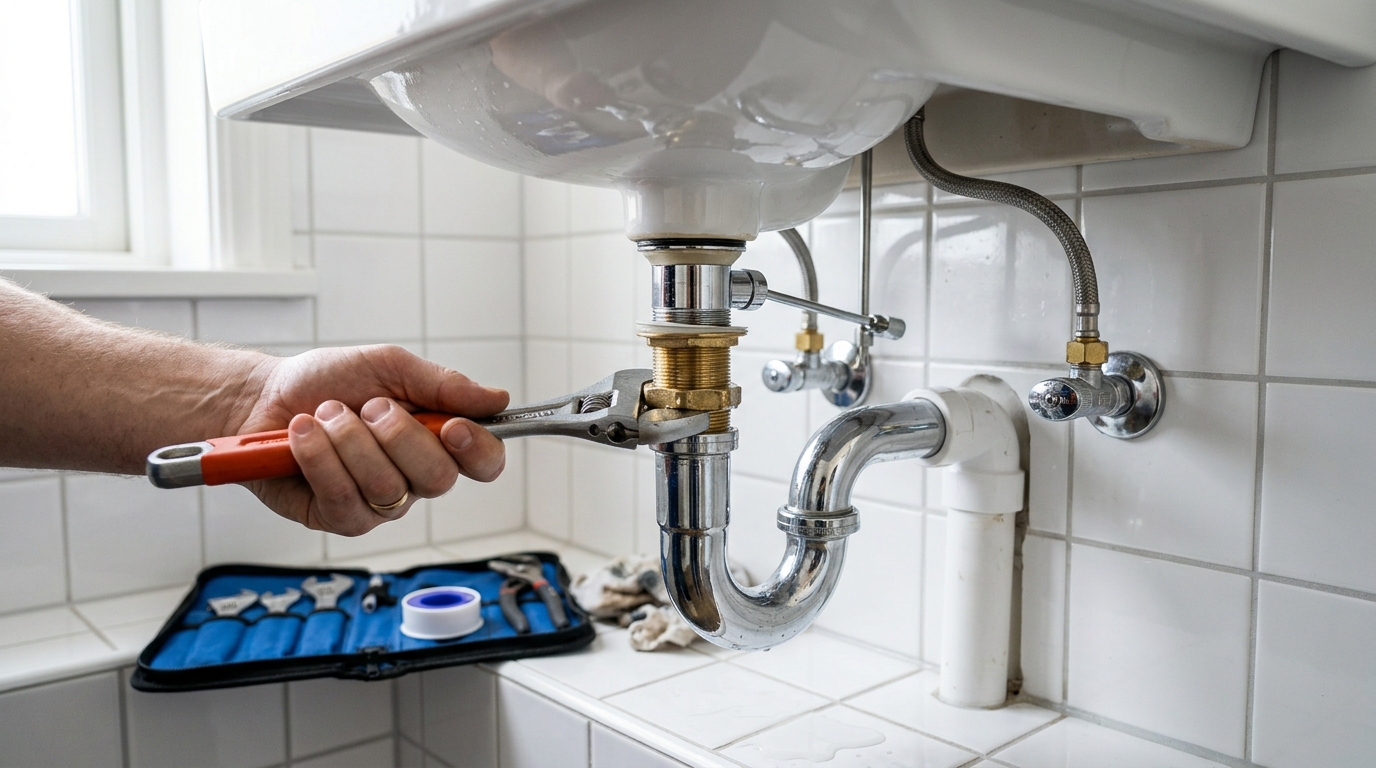
Loosen Locking Collar and Extract Worn Drain Assembly: Place a catch basin under the trap. Use a water pump plier or adjustable wrench to unscrew the slip-joint nuts connecting the P-trap to the wall outlet and the pop-up tailpiece. Unscrew the large brass basin retaining nut and pull the drain body up through the basin bowl.
- 3
Scrape Mineral Sludge and Sanitize Drain Orifice: Thoroughly clean calcified soap scum, degraded rubber remnants, and mildew from both top and underside surfaces of the ceramic drain hole using a brush and dry towel to guarantee a watertight seal.
- 4
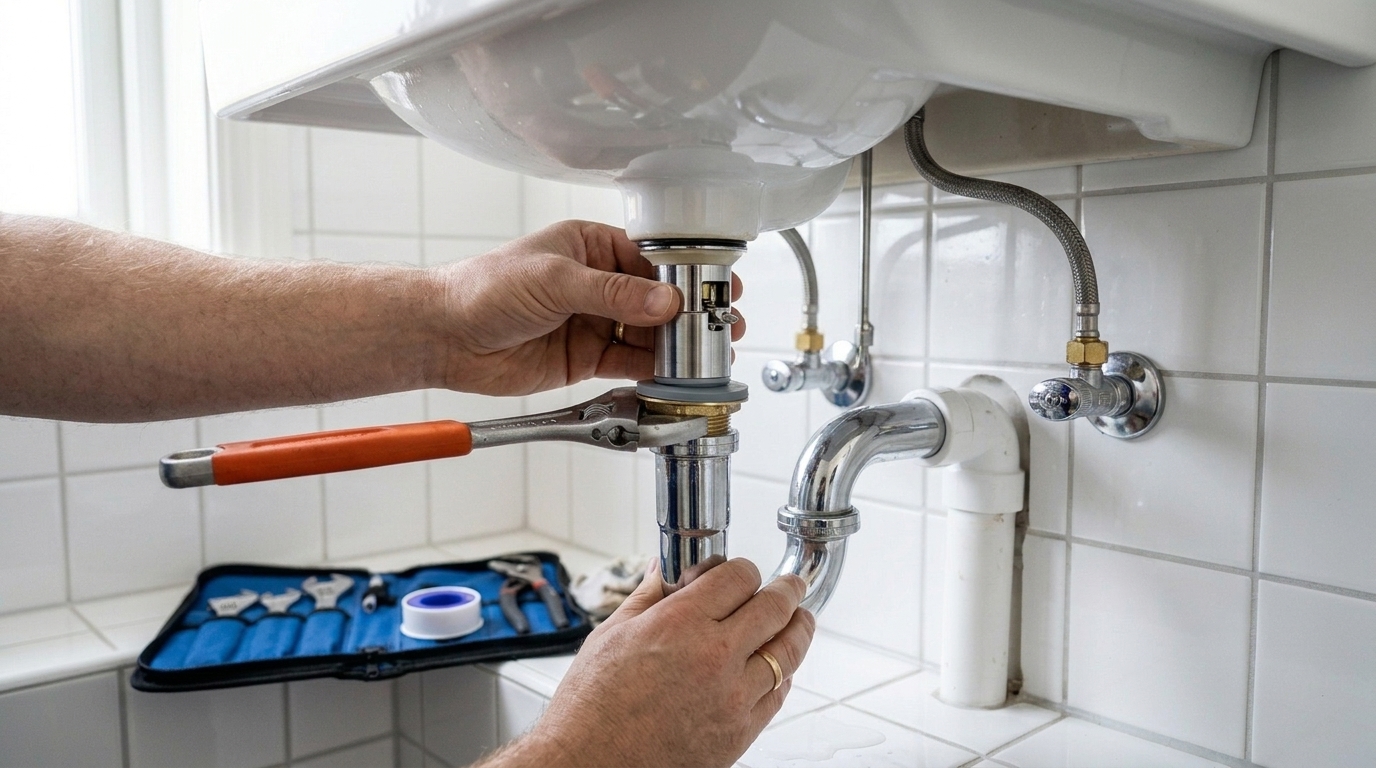
Insert Push-Button Auto Pop-Up and Fasten Trap Nuts: Insert the new click-clack pop-up body (matching your basin overflow port specification) from above. Beneath the sink, slide on the beveled silicone washer, friction washer, and brass locking nut, threading by hand until snug plus a half-turn with pliers. Insert the rubber drain seal into the wall/floor pipe and slip-join the trap assembly.
- 5
Perform High-Volume Drainage Test and Recycle Scrap Metals: Push the stopper to close and fill the basin halfway with water. Pop the drain open to discharge while inspecting all threaded joints and slip collars for moisture beads. Discarded brass/stainless steel tailpieces and copper nuts are 100% recyclable non-ferrous scrap metal for curbside metal bins; throw hardened rubber gaskets into standard municipal trash.
Frequently asked question
How do I determine whether my basin requires an overflow or non-overflow pop-up drain?
Look inside the upper front rim of your sink bowl. If there is a small oval cutout designed to prevent accidental tub overflow, you need an 'Overflow' pop-up (it features rectangular drainage side-ports on the tailpiece shaft). Countertop vessel bowls without an upper drain hole strictly require a 'Non-Overflow' sealed shaft.
What causes minor water seepage from the pop-up retaining nut after installation?
This is almost always caused by an inverted beveled washer (the tapered cone side must point upward into the porcelain hole recess) or residual mineral crust preventing the rubber from seating flush. Loosen the locknut, wipe the ceramic seating surface bone-dry with a clean cloth, and retighten firmly.
What is the difference between a wall drain trap and a floor drain trap?
If your wastewater outlet enters the bathroom wall, use a P-trap (or bottle trap). If the sewer line drops vertically straight down through the tile floor, use an S-trap (or straight I-trap/flexible accordion trap) to maintain the liquid water seal that blocks sewer gases.
How should removed metal drain pipes and locknuts be sorted for waste collection?
Chrome-plated brass pipes, stainless steel tailpieces, and brass collars are 100% high-grade recyclable metals. Place them into curbside scrap metal/can recycling bins. Only deteriorated black rubber washers and PTFE tape shreds should be placed into household trash.