Shower Diverter Valve Cartridge Replacement & Scrap Brass Disposal Guide
- 1Exposed rainfall shower columns utilize a 3-way ceramic diverter cartridge to direct pressurized water between the overhead drench head, handheld shower wand, and tub spout.
- 2Over years of thermal cycling, hard water mineral scale and ceramic disc erosion degrade internal water seals, causing water to bleed simultaneously from both sprayers while slashing water pressure in half.
- 3Instead of spending hundreds on a complete plumbing replacement, dropping in a standardized replacement brass/ceramic diverter cartridge restores crisp valve indexing and full hydraulic pressure.
- ✓This guide covers main water shutoff, hex spanner removal, Teflon thread sealing, and valuable scrap brass recycling.

Follow these steps
- 1
Shut Off Water Supply and Bleed Residual Line Pressure: Turn off the main water meter shutoff valve (or the eccentric wall service stop screws) using a flathead screwdriver to prevent indoor flooding. Open the shower faucet fully to drain residual water and relieve line pressure.
- 2
Pop Lever Index Cap and Loosen Retaining Screw: Pry off the small decorative chrome trim plug on the diverter lever using a utility knife tip. Unscrew the concealed Phillips or Allen set screw inside, then slide the lever handle off the splined stem.
- 3
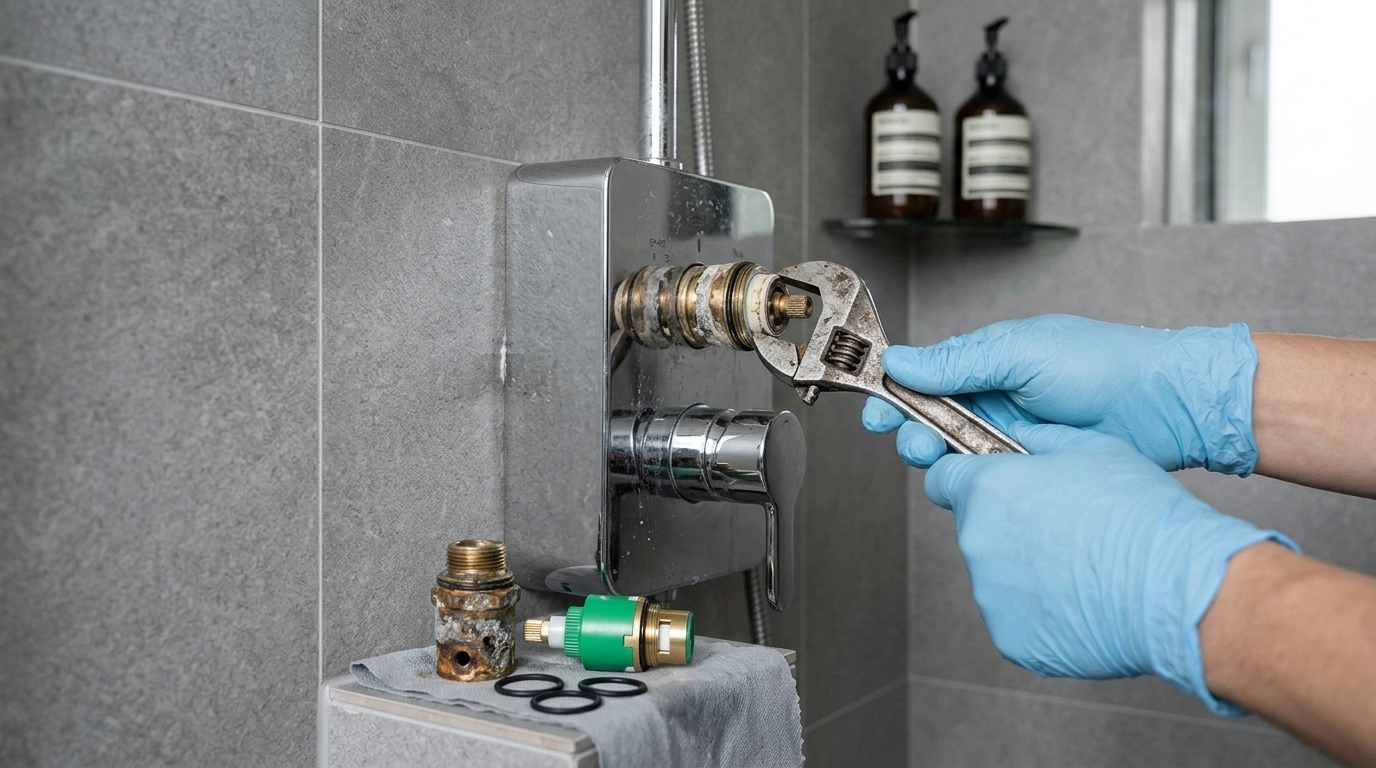
Unscrew Worn Diverter Cartridge with Adjustable Wrench: Secure an adjustable wrench onto the brass cartridge hex flats and rotate counterclockwise to break loose the calcified threads. Extract the corroded valve cartridge and wipe mineral scale from the faucet chamber with a clean rag.
- 4
Wrap Teflon Tape and Seat New Ceramic Diverter: Wrap 10 to 15 turns of PTFE thread seal tape clockwise around the male threads of the replacement diverter and lubricate the rubber O-rings with silicone grease. Thread the cartridge in by hand and snug it firmly with the wrench without overtightening.
- 5
Restore Water Pressure, Test Switching, and Recycle Scrap Brass: Slowly turn the main water valve back on and cycle the diverter lever to verify crisp, leak-free switching between the rainfall head and handheld wand. The discarded brass valve body is high-value recyclable non-ferrous metal; drop it into curbside scrap metal recycling, while degraded rubber seals go into standard municipal trash.
Frequently asked question
Why does water stream simultaneously out of both the shower wand and rainfall head?
This fault is caused by eroded ceramic sealing discs or cracked rubber O-rings within the diverter cartridge, allowing pressurized water to blow past the barrier into both conduit chambers simultaneously. Replacing the inner cartridge immediately resolves the bleed-through.
How do I identify the exact replacement cartridge model for my shower fixture?
The most foolproof method is turning off the water, extracting the old cartridge with a wrench, and measuring its overall height, thread diameter (typically 20mm or 25mm), and stem spline count with a ruler or caliper. Cross-referencing photos against supplier dimension diagrams ensures a perfect 1:1 match.
Is Teflon thread seal tape strictly required when threading in the new diverter?
Yes, it is highly recommended. Although primary sealing relies on rubber O-rings, municipal line pressure surges easily cause seepage through bare brass threads. Wrapping 10 to 15 layers of PTFE Teflon tape clockwise ensures complete hydraulic seal and prevents metal-to-metal galling.
Can the removed old brass cartridge be placed directly in curbside scrap metal recycling?
Yes. The heavy valve body and hex collar are forged from high-purity yellow brass, a valuable non-ferrous recyclable metal. Peel off and throw away any degraded rubber O-rings into general trash, and drop the brass hardware into curbside metal recycling for full reclamation.