Toilet Tank Fill Valve & Flapper Replacement: Leak Repair and Scrap Plastic/Metal Disposal
- 1Inside a toilet porcelain water tank, the vertical fill valve (ballcock float valve) automatically replenishes flushing water, while the flush valve flapper stopper seals the bottom outlet.
- 2Over years of submersion, hard water mineral scale and rubber embrittlement degrade internal diaphragms, causing the valve to continuously hiss and leak overflow water down into the bowl, generating massive water utility bills.
- 3While hiring a plumber costs $70–$120, installing a universal quiet fill valve and silicone flapper kit costs under $15 and takes only 20 minutes with basic wrenches.
- ✓This guide covers supply stop shutoff, tank drainage, plastic locking nut extraction, refill hose routing, float adjustment, and proper recycling of braided stainless hoses and plastic components.
Follow these steps
- 1
Shut Off Water Stop and Sponge Out Residual Tank Water: Turn the service angle stop shutoff valve clockwise until fully seated. Flush the toilet and hold the lever down to evacuate water, then use a sponge to absorb the remaining bottom water into a catch bucket.
- 2
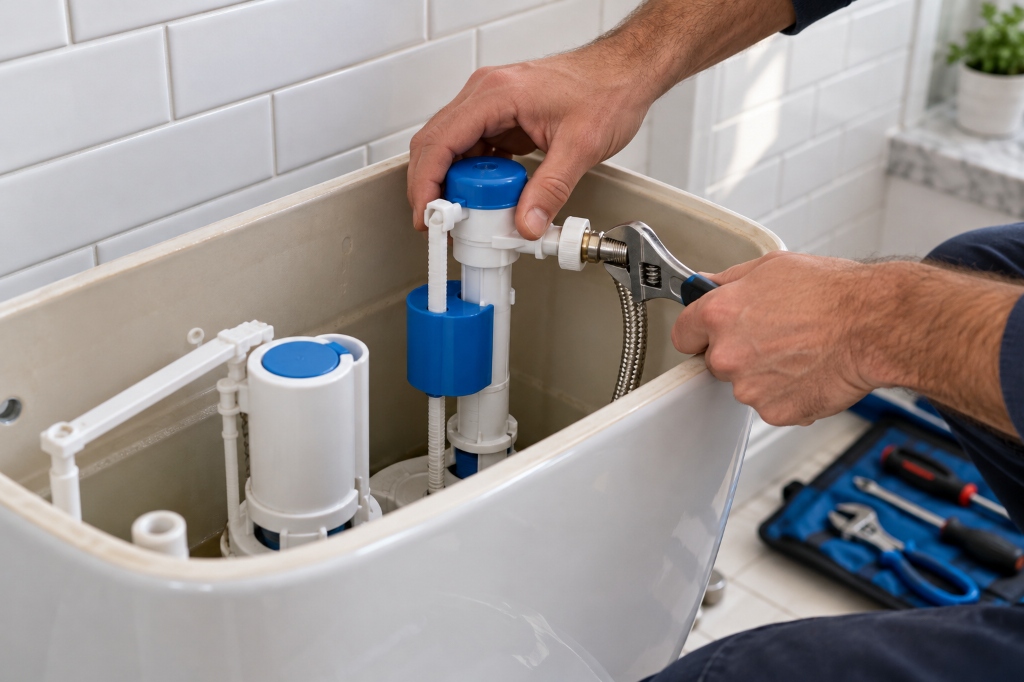
Disconnect Braided Supply Line and Remove Plastic Locknut: Position a catch pan under the tank. Use an adjustable wrench to disconnect the braided stainless supply hose coupling from the fill valve threaded shank. Loosen the large plastic locknut beneath the porcelain tank and lift the old valve up and out.
- 3
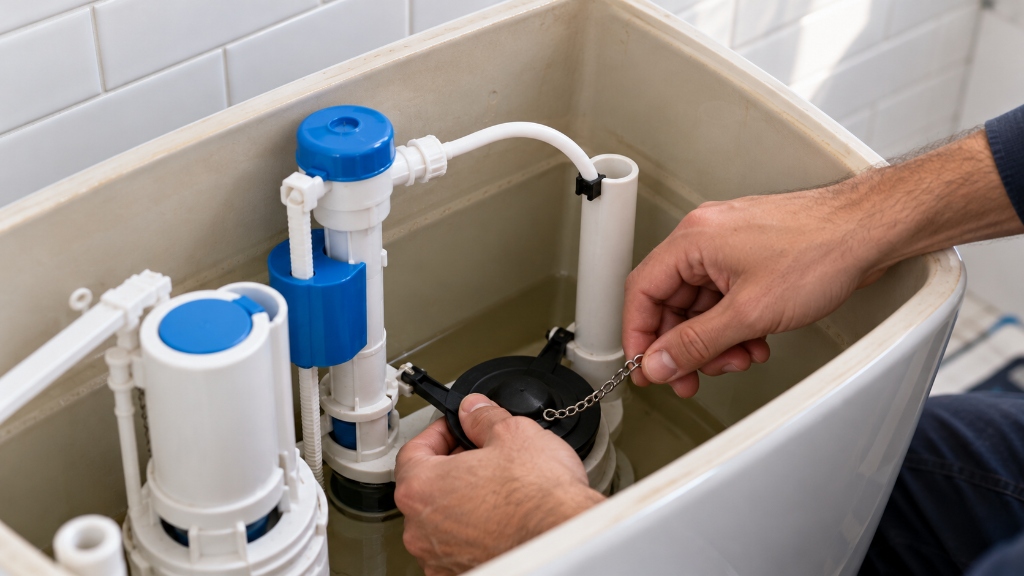
Detach Degraded Rubber Flapper and Lever Lift Chain: Unhook the mounting ears of the worn rubber flapper from the flush valve pivot posts, and unclip the stainless chain from the flush trip lever. (Wear disposable gloves, as decomposing rubber leaves persistent black carbon residue on hands).
- 4
Seat New Fill Valve, Mount Flapper, and Clip Refill Tube: Ensure the beveled rubber seal is properly seated on the fill valve base, drop it into the tank hole, and hand-tighten the bottom locknut firmly without overtightening. Snap the replacement silicone flapper onto the hinge posts with slight chain slack (1–2 links). Clip the flexible refill tube onto the overflow pipe top.
- 5
Turn On Supply, Dial In Water Float Level, and Recycle: Turn the angle stop back on to fill the tank. Adjust the threaded float screw so the water line stops approximately 1 inch (2–3cm) below the top of the overflow pipe. Discarded stainless braided hoses belong in scrap metal recycling bins; dispose of worn rubber flappers and brittle plastic valve fragments into standard municipal trash.
Frequently asked question
Why does the toilet continuously make a hissing or trickling water sound when not in use?
There are two primary causes: 1) The bottom rubber flapper has degraded, constantly weeping water into the bowl, or 2) The internal diaphragm inside the fill valve has failed, failing to shut off and letting water spill over into the overflow tube. Replacing both components completely cures phantom running.
What is the proper water level height inside the toilet tank?
The water level should shut off precisely 1 inch (2 to 3 cm) below the rim of the overflow pipe. If the water reaches the pipe rim, it will silently drain down into the sewer 24/7; turn the plastic adjustment screw counterclockwise to lower the float ball level.
How do I choose between One-Piece and Two-Piece toilet replacement valve kits?
If the water tank and lower bowl are seamlessly molded as a single ceramic fixture, it is a 'One-Piece' toilet. If the tank is a separate unit bolted on top of the bowl, it is a 'Two-Piece' toilet. While many vertical fill valves are universal, one-piece toilets have shorter clearance and often require compact low-profile fill valves and specialized flappers.
How should removed old toilet tank hardware be sorted for disposal?
Braided stainless steel supply lines and brass hex fittings are 100% recyclable non-ferrous scrap metals for curbside metal recycling. Degraded black rubber flappers, silicone seals, Teflon shreds, and brittle POM/ABS plastic valve skeletons are non-recyclable composite debris and must go into standard municipal trash bags.