Kitchen Sink Soap Dispenser Replacement & Old Pump Hardware Cleanout Guide
- 1Countertop built-in kitchen sink soap dispensers experience spring fatigue, clogs, and snapped nozzle tips after 5 to 10 years of daily use, posing scratching risks from sharp broken plastic or metal edges.
- 2Swapping out the old unit requires zero specialized plumbing tools—simply reaching under the sink cabinet to unscrew the mounting locknut and plastic bottle by hand completes the replacement in under 5 minutes.
- 3The most critical step is verifying the sink hole diameter (typically 25mm to 35mm).
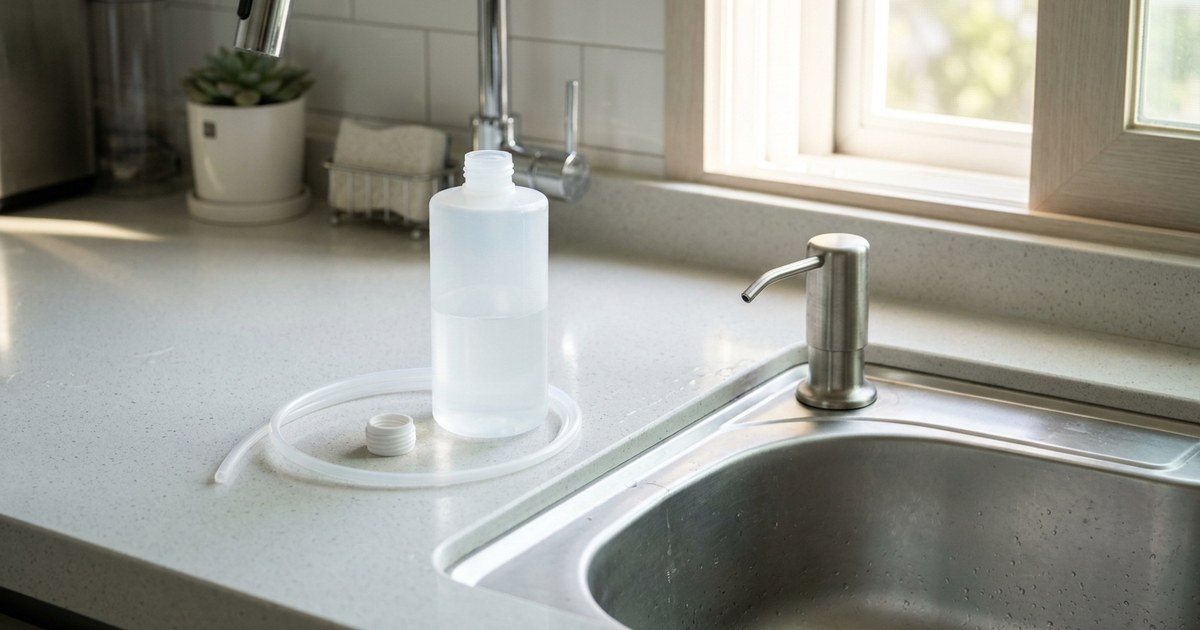
- 4To eliminate the hassle of crawling under the sink to refill liquid detergent, you can simply pull the pump head straight up from above to pour soap down the neck or connect a 1-meter direct-draw silicone extension tube into an economy-size detergent jug.
- ✓When disposing of the discarded hardware, rinse the stainless steel pump head and internal metal spring for scrap metal recycling, place the polyethylene bottle and tubing into plastic recycling, and discard worn rubber sealing washers in general municipal waste bags.
Follow these steps
- 1
1. Inspect Damage & Verify Mounting Hole Diameter: Pull the damaged pump head straight up and off. Check the existing sink countertop cutout diameter—standard Korean stainless sink deck holes measure between 25mm and 35mm—to ensure the replacement dispenser kit fits properly.
- 2
2. Unscrew Under-Sink Bottle & Locknut by Hand: Reach into the under-sink cabinet, turn the plastic detergent reservoir bottle counterclockwise to remove it, and unthread the plastic mounting locknut and washer downwards without needing pipe wrenches.
- 3
3. Clean Countertop Deck Hole Surface: Wipe away decades of built-up soap scum, dried detergent residue, and limescale around the mounting cutout hole using a damp sponge and dry thoroughly to guarantee a watertight seal.
- 4
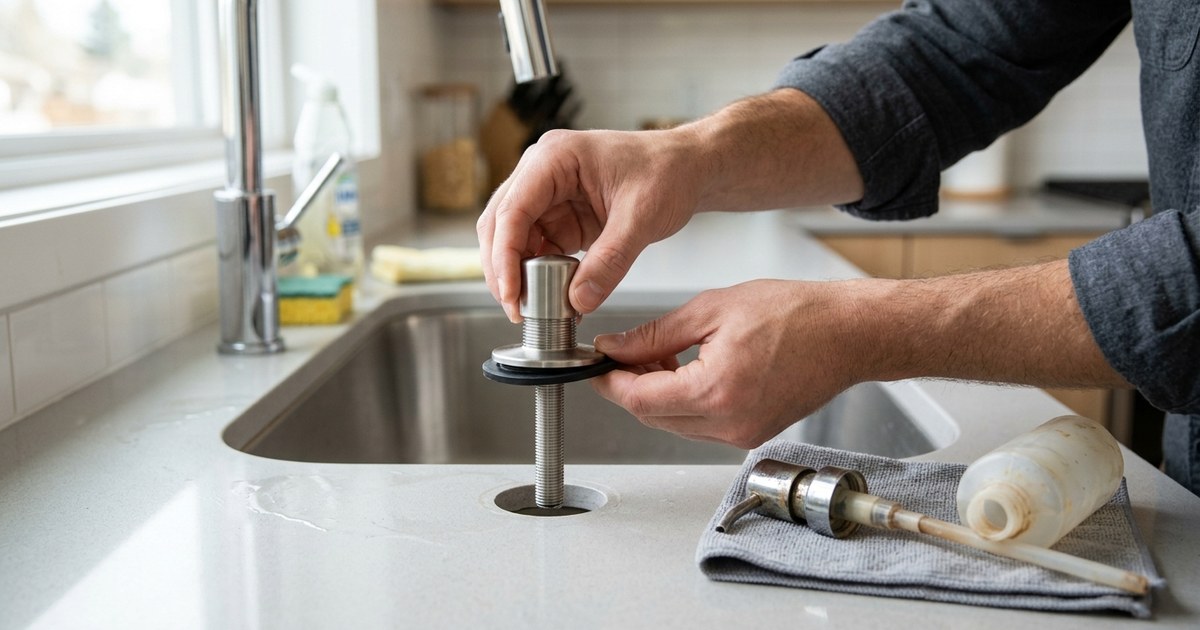
4. Insert Top Body with Upper Gasket: Slide the upper silicone waterproof ring onto the threaded dispenser shank and drop the threaded column down through the countertop hole from above.
- 5
5. Tighten Under-Sink Locknut Firmly by Hand: From beneath the sink, thread the lower rubber washer and plastic locknut up the shank. Hold the above-counter nozzle aligned toward the sink basin and hand-tighten the nut securely until snug against the sink underside without overtightening.
- 6
6. Refill Soap & Sort Discarded Hardware: Pull the top pump head out from above to pour liquid dish soap directly into the reservoir neck, reinsert the pump, and prime until soap dispenses smoothly. Separate the discarded hardware: rinse the stainless steel pump spout and metal coil spring for scrap metal recycling, sort the plastic reservoir bottle into plastics, and toss degraded rubber washers into general municipal trash bags.
Frequently asked question
Do I have to crawl under the sink to unscrew the bottle every time I refill dish soap?
No! You do not need to access the under-sink cabinet. Simply pull the top pump head straight up from above the countertop to expose the refill neck, pour liquid dish soap down into the reservoir bottle, and push the pump back in.
Can I attach a direct-draw silicone extension tube into an economy-size detergent jug instead of the bottle?
Yes. You can attach an aftermarket silicone extension hose kit (equipped with a weighted check valve) directly to the pump stem and feed it straight into a large gallon jug of dish soap placed inside the bottom cabinet, eliminating refills for over a year.
What should I do if the sink countertop hole size does not match the new dispenser?
Most Korean stainless sink basins feature standard 25mm to 35mm pre-drilled accessory holes, accommodating standard dispenser columns (24–28mm). If the cutout is slightly undersized, enlarge it using a bi-metal hole saw; if oversized, choose a model with an extra-wide escutcheon base washer (40mm+) to bridge the gap.
How should the discarded old soap dispenser hardware be sorted for recycling?
Sort components by material: rinse the stainless steel pump spout and metal coil spring for scrap metal recycling, wash out the plastic reservoir bottle for plastic recycling, and discard contaminated rubber gaskets in municipal trash bags.