Baby Straw Cup & Reusable Straw Deep Cleaning Guide | Silicone & Stainless Straw Mold Removal & Boiling Water Sterilization
Complete hygienic care guide for removing black mold, milk curd buildup, and unpleasant odors from infant straw cups, reusable silicone straws, and stainless steel tumbler straws using dedicated tube brushes, baking soda soaks, and safe boiling water sterilization.
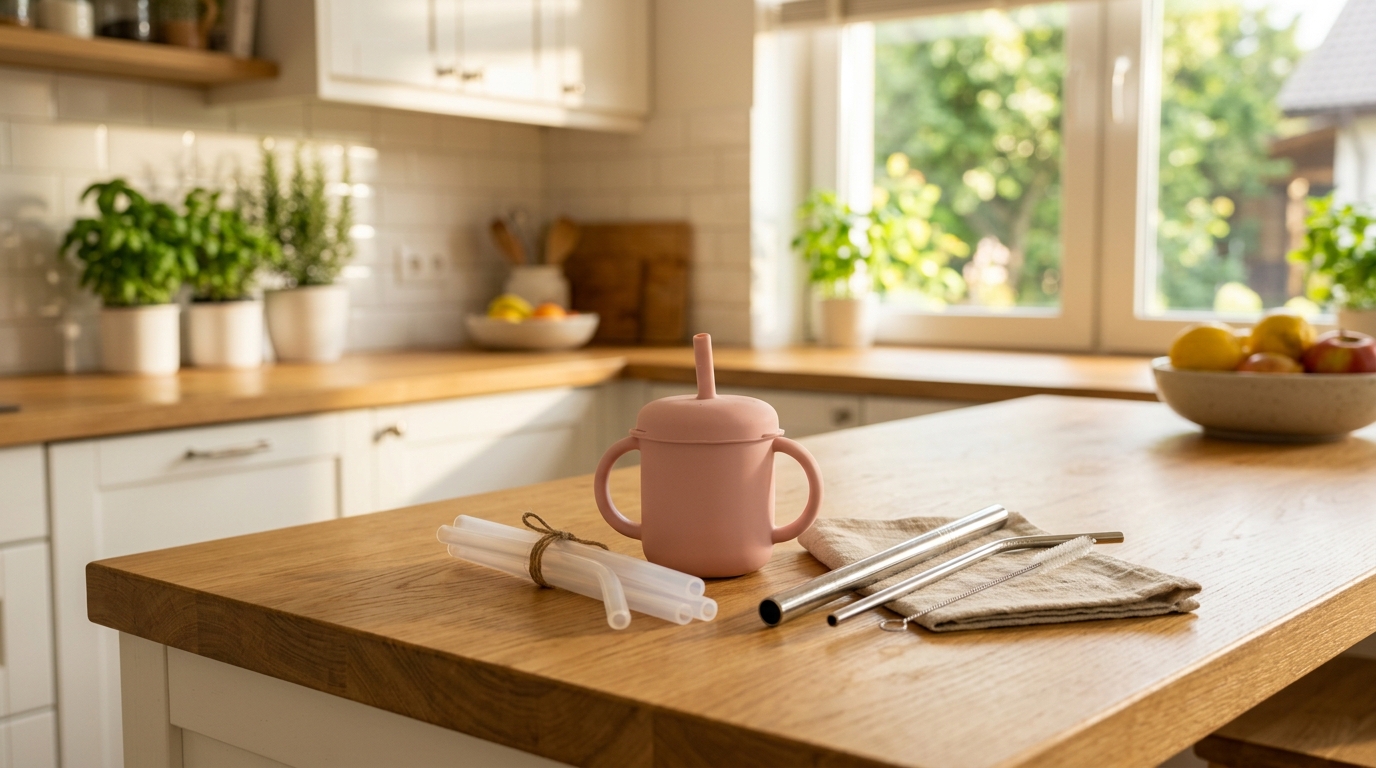
🛠️ Required Tools & Cleaning Agents
🔄 Alternative Detergents & Eco Tips
- Long Wire Straw Brush → Alt: Interdental Brush or Thin Wire with Thread (Precision bristle tool designed to sweep tight cross-cut spouts and air vents)
- Citric Acid (1 tsp) → Alt: Distilled White Vinegar (1 tbsp) or Fresh Lemon Juice (Natural organic acid that dissolves tap water mineral scale and milk curds)
✨ Step-by-Step Care Instructions
Step 1: Completely Disassemble All Cup Parts & Check for Hidden Grime
- Disassemble all detachable components: lid, silicone spout, weighted ball, tube straw, and gasket.
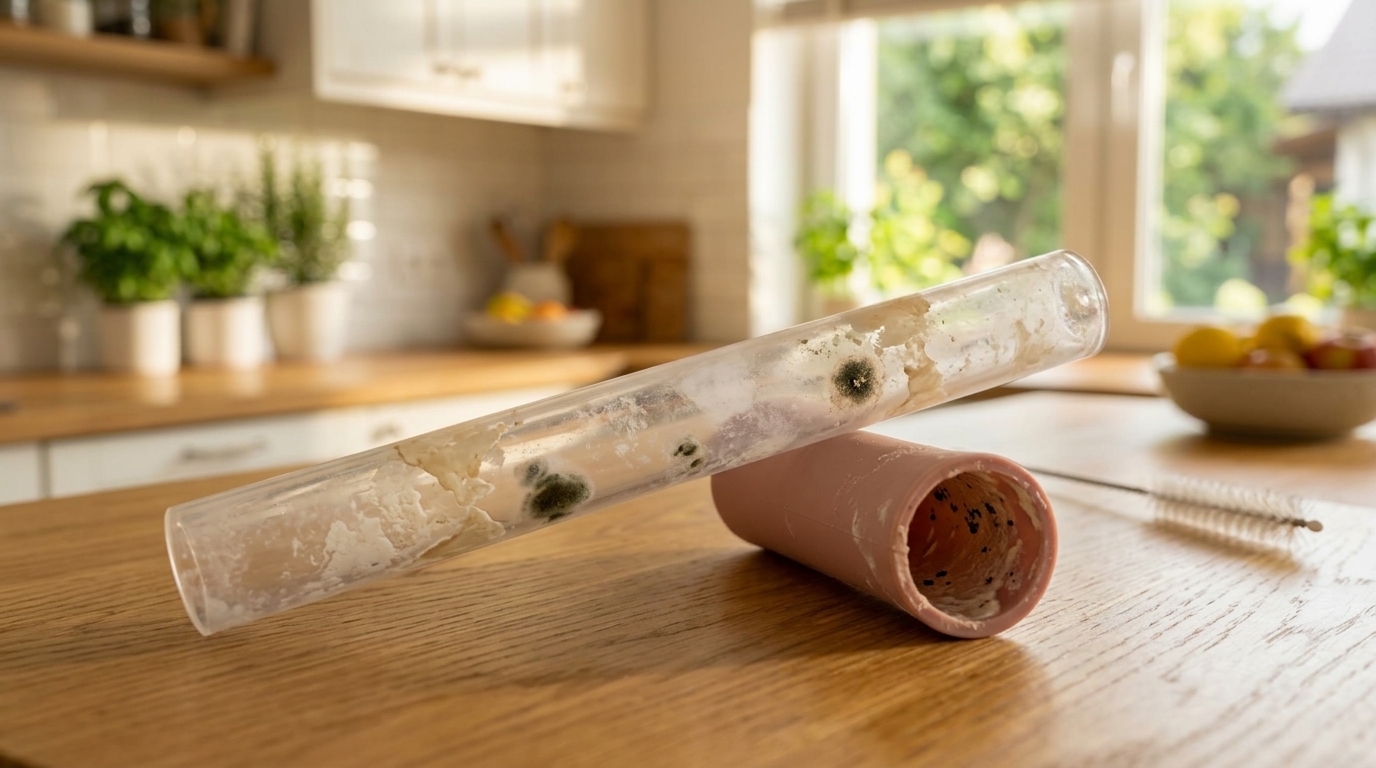
- Inspect cross-cut (十) drinking valves and tight silicone grooves for black mold colonies.
- Check for tears or structural damage on silicone straws (replace immediately if ripped).
- Rinse under lukewarm running tap water to flush away loose beverage residue.
Step 2: Soak in Lukewarm Water with Baking Soda for 15 Minutes
- Dissolve 1 tablespoon of baking soda in 1 liter of lukewarm water (40-50°C).
- Submerge all disassembled silicone straws, spouts, and rubber gaskets completely.
- Mild alkaline baking soda softens dried milk protein, fatty dairy curds, and saliva films.
- Let soak for 15 minutes to loosen stubborn organic buildup and weaken mold spore adhesion.
Step 3: Scrub Interior Tube Thoroughly with Long Wire Straw Brush
- Apply a small pump of baby bottle cleanser onto the damp straw brush to create rich foam.
- Insert the brush all the way through the straw from one end to the other, rotating 5 to 10 times.
- Gently massage the silicone cross-cut valve with your fingers instead of forcing wire bristles through it.
- Straighten curved or corrugated silicone straws while brushing to ensure full bristle contact.
Step 4: Neutralize with Citric Acid Water & Sterilize in Boiling Water
- Rinse straw tubes with diluted citric acid water (1 tsp in 500ml water) to dissolve mineral limescale.
- Bring a pot of water to a rolling boil (100°C), then turn off heat or reduce to lowest simmer.
- Immerse boil-safe silicone straws and spouts for 30 to 60 seconds using kitchen tongs.
- ★Caution: Never boil rigid plastic (PP, Tritan) cup bodies or lids to prevent thermal warping.
Step 5: Rinse Under Running Water & Dry Upright on a Ventilated Rack
- Rinse thoroughly under fast-flowing cold tap water to flush out all residual minerals.
- Shake off excess interior water droplets firmly.
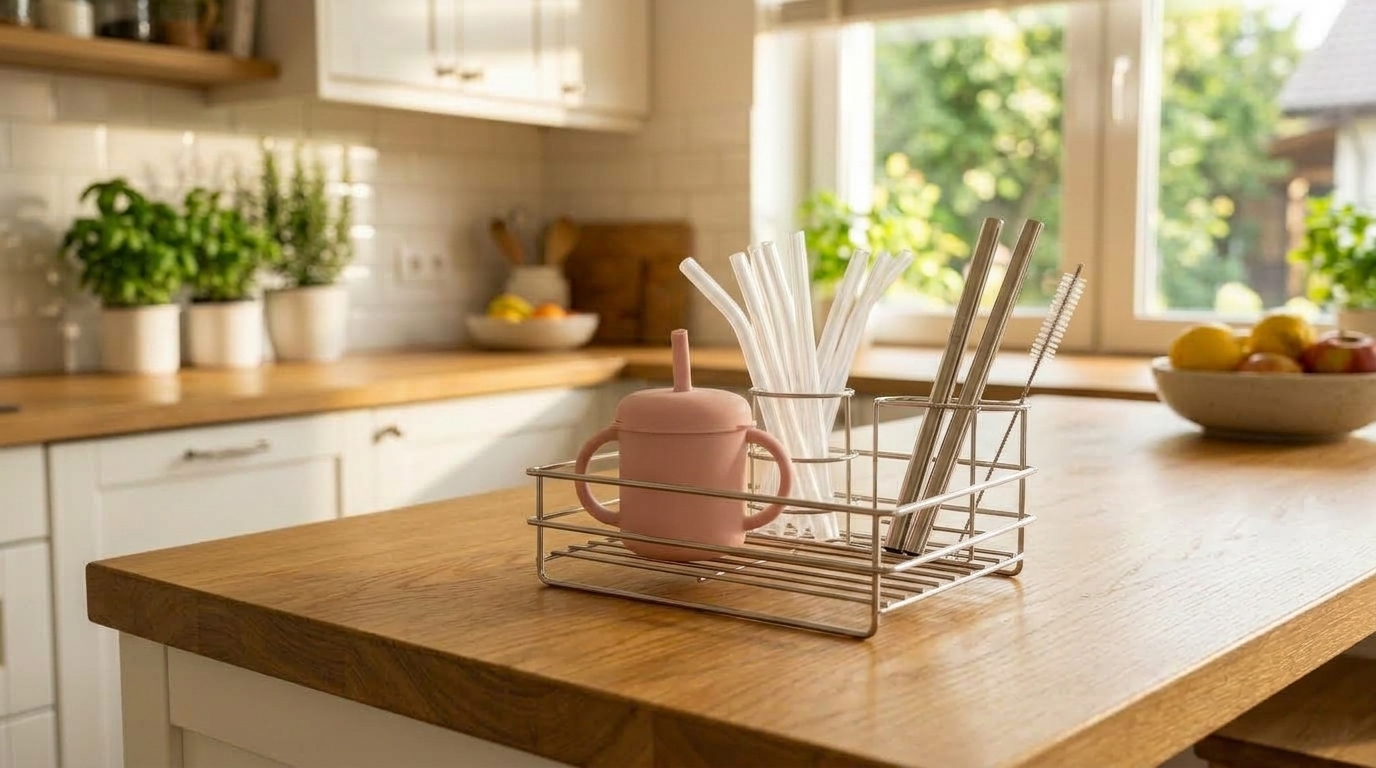
- Place straws vertically upright in a drying stand or cup to allow two-way airflow.
- Ensure 100% complete drying before reassembly (trapped moisture regenerates mold within 24 hours).
🩺 Self-Diagnosis Guide
✅ Can be restored with care
- Cloudy milk curds or juice film coating inner transparent silicone straw walls
- Tiny black mold spots forming along the cross-cut drinking valve slits
- Sour dairy or stale water odors persisting after ordinary rinsing
- White chalky mineral scale deposits clinging to stainless steel straw interiors
- Silicone straw maintains full elasticity without tears or sticky degradation
❌ Reached end of lifespan (Proper disposal required)
- Teething marks tore the silicone drinking tip, creating choking and micro-ingestion risks
- Silicone exhibits sticky hydrolysis, hardening, or irreversible yellow oxidation
- Stainless steel straw interior exhibits peeling coating, rust spots, or metal flaking
- Lid latch or air valve broken, preventing vacuum suction and causing continuous leaking
⚠️ Important Safety Precautions
- Do NOT poke sharp toothpicks or abrasive scouring pads into cross-cut valves (causes tears and leaks).
- Do NOT boil rigid plastic (PP, Tritan, Acrylic) straw cups or tumbler straws (causes severe thermal warping).
- Never use chlorine bleach on baby silicone products (chemical absorption and residue hazards).
- Never store straws assembled on lids while still damp inside (primary trigger for rapid black mold growth).
💡 Reusable Straw Replacement Guide: 3 Key Technical Specs Before Buying
♻️ Reached end of lifespan?
Check local disposal regulations instead of forcing reuse.
❓ Frequently Asked Questions (FAQ)
Q. How do I remove stubborn black mold embedded deep inside a silicone straw?
A. Dissolve 1/2 teaspoon of sodium percarbonate (or baking soda + citric acid) in warm water and soak the straw for 20-30 minutes. Active oxygen bubbles will loosen the fungal biofilm, allowing the wire straw brush to sweep it away cleanly. If black mold stains have penetrated deep into the silicone material itself, replace the straw immediately for infant safety.
Q. Can I put reusable straws in the dishwasher?
A. Yes, provided you place silicone and stainless straws inside a dedicated top-rack utensil basket. However, because dishwasher spray jets cannot easily penetrate narrow straw tubes, running a manual wire straw brush beforehand is essential to guarantee complete interior cleanliness.
Q. How do I eliminate rainbow stains or cloudy mineral deposits inside stainless steel straws?
A. Rainbow tints and white chalky marks are harmless calcium and magnesium mineral films precipitated from tap water. Submerge the stainless steel straws in warm water with 1 teaspoon of citric acid or 1 tablespoon of distilled vinegar for 10 minutes. The mild organic acid effortlessly dissolves limescale, restoring the metal's brilliant original shine.