DIY Kitchen Sink Faucet Replacement & Scrap Brass Recycling Guide
- 1Kitchen pull-out single-hole faucets undergo relentless daily use, with ceramic mixing cartridges and flexible braided pull-out hoses typically failing after 5–7 years, causing insidious hidden leaks that drip into lower cabinetry.
- 2Unchecked leaks cause subfloor plywood rot, foul mold odors, and expensive structural damage.
- 3The most challenging phase of DIY faucet replacement is reaching and loosening the mounting lock nut positioned inside the cramped, dark recess behind the deep stainless sink bowl.
- 4When standard adjustable wrenches lack swing clearance, utilizing a specialized basin wrench or multi-purpose sink installation tool allows quick, effortless counter-clockwise loosening.
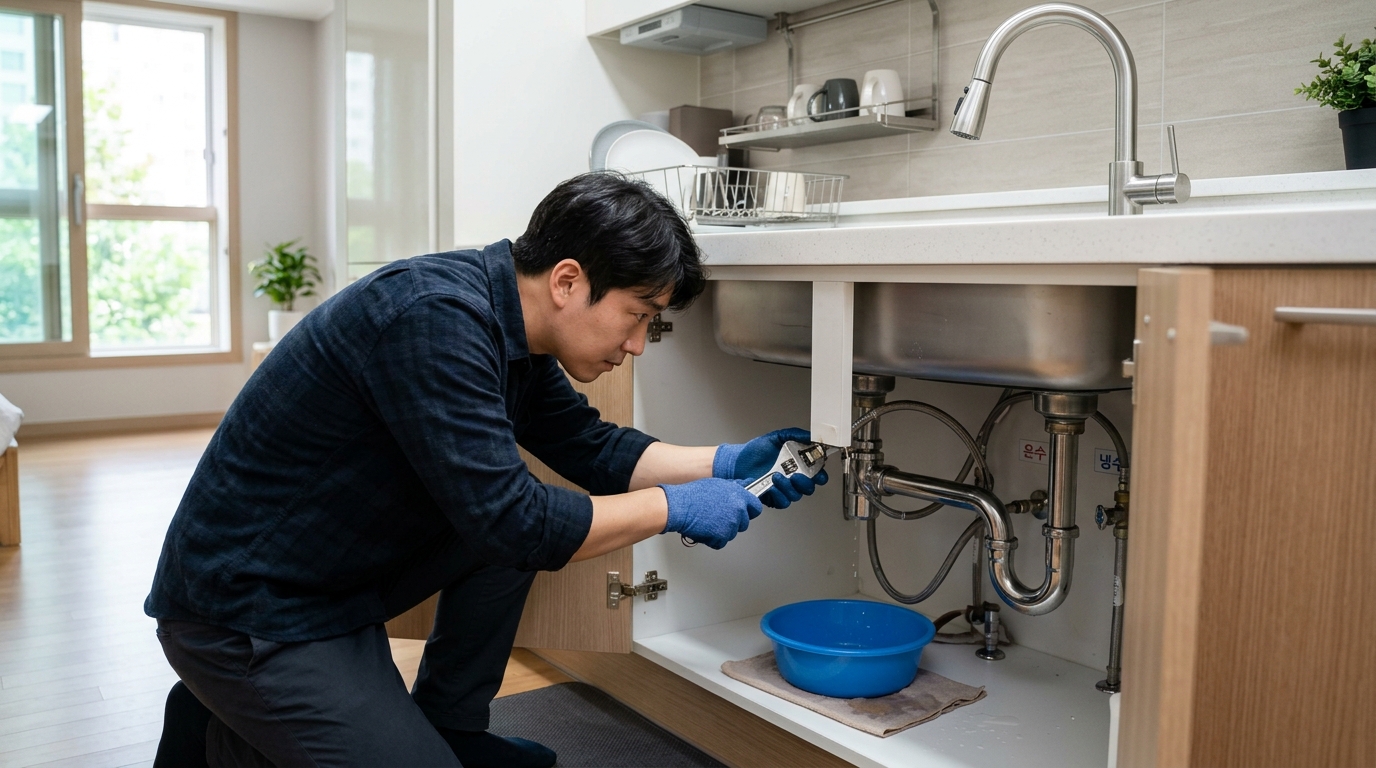
- 5Before starting, shut off both hot and cold angle stop valves completely and open the mixer lever to purge residual pipe pressure into a catch basin.
- 6The discarded faucet body is manufactured from high-grade chrome-plated brass or stainless steel, qualifying as high-value non-ferrous scrap metal.
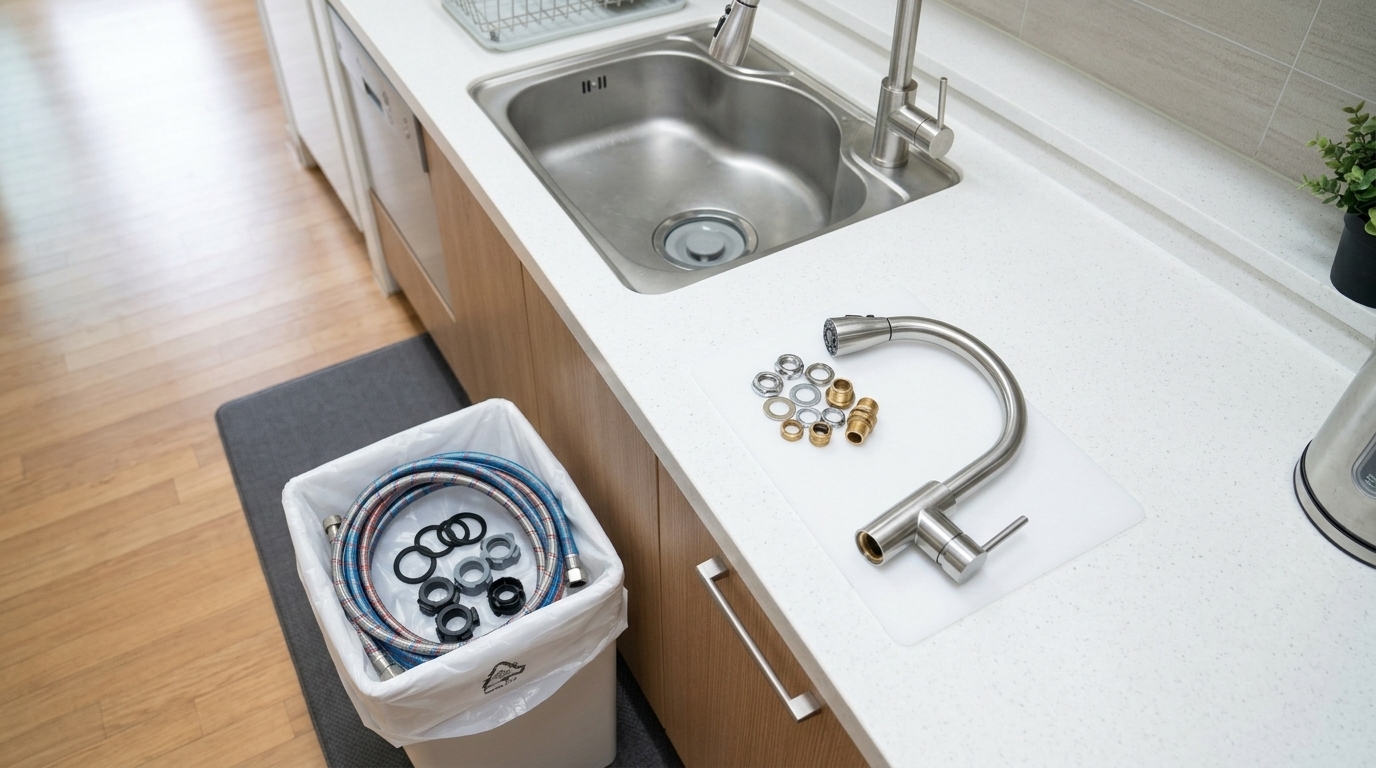
- ✓Deposit the detached metal faucet body into municipal metal recycling bins, while discarding hybrid nylon braided hoses, rubber gaskets, and counterweights inside general municipal trash bags.
Follow these steps
- 1
Step 1 (Shut Off Angle Valves & Purge Residual Water): Open the under-sink cabinet and turn both hot and cold water angle stop valves clockwise until tightly closed. Place a shallow basin and towel beneath the connections, then lift the top faucet lever to both extremes to drain remaining trapped water and relieve line pressure.
- 2
Step 2 (Remove Hose Weight & Disconnect Supply Lines): Detach the black counterweight clamped onto the flexible pull-out sprayer hose (unclipping plastic latches or loosening screws). Use an adjustable wrench to unthread the hexagonal nuts connecting the flexible hot/cold supply lines to the wall valves counter-clockwise, catching drainage in the basin.
- 3
Step 3 (Unscrew Mounting Lock Nut & Extract Faucet Body): Reach into the recess under the sink bowl using a basin wrench or socket tool to loosen the large retaining nut and triangular mounting flange counter-clockwise. Once the nut is completely threaded off, return above the counter and gently pull the entire faucet body straight up along with all connected hoses.
- 4
Step 4 (Scrub Limescale around Sink Hole & Prep Mounting Surface): Inspect the exposed circular cutout hole in the stainless steel countertop. Scrub away decades of caked mineral scale, rust stains, and degraded silicone using a scouring pad and mild cleaner, then wipe completely dry to ensure the new faucet's rubber O-ring creates a hermetic seal.
- 5
Step 5 (Sort Metal Scrap Recycling vs Composite Trash): Segregate components by raw material. The heavy chrome-plated brass or stainless steel faucet body and metal fittings belong in 100% recyclable scrap metal bins. In contrast, internal rubber-lined braided supply lines, hardened silicone O-rings, plastic locking collars, and weighted hose blocks are non-recyclable composite waste that must be sealed inside municipal general trash bags.
Frequently asked question
What should I do if the faucet lock nut in the cramped recess won't budge with an adjustable wrench?
Use an inexpensive specialized basin wrench or tubular faucet lock-nut socket tool (often under $5). Its elongated hollow body slips over dangling supply lines and reaches deep into narrow recesses, providing ample leverage to break frozen nuts loose effortlessly.
Why does water seep slightly from the connector joints after opening the shutoff valves?
The rubber washer inside the female hose coupling is either misaligned/pinched or was crushed from overtightening. Shut off the valve, unthread the nut, check that the gasket is seated flat, and hand-tighten until snug before applying just a quarter to half turn with a wrench.
Where should the hose counterweight be mounted for optimal pull-out retraction?
Mount the counterweight approximately 5–10 cm above the lowest loop of the U-shaped slack hose toward the faucet body. Fastening it too high limits pull-out reach, while placing it too low causes the weight to snag on drain pipes, preventing the spray head from docking cleanly.
Why must the detached faucet body be recycled in scrap metal bins rather than general trash?
Although chrome-plated with a silvery finish, the solid body consists of pure brass (copper-zinc alloy) or heavy stainless steel, representing valuable non-ferrous scrap metal. Recycling facilities prize brass for continuous remelting, so stripping the flexible rubber hoses allows 100% circular recycling in scrap metal bins.