Bathroom Floor Drain Cover & Odor Trap DIY Replacement and Disposal Guide
- 1Floor drain grates (commonly called 'Yuga' in Korean plumbing) embedded in bathroom tiles suffer from rust, chemical corrosion from bleach cleaners, and warped internal plastic water-seal bell traps that allow sewer gas and drain flies into the home.
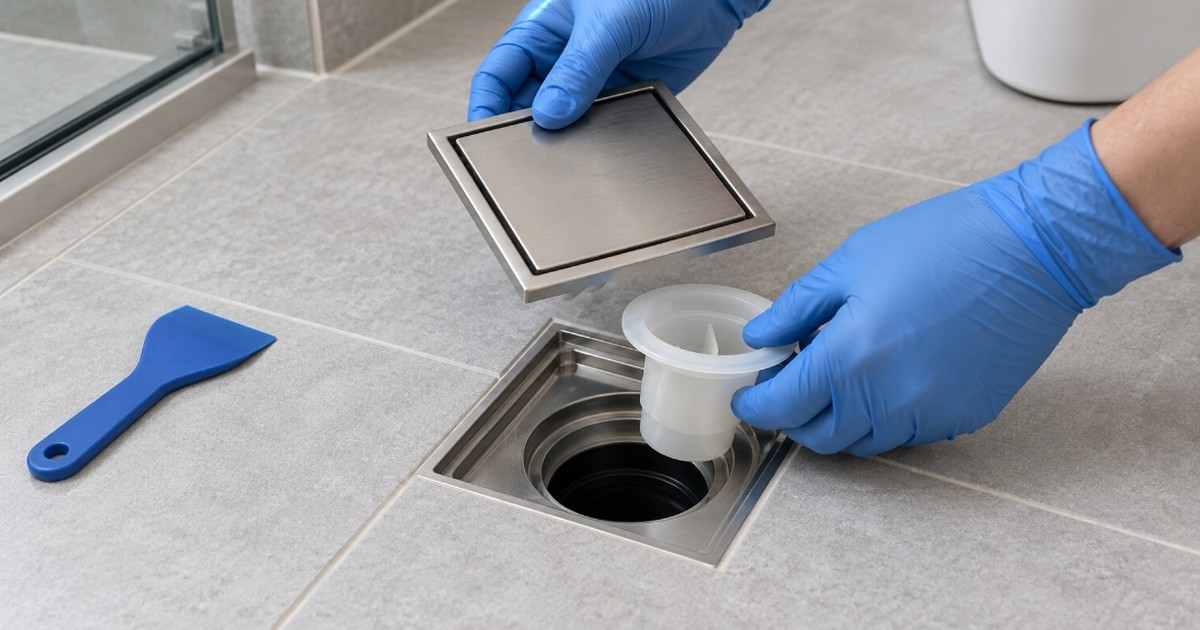
- 2Swapping just the top grate and dropping in a silicone backflow odor trap takes under 5 minutes without tools, while replacing the entire recessed square frame with a modern brushed stainless steel or tile-insert drain requires matching the outer frame dimensions (typically 100x100mm or 120x120mm) and pipe diameter, then sealing the perimeter with white grout cement or neutral bathroom silicone.
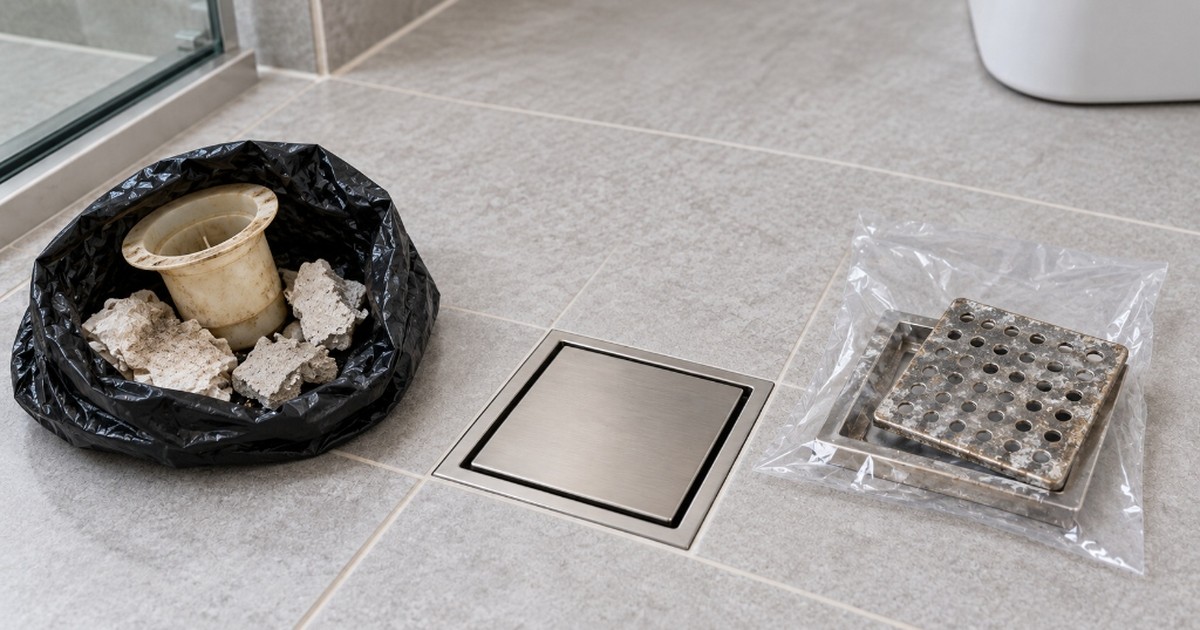
- ✓After replacement, rinse the old stainless steel or brass drain cover and frame for 'Scrap Metal' recycling, while discarding slime-coated plastic bell trap cups, rubber gaskets, and chipped cement chunks in a standard municipal trash bag.
Follow these steps
- 1
1. Measure Existing Drain Frame & Pipe Inner Diameter: Before purchasing parts, measure the outer width and length of the recessed floor drain frame (standard Korean apartments use 100x100mm or 120x120mm squares) using a tape measure. Lift the grate, remove the inner plastic bell trap, and check the inner diameter (typically 40mm–75mm) and depth of the vertical PVC sewer pipe to select a compatible stainless steel drain kit and odor trap.
- 2
2. Remove Strainer & Pry Out Corroded Drain Frame: If only upgrading the grate and odor valve, scrub the existing frame interior with a brush. For a full frame replacement, gently chip away the old white grout around the metal rim using a flathead screwdriver and light hammer taps, then pry the corroded stainless steel housing upward carefully without cracking adjacent porcelain floor tiles.
- 3
3. Clean Recessed Groove & Dry-Fit New Drain Housing: Stuff a rag or newspaper temporarily into the open sewer pipe mouth so chipped mortar debris cannot fall inside and clog the plumbing. Sweep and wipe away dust, loose cement, and moisture from the recessed floor pocket, then dry-fit the new stainless steel drain body to verify it sits 1–2mm lower than the surrounding tile surface for proper water drainage.
- 4
4. Install Backflow Odor Trap & Seal Perimeter: Remove the temporary pipe plug and press the silicone adapter ring of the new one-way odor trap snugly into the sewer pipe opening. Fill the gap around the new drain housing with waterproof white tile grout or anti-fungal neutral bathroom silicone, smooth the joint, and allow 6–12 hours of dry curing before seating the hair strainer and top grate.
- 5
5. Sort Metal Grates into Scrap Metal & Plastic Traps into General Trash: Knock loose mortar off the removed stainless steel or brass drain grate and frame, rinse briefly, and place them in the 'Scrap Metal' recycling bin. Discard the slime-stained old plastic bell trap cup, silicone gaskets, and dirty wipes in a standard municipal general waste bag, and wrap small chipped white cement pieces in thick paper before disposal.
Frequently asked question
Can I block bathroom sewer odors and drain flies immediately without chipping out the floor drain frame?
Yes. If the existing metal drain frame is still firmly anchored in the tile, you do not need to pry it out. Simply lift the top grate, remove the old plastic bell-shaped trap cup, scrub the rim, and insert a retrofit silicone sleeve or magnetic one-way odor trap that opens only when water drains and seals tightly when dry.
What is the difference between a standard stainless steel grate and a 'tile-insert' floor drain?
A standard drain grate exposes a perforated metal grid, whereas a tile-insert floor drain features a reversible flat tray that either holds a cut piece of matching bathroom floor tile or displays a sleek brushed matte stainless steel plate, draining water through a narrow perimeter slot for a seamless hotel-bathroom look.
Should I use white grout cement or bathroom silicone sealant around the new floor drain frame?
If removing the old frame leaves deep mortar voids or requires leveling adjustments, packing the base with quick-setting white tile grout cement provides rigid structural support. If the new frame fits snugly with only a narrow perimeter gap, sealing with anti-fungal neutral bathroom silicone prevents cracking and ensures flexible waterproofing.
Can the removed plastic bell trap cup and hair catcher be recycled as plastic if washed?
No. Internal plastic drain cups and hair strainers are small PVC/ABS parts degraded by soap scum, biofilm, and harsh cleaners, often combined with silicone rings that sorting facilities cannot recycle. Recycle only the stainless steel or brass components as 'Scrap Metal' and discard all plastic/silicone internal parts in a general trash bag.