DIY Bathroom Washbasin Faucet Replacement & Brass Scrap Recycling Guide
- 1Bathroom washbasin single-hole mixer faucets endure daily thermal cycling and mechanical wear, commonly developing cartridge failure, handle leaks, or dripping braided supply lines after 5 to 8 years.
- 2Leaving leaks unaddressed causes sub-basin water staining, cabinet decay, and potential lower-floor structural water damage.
- 3While professional plumbing visits cost $80 to $150, homeowners can complete a direct 1-to-1 swap in 20 minutes using standard 35mm replacement units and a specialized basin wrench.
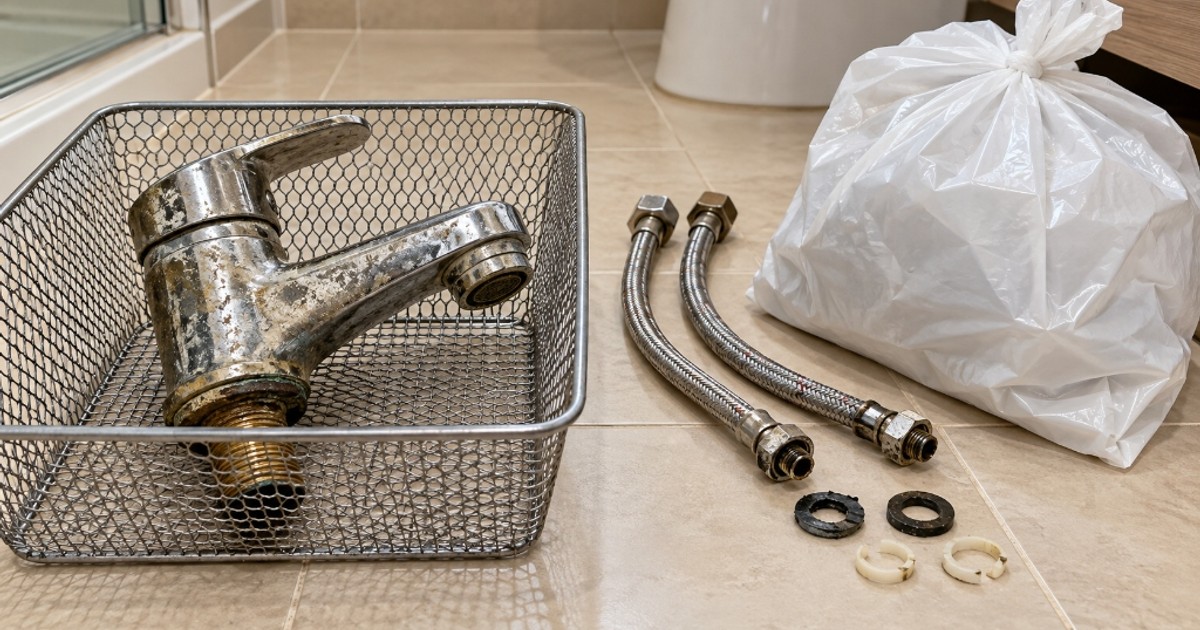
- ✓The detached vintage faucet body is high-value chrome-plated solid brass, suitable for scrap metal recycling, whereas degraded rubber washers and internal rubber-lined braided hoses belong in municipal general waste bags.
Follow these steps
- 1
Step 1 (Shut Off Angle Valves & Drain Residual Water): Turn both hot and cold water angle stop valves beneath the washbasin clockwise until fully shut. Lift the faucet lever to relieve internal pressure and drain remaining water, then position a shallow basin and towel under the pipes.
- 2
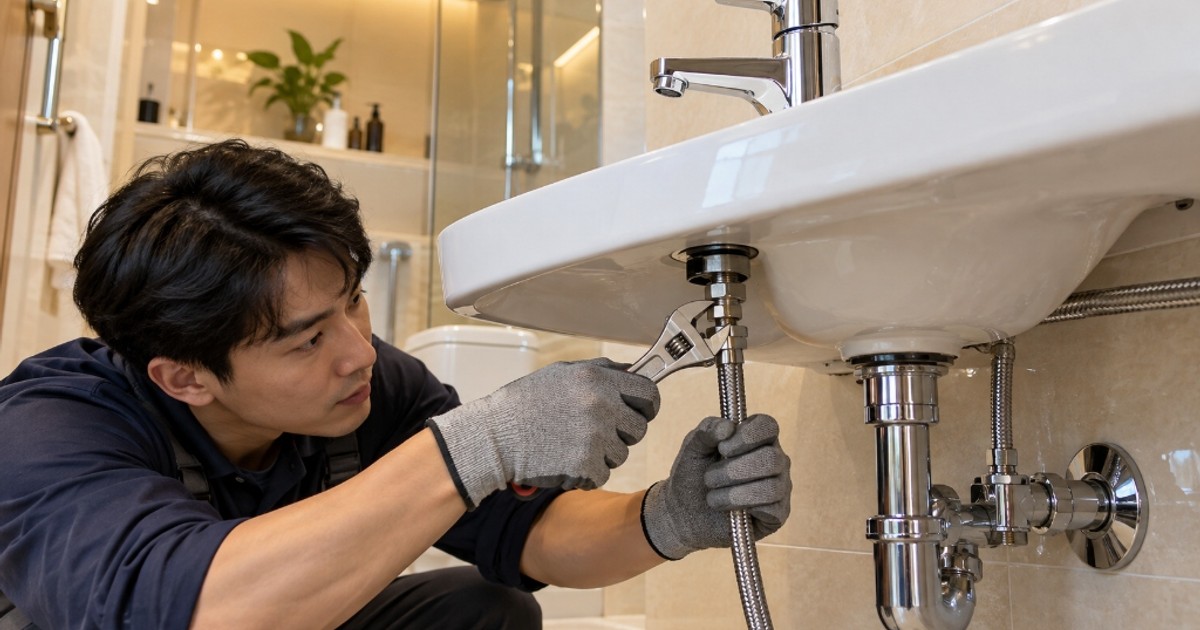
Step 2 (Disconnect Supply Hoses & Unscrew Basin Locknut): Use an adjustable wrench to unscrew the hot/cold braided hose nuts from the angle valves counter-clockwise. Underneath the ceramic basin, locate the brass or triangular plastic locknut and loosen it completely using a basin wrench or water pump pliers.
- 3
Step 3 (Extract Old Faucet & Clean Mounting Hole Grime): Carefully pull the old faucet body and its trailing hoses up through the washbasin hole. Thoroughly scrub mineral limescale, soap residue, and mildew around the mounting orifice using an old toothbrush and mild cleanser, then wipe dry.
- 4
Step 4 (Position New Faucet & Fasten Lower Locknut): Fit the rubber sealing O-ring onto the base of the new faucet, feed the hoses down through the basin opening, and seat the faucet upright. From below, install the rubber washer, metal washer, and locknut, align the faucet above, and tighten firmly with a wrench.
- 5
Step 5 (Connect Hoses, Check for Leaks & Sort Scrap): Hand-tighten the hot and cold supply lines to their matching angle stops, then snug an extra half-turn with a wrench (no Teflon needed on gasketed nuts). Reopen valves to inspect for leaks with a dry tissue. Place the heavy solid brass faucet body into metal recycling, and dispose of degraded hoses and worn rubber gaskets into regular household trash.
Frequently asked question
How do I distinguish between a single-hole faucet and a 4-inch two-hole faucet?
A single-hole faucet mounts onto a single center orifice (around 35mm diameter), whereas a 4-inch centerset unit requires three holes (center drain pull plus hot/cold valves spaced 102mm apart). Because hole spacings differ, they are not directly interchangeable without specialized cover plates; check beneath your basin before purchasing.
Should I wrap Teflon thread seal tape when connecting new supply hoses to angle valves?
No. Modern braided supply hose nuts contain integrated black rubber compression gaskets that seal watertight upon contact. Wrapping Teflon tape around the valve threads can prevent the gasket from seating flush and cause slow leaks; simply thread by hand and snug half a turn with a wrench.
What should I do if the tight space under the basin prevents an adjustable wrench from turning the locknut?
When the cramped gap between the porcelain bowl and wall restricts wrench swing, use a specialized hollow basin socket wrench (or multi-functional faucet tool). Its elongated tubular body slips over hoses to turn locknuts easily from directly below.
How should the detached old faucet body and braided hoses be separated and disposed of?
The heavy solid faucet body is chrome-plated brass (a valuable non-ferrous alloy) and should be sorted into scrap metal recycling after removing plastic aerators. Braided hoses containing internal vulcanized rubber and worn rubber washers cannot be processed and must be bagged with standard household waste.