DIY Front Door Safety Latch & Doorstop Replacement and Scrap Metal Guide
- 1Front steel fire doors in apartments endure thousands of forceful slams, causing the screws on security chain latches and kickdown horseshoe doorstops to loosen and strip out of the thin sheet metal.
- 2Furthermore, the rubber friction pad on the doorstop wears smooth over time, failing to hold heavy doors open against hallway draft pressure.
- 3A common headache during replacement is dealing with stripped screw threads that spin freely without backing out.
- 4To solve this, wedge a flathead screwdriver beneath the screw flange to apply outward prying leverage while reversing the drill slowly, or place a wide rubber band over a stripped Phillips drive recess for extra bit grip.
- 5If the existing sheet metal holes are oversized, stuffing a short segment of nylon zip-tie into the hole before driving new screws provides a rock-solid mechanical bite.
- 6When restoring the door for tenant move-out inspections, fill the screw perforations with steel-reinforced epoxy putty, scrape flush, and touch up with matching gray door paint.
- ✓The removed zinc alloy/stainless latch bars, steel doorstop arms, and mounting screws qualify as 100% recyclable scrap metal, while degraded rubber floor pads and plastic pedal caps must be discarded inside municipal general trash bags.
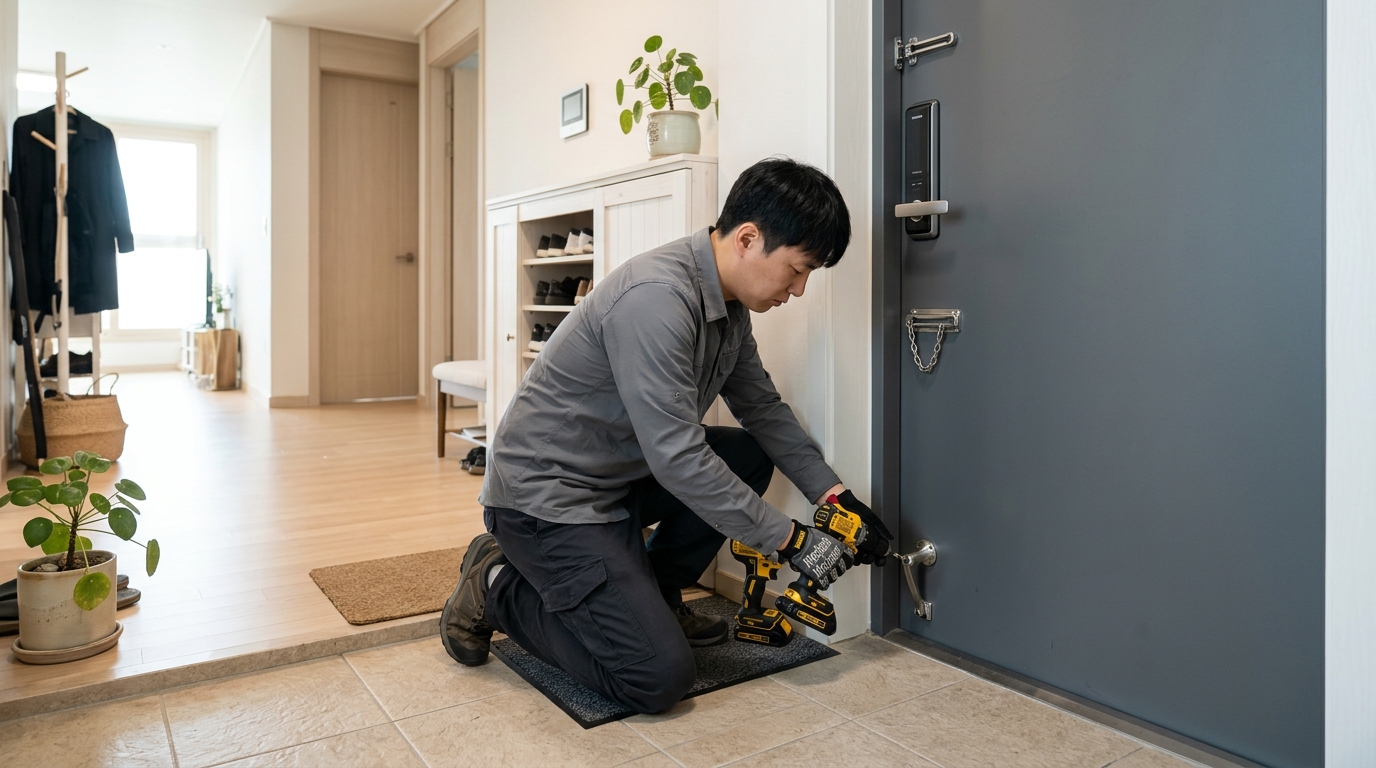
Follow these steps
- 1
Step 1 (Inspect Hardware & Chock Front Door): Wedge a doorstop under the door to prevent swinging during tool operation. Inspect the mounting screws on the upper security latch and lower kickdown stopper for rust or stripped Phillips heads; fit a proper PH2 screwdriver bit.
- 2
Step 2 (Back Out Screws & Extract Stripped Fasteners): Reverse screws counter-clockwise using a cordless drill. If a sheet metal screw spins loosely, wedge a thin flathead screwdriver under the screw collar to exert outward prying pressure while spinning the bit, or clamp the screw head firmly with locking pliers to pull it out.
- 3
Step 3 (Detach Hardware & Clean Mounting Surface): Remove the latch bar, door frame strike plate, and the kickdown doorstop arm from the steel door. Wipe down the grease stains, metal shavings, and grime trapped beneath the old plates using rubbing alcohol and a microfiber cloth.
- 4
Step 4 (Reinforce Loose Screw Holes or Spackle for Move-Out): If reinstalling new hardware over existing holes, insert a 1 cm snippet of a plastic zip-tie into the hole before driving new screws for maximum grip. If removing permanently for apartment move-out restoration, knead steel-reinforced epoxy putty into the holes, scrape flush with a razor scraper, and dab matching touch-up paint over the spot.
- 5
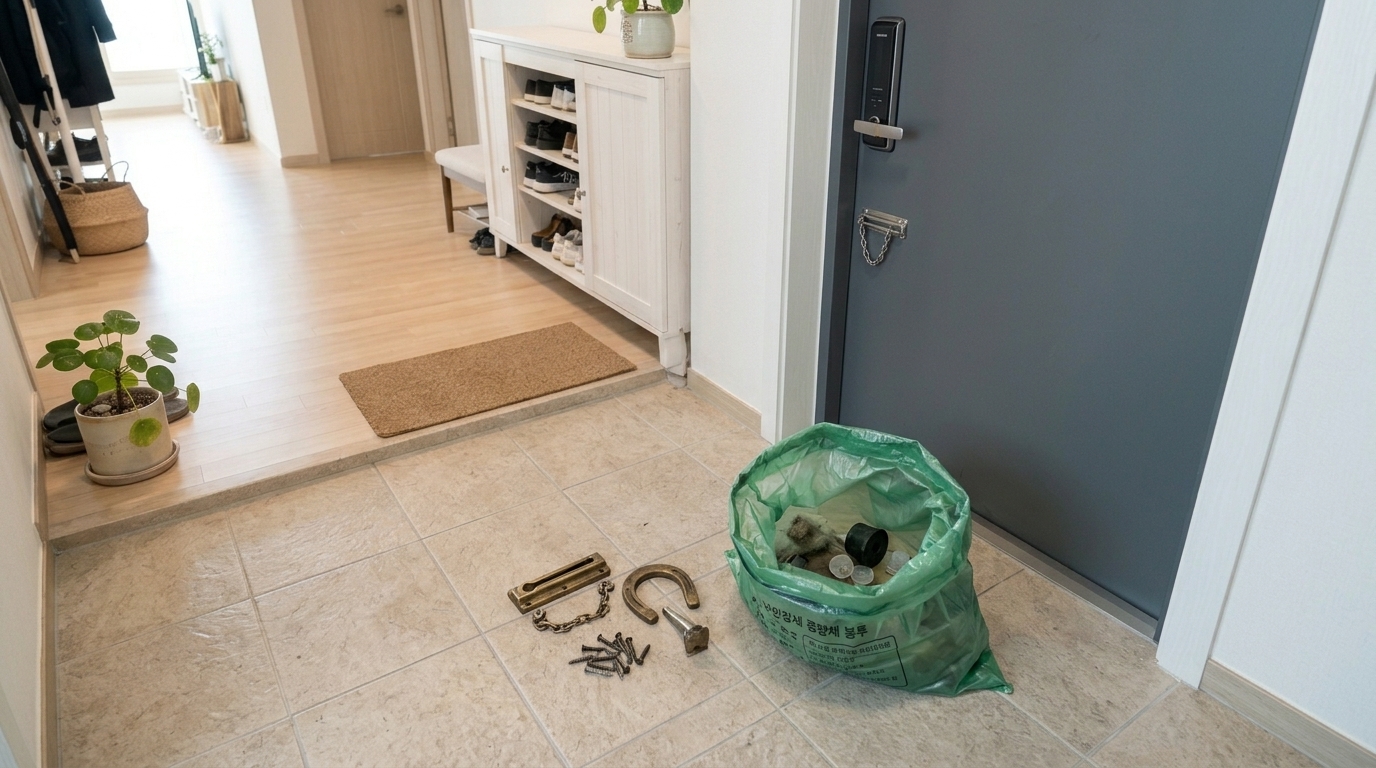
Step 5 (Sort Metal Scraps vs General Trash): Segregate components by raw material. The zinc die-cast or stainless steel latch body, steel doorstop assembly, and metal screws belong in scrap metal recycling. Detach the worn black rubber contact tip and small plastic pedal clips, discarding them inside standard municipal trash bags.
Frequently asked question
How do you back out a screw when the Phillips drive recess is completely stripped?
Stretch a wide rubber band across the stripped screw head and press the driver bit firmly into the recess while reversing slowly; the rubber fills micro-voids and restores torque grip. If still frozen, cut a single straight slot into the screw head using a Dremel rotary wheel or hacksaw blade to back it out with a flathead screwdriver.
What is the correct mounting height from the floor when installing a new kickdown doorstop?
Position the doorstop so that when fully kicked down, the rubber friction foot contacts the floor at a 45–60 degree angle (typically mounting the base plate 1.5–2 cm above the bottom edge of the fire door). Installing it too high fails to grip, while mounting it too low causes the foot to drag and scratch tile floors.
How can I solidly secure new screws when the existing fire door sheet metal holes are stripped oversized?
Upgrading to a slightly thicker gauge sheet metal screw (e.g., from #8 to #10) provides the most reliable bite. Alternatively, inserting a short 1 cm piece of a plastic zip-tie into the hole before driving the original screw expands inside the hollow cavity, creating a heavy-duty mechanical anchor.
Will municipal recycling crews pick up detached doorstops and safety latches as scrap metal?
Yes, zinc die-cast, stainless, and forged steel hardware are premium scrap metal resources. Simply pry off the bottom black rubber friction pad into general trash, place the metal arms and screws into a clear bag, and drop it into your community scrap metal recycling bin for 100% circular reuse.