Shower Head & Hose Citric Acid Descaling: Unclogging Spray Nozzles & Restoring Water Pressure
A zero-waste maintenance guide to dissolving stubborn limescale mineral deposits blocking shower nozzles and removing soap scum from flexible metal hose crevices using a warm citric acid soak and detail brushing to restore full water pressure.
🛠️ Required Tools & Cleaning Agents
🔄 Alternative Detergents & Eco Tips
- Citric acid powder → Alt: White distilled vinegar (1:1 warm water to vinegar mix) (If the strong vinegar odor is undesirable, odorless food-grade citric acid dissolved in warm water provides equal descaling power with no scent.)
- Washbasin → Alt: Large ziplock bag & rubber band (If the shower head cannot be unscrewed from the hose, fill a ziplock bag with the citric acid solution, slip it over the head, and secure tightly with a rubber band.)
- Detail cleaning toothbrush → Alt: Interdental brush & wooden toothpick (A wooden toothpick or fine interdental brush works wonders for physically poking through stubborn mineral plugs lodged inside micro spray holes.)
✨ Step-by-Step Care Instructions
Step 1: Safe Disassembly and Mesh Filter Inspection
- Put on rubber gloves and rotate the lower connector nut counterclockwise to detach the head from the hose.
- If it is tightly jammed, wrap a dry towel around the grip or use an adjustable wrench with gentle pressure.
- Remove the inner rubber sealing O-ring washer and the micro-mesh filter screen from the connector.
- For models with a detachable front faceplate, unscrew the outer bezel to separate the spray plate.
Step 2: Inspecting Clogged Nozzles and Flexible Hose Grooves
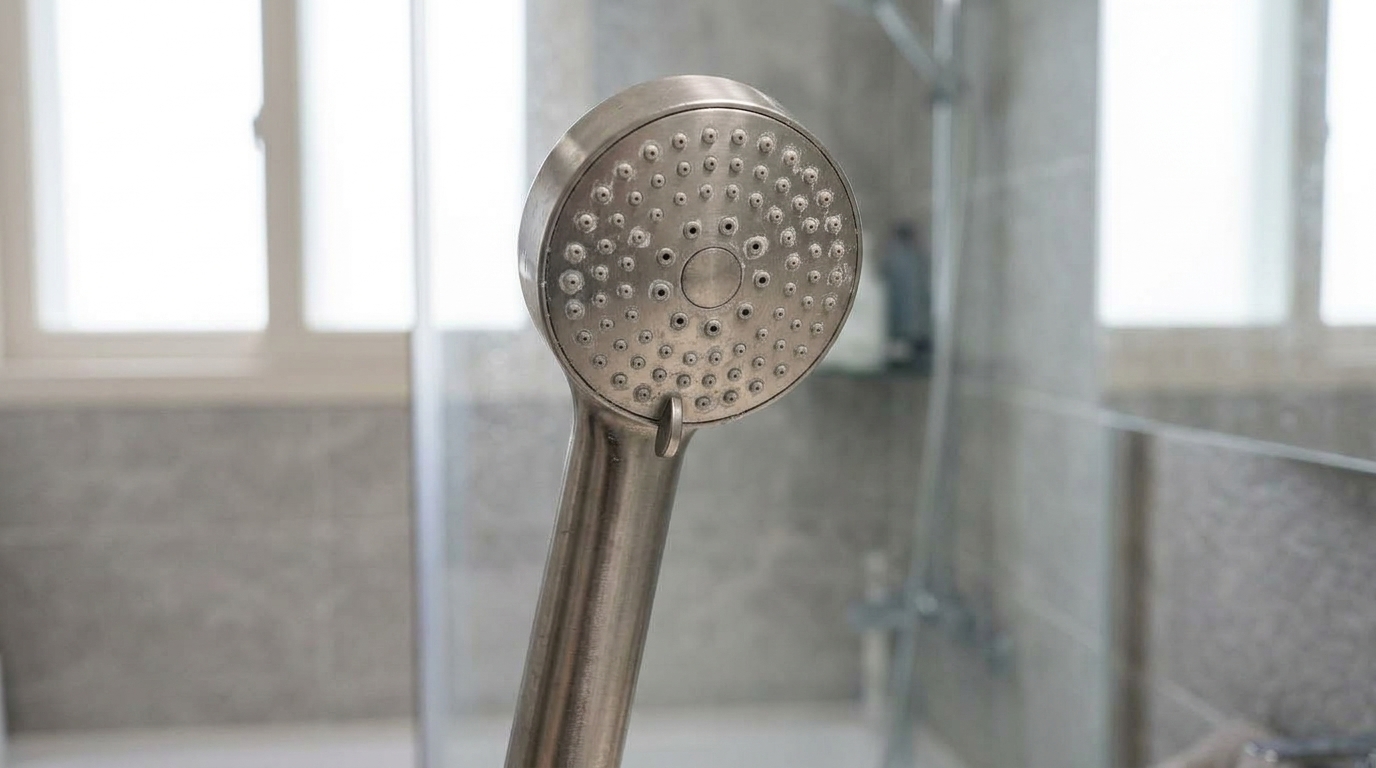
- Visually inspect the chalky white mineral scale deposits hardening over the micro spray nozzles.
- Stretch the flexible metal spiral hose to inspect gray soap scum and pink biofilm trapped between ribs.
- Because water scale consists of alkaline minerals, ordinary neutral dish soap cannot dissolve it—acidic citric acid is required.
- Never poke the holes forcefully with metal needles or awls as this permanently distorts the fine spray orifices.
Step 3: 20-Minute Warm Citric Acid Soak and Detail Scrubbing
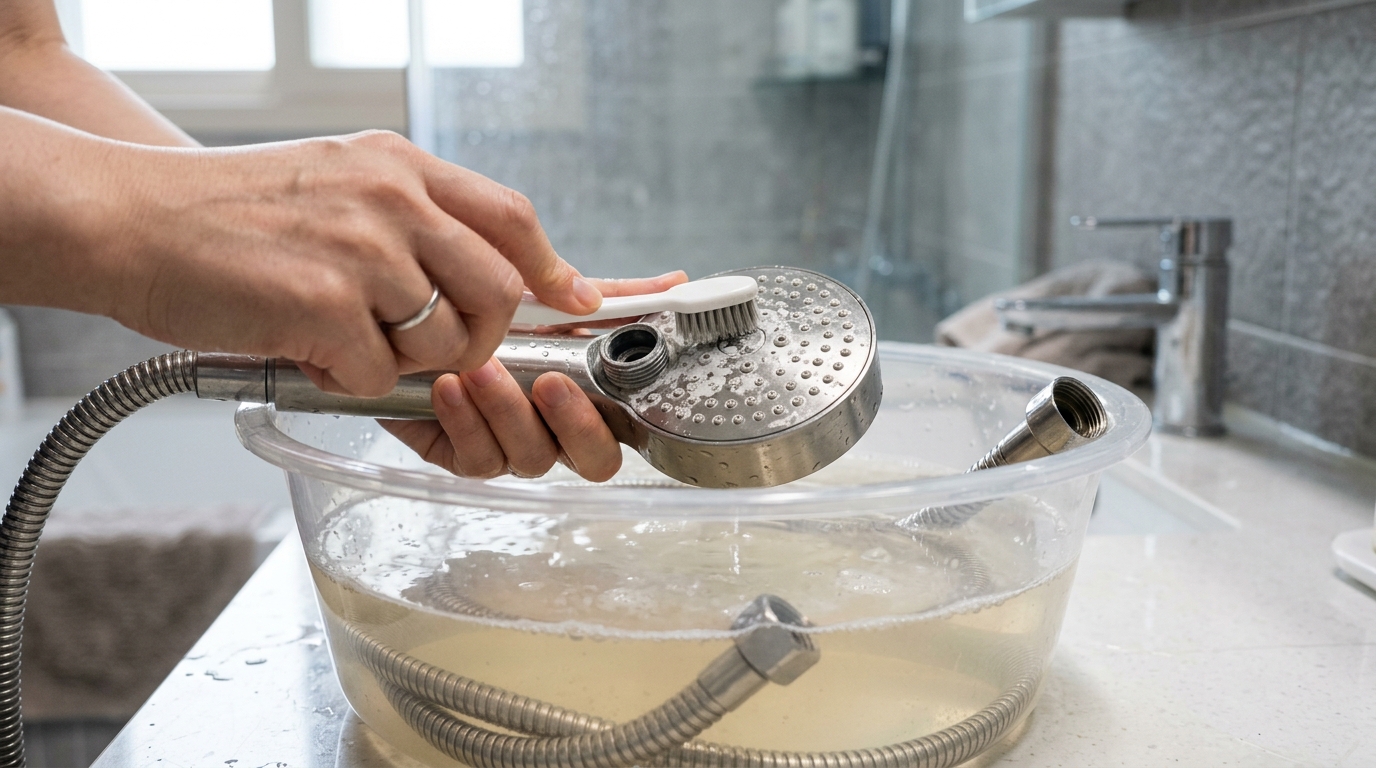
- Fill a washbasin with warm water (45-50°C / 113-122°F) and fully dissolve 2-3 tablespoons of citric acid.
- Submerge the disassembled shower head, faceplate, and metal hose completely and let sit for 20 minutes.
- Once the acidic bath softens the mineral bonds, use a fine-bristle toothbrush to scrub the nozzle plate in circular motions.
- Gently massage the hose ribs in the solution and brush along the spiral seams to lift dissolved soap scum.
Step 4: Hot Water Reverse Flush and Residual Scale Purge
- Hold the shower head upside down under running warm tap water and shake gently to flush out dislodged scale flakes.
- For any persistently clogged individual nozzle hole, gently poke through with a wooden toothpick to dislodge softened debris.
- Thoroughly rinse both the shower head and hose with plenty of fresh water to eliminate any acidic citric residues.
- Gently clean the separated rubber O-ring washer and mesh screen under running water using the toothbrush.
Step 5: Reassembly with O-Ring Seal & Testing Restored Water Pressure
- Reinsert the mesh filter and rubber O-ring washer flat inside the connector socket in the correct orientation (vital to prevent leaks).
- Thread the shower head clockwise onto the hose connector and hand-tighten firmly without over-torquing.
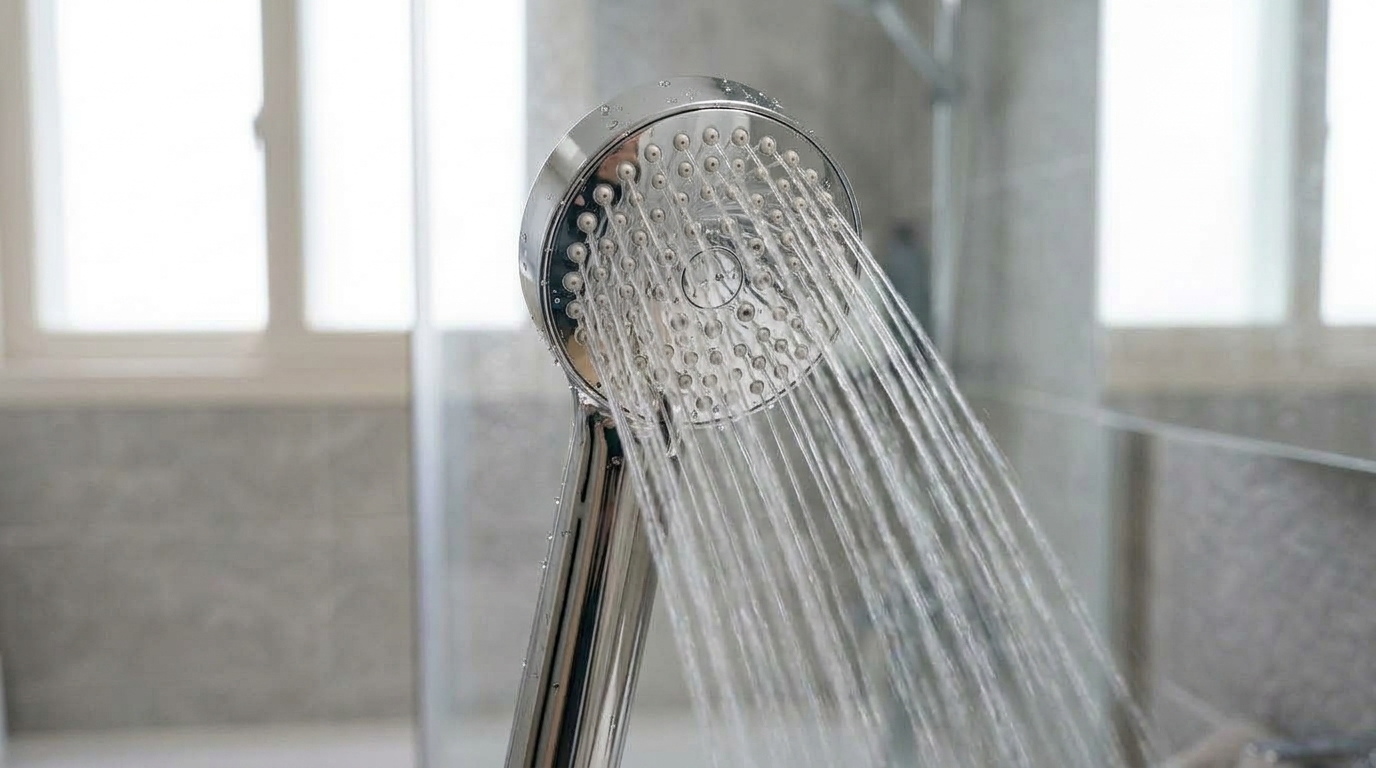
- Turn on the water to test flow dynamics and confirm powerful, straight, and evenly distributed water jets.
- Buff the exterior metal casing and hose with a dry microfiber cloth to reveal a sparkling, mirror-like chrome shine.
🩺 Self-Diagnosis Guide
✅ Can be restored with care
- White chalky mineral scale deposits (calcium/magnesium) crusting around micro spray nozzles.
- Weakened water pressure or erratic spray streams shooting sideways due to clogged holes.
- Slippery soap scum and pink bacterial biofilm forming in flexible metal hose grooves.
- Gritty mineral buildup along the threaded connector causing stiffness during unscrewing.
- Structural integrity intact with zero cracking, stripped threads, or internal valve failure.
❌ Reached end of lifespan (Proper disposal required)
- Cracked plastic housing or broken casing causing continuous high-pressure leaks.
- Damaged internal on/off toggle switch or stripped flow control cartridge spinning loosely.
- Uncoiled outer metal shielding causing the inner rubber core tube to bulge and burst.
- Severely corroded or stripped connector threads preventing disassembly with ongoing water leakage.
⚠️ Important Safety Precautions
- NEVER mix chlorine bleach with acidic citric acid: Doing so releases toxic chlorine gas that causes severe respiratory injury.
- Do NOT use wire sponges or steel scouring pads: Scrubbing damages the chrome electroplating layer and accelerates corrosion.
- Do NOT poke spray orifices with metal needles or steel awls: Forcing metal tools deforms the micro-apertures, ruining uniform flow.
- Avoid over-tightening connector nuts with metal pliers: Excessive torque crushes the rubber gasket or cracks plastic threads, causing leaks.
💡 Filtered Showerhead Replacement Guide: 3 Key Technical Specs Before Buying
♻️ Reached end of lifespan?
Check local disposal regulations instead of forcing reuse.
❓ Frequently Asked Questions (FAQ)
Q. Can I use baking soda or sodium percarbonate instead of citric acid to dissolve limescale?
A. No. Tap water limescale and mineral deposits are alkaline in nature, so alkaline cleaners like baking soda or oxygen bleach cannot chemically break them down. You must use an acidic agent like food-grade citric acid or distilled white vinegar to neutralize and dissolve the chalky calcium buildup.
Q. What should I do if the shower head is completely stuck to the hose and won't unscrew?
A. Mineral crusting and dried soap scum often cement the threads together. Wear grippy rubber gloves for extra traction, run warm water over the connector joint for 1-2 minutes to expand the metal, wrap a dry towel around the nut, and gently turn with an adjustable wrench. Alternatively, slip a ziplock bag filled with citric acid solution over the head and tie it with a rubber band to soak in place.
Q. Why is my shower water pressure still weak even after a full citric acid descaling?
A. Rust sediment from municipal pipes may be lodged in the inlet mesh screen, or the master pressure-reducing valve / wall shut-off valves may be partially closed. If the internal flow-control switch or stop valve cartridge has internally failed, descaling cannot fix mechanical damage and the shower head must be replaced.
Q. How do I properly dispose of or recycle an old, broken shower head and metal hose in Korea?
A. Shower heads consist of inseparable mixed materials (chrome-plated plastic, rubber gaskets, and stainless mesh), so they cannot be recycled as pure plastic and must be discarded in a standard municipal volume-rate trash bag (Jongnyangje). Flexible metal hoses also contain an inner rubber conduit and belong in general trash.