DIY Ceiling Laundry Drying Rack Removal & Scrap Metal Recycling Guide
- 1Ceiling-mounted pulley clothes drying racks in apartment balconies frequently suffer from snapped nylon cords, seized pulley rollers, and corroded poles due to years of heavy wet laundry weight and ambient humidity.
- 2When removing an old rack for replacement or apartment move-out restoration, following the correct disassembly sequence is vital for safety.
- 3Severing the lift cord prematurely causes heavy metal poles to plunge down simultaneously, cracking floor tiles or causing severe bodily injury.
- 4Always lower the scissor arms completely and dislodge each horizontal pole individually from its bracket clips onto the floor first.
- 5Next, back out the concrete ceiling anchor screws using an impact drill or wrench; if an anchor spins loosely in place, clamp the screw head firmly with needle-nose pliers and pull downward while reversing.
- 6Spackle or silicone-seal the exposed drill holes to restore the ceiling finish.
- ✓For eco-friendly disposal, pure aluminum or stainless steel poles and steel bracket arms qualify as 100% recyclable scrap metal, whereas worn nylon cordage and composite plastic pulleys must be discarded inside standard municipal trash bags.
Follow these steps
- 1
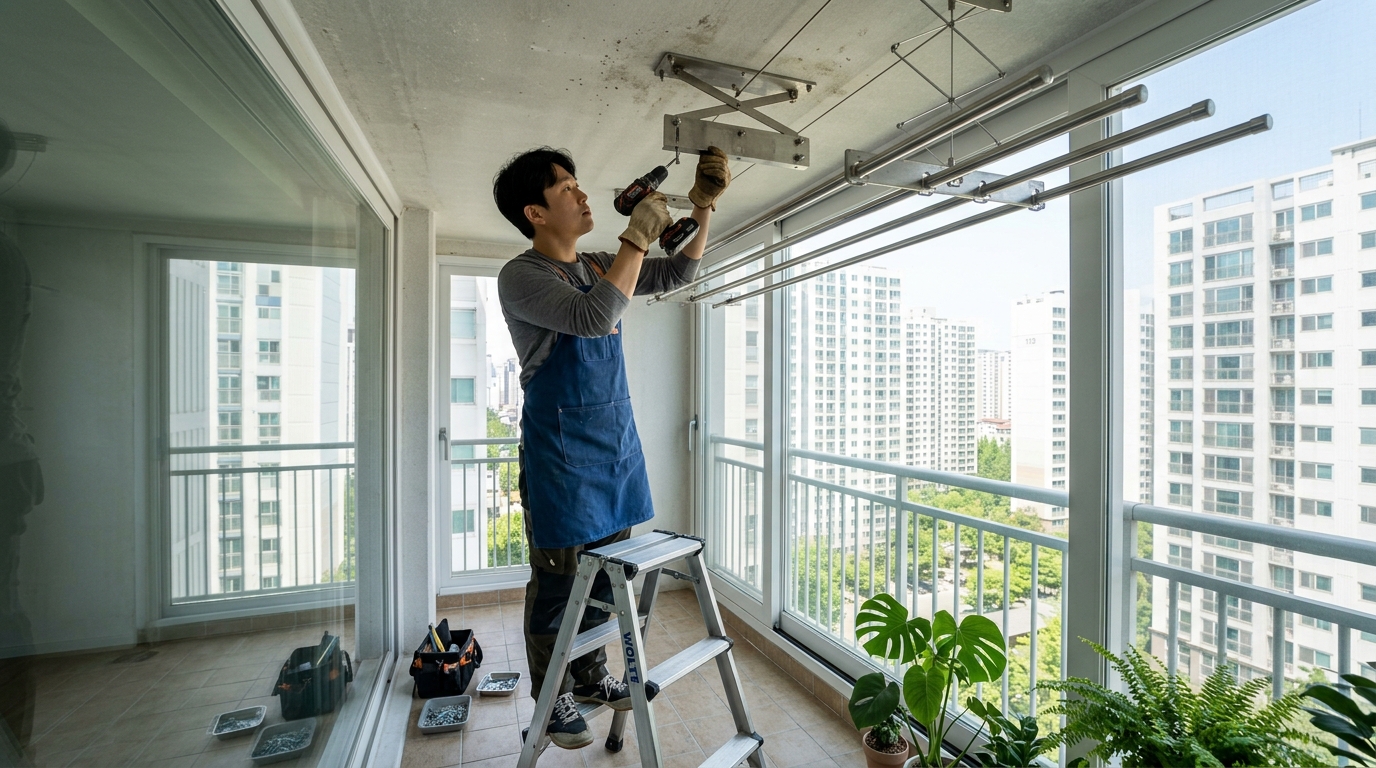
Step 1 (Safety Setup & Individual Pole Removal): Wear work gloves, safety glasses, and position a stable step stool. Release the tension cord to lower the accordion scissor arms to their lowest point. Before cutting any ropes, lift each horizontal drying rod out of its bracket retaining clips one by one and place them safely onto the floor (preventing free-falling poles and broken floor tiles).
- 2
Step 2 (Cut Worn Lift Cords & Remove Pulleys): With all poles removed and zero load on the structure, use shears or wire cutters to snip the old nylon lift cords. Pull the cords completely through the ceiling pulleys and wall guide cleats, coiling them neatly for disposal.
- 3
Step 3 (Unfasten Ceiling Anchor Screws & Detach Brackets): Using a cordless drill or screwdriver, back out the mounting anchor screws counter-clockwise from the concrete ceiling. Firmly support the metal scissor bracket with one hand while loosening the final screw to prevent the bracket assembly from swinging down.
- 4
Step 4 (Extract Loose Wall Anchors & Spackle Holes): If plastic wall plugs or metal anchors remain stuck or protrude from the ceiling, grasp the exposed rim with needle-nose pliers, wiggle gently side-to-side, and pull downward. Inject white paintable acrylic caulk or drywall spackle into the drill holes and smooth flush with a putty knife for seamless rental move-out restoration.
- 5
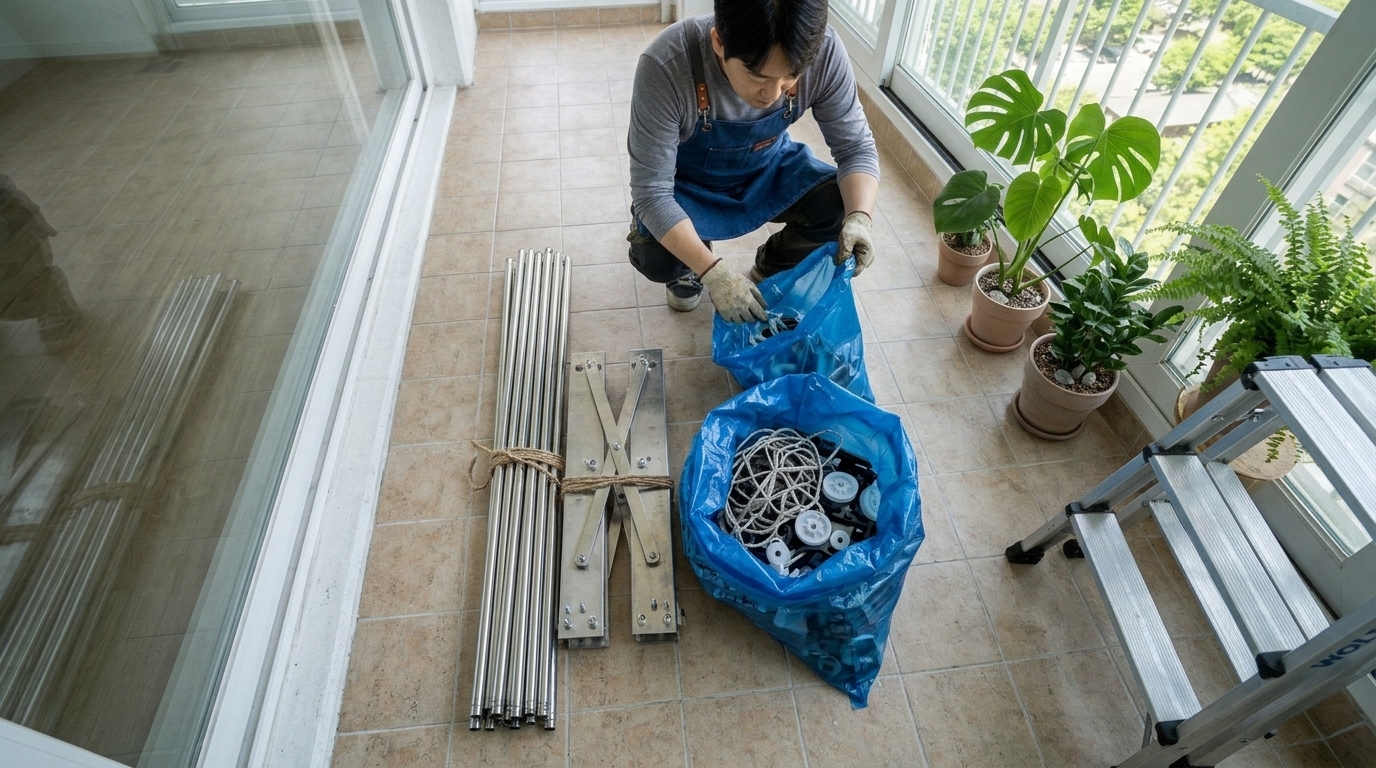
Step 5 (Material Sorting: Scrap Metal Recycling vs General Trash): Bundle the lightweight aluminum/stainless steel poles and steel bracket scissor arms together for 100% scrap metal recycling (pop off plastic end caps if possible). Discard frayed nylon cords, plastic roller wheels, rubber stoppers, and extracted wall plugs inside standard municipal trash bags (or purchase a local ₩2,000–₩3,000 bulky waste sticker if discarding the unseparated assembly whole).
Frequently asked question
Can I reuse the existing ceiling drill holes when installing a new drying rack?
Yes, if the hole spacing of your new mounting bracket matches the existing holes and the wall anchors remain tight, reusing them is ideal. However, if the old holes are loose or stripped, insert larger-gauge wall plugs or drill new anchor holes 5–10 cm away into solid concrete using a 6mm hammer drill bit.
Will recycling collectors take disassembled aluminum or stainless drying poles?
Yes, disassembled aluminum and stainless poles are high-grade scrap metal. Tie the rods and metal brackets securely with string or tape and place them next to your residential scrap metal bin for free recycling. However, if discarded whole with tangled ropes and plastic parts intact, you must purchase and attach a local bulky waste sticker (₩2,000–₩3,000).
How do you extract a ceiling screw when it spins freely inside the plastic anchor?
When a screw spins without gripping, wedge a flathead screwdriver or scraper under the screw head to apply downward prying pressure while backing out the screw with a drill. Once the screw is out, grasp the exposed rim of the plastic anchor plug with needle-nose pliers, twist gently side-to-side, and pull downward.
What spackling material provides the most seamless finish for ceiling drill holes?
Water-based drywall spackle or tube wall repair filler works best. Fill the hole completely, then scrape flush with a putty knife or rigid plastic ruler. Once dry, dab a tiny amount of matching white interior paint over the spot with a small brush to pass move-out property inspections flawlessly.