DIY Kitchen Cabinet Damper Hinge Replacement & Scrap Metal Guide
- 1Kitchen cabinet doors frequently suffer from failed hydraulic dampers causing harsh slamming or stripped particleboard (PB/MDF) screw holes leading to sagging doors due to humidity and repeated opening cycles.
- 2By replacing old hinges with standard 35mm cup concealed hinges equipped with integrated soft-close dampers (matching full overlay, half overlay, or inset specifications), you can restore smooth, quiet operation without hiring a professional.
- 3If the mounting screws spin loosely, reinforce the holes using wooden toothpicks dipped in wood PVA glue or install stainless steel hinge repair plates.
- 4Finish by adjusting the 3-way alignment screws to balance horizontal gap, vertical height, and door depth.
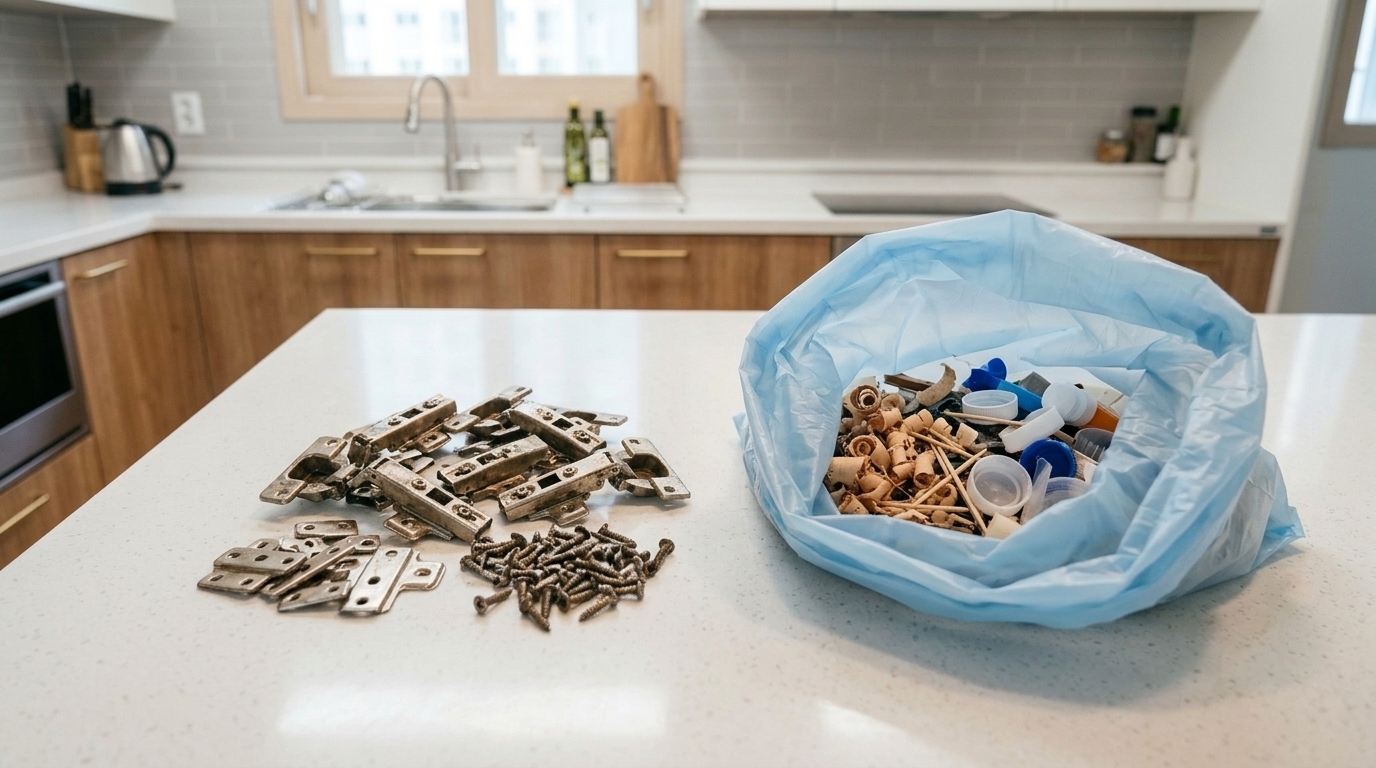
- ✓The removed old metal hinges are recyclable scrap metal (steel/zinc alloy) and should be cleared of plastic accessories before placing in curbside scrap metal recycling.
Follow these steps
- 1
Verify the cup diameter (standard 35mm) and overlay type (full overlay, half overlay, or inset where door sits flush inside the carcass frame). Procure identical soft-close hydraulic cup hinges along with wood PVA glue, wooden toothpicks, stainless hinge repair plates (if needed), and a #2 Phillips screwdriver.
- 2
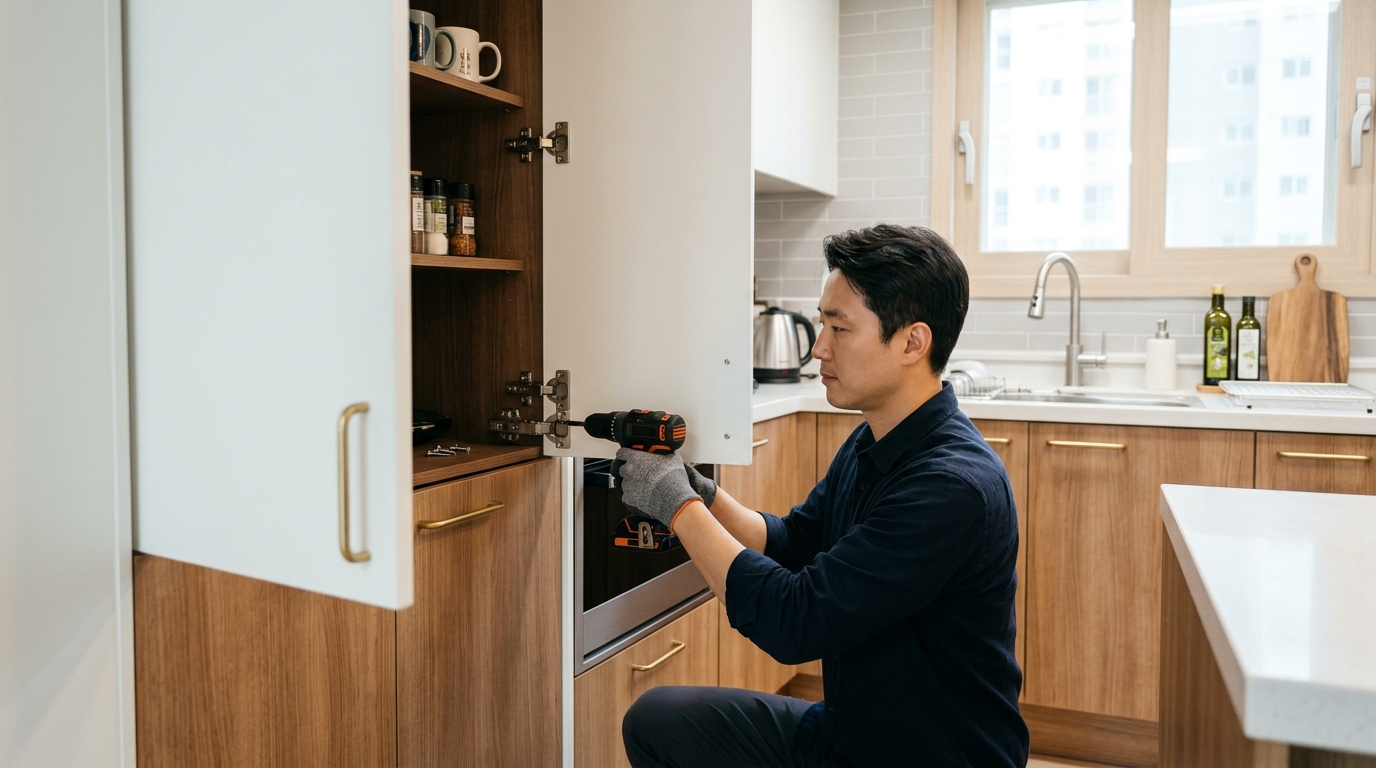
Place a thick book or cardboard block beneath the cabinet door to support its weight and prevent sagging. Back out the carcass side mounting plate screws first, followed by the two 35mm door cup screws, then carefully lift away the cabinet door and set aside the removed worn hinges.
- 3
If particleboard (PB/MDF) screw holes are stripped and spin loose, squeeze wood PVA glue into the cavity, pack it tightly with 2-3 wooden toothpicks or wooden dowel splinters, allow to cure, and trim flush with a utility knife to create solid wood anchor mass; for severely blown-out wood, install a stainless steel hinge reinforcement mounting plate.
- 4
Press the new 35mm damper hinge cup squarely into the door recess and drive in mounting screws. Hang the door onto the carcass plate. Using a handheld screwdriver, fine-tune the 3-axis adjustment screws: depth screw (in/out flushness), lateral eccentric screw (left/right gap between adjacent doors), and vertical slot screws (height alignment) until lines match seamlessly.
- 5
Discarded steel and zinc alloy hinges along with metal screws are 100% recyclable scrap metal. Pry off any non-metallic plastic dampers, clips, or cosmetic covers to toss into general municipal waste, then deposit all metal hardware into curbside scrap metal / can recycling bins. Sweep up drilled sawdust and trimmed wood splinters into regular trash.
Frequently asked question
Why won't my cabinet door close all the way, or closes too slowly after installing damper hinges?
Some heavy-duty hydraulic dampers generate excessive backpressure if installed on lightweight doors, or when only one hinge out of two has a damper. Ensure all hinges on the door share the identical damper rating. If your hinge features a damper adjustment slider or valve switch on the arm, slide it to a lower tension setting for smooth full-close action.
How do I distinguish between Full Overlay (outdoor) and Inset (indoor) hinges?
Observe how the door rests against the cabinet carcass frame when closed: if the door completely conceals the carcass edge (15-18mm thickness), it is a Full Overlay (straight arm / 0mm crank). If adjacent doors share one middle partition, it is a Half Overlay (half crank / 9mm). If the door sits flush inside the carcass frame with edges visible, it is an Inset hinge (full crank / 16mm).
What should I do if the screw hole is too blown out to fix with toothpicks?
If particleboard is severely blown out and splintered over a wide area, wooden toothpicks will not provide adequate bearing area. Purchase a stainless steel 'Hinge Repair Plate' kit. Fasten the broad multi-hole metal plate over the damaged wood using peripheral screws, then anchor your new damper hinge directly to the threaded metal inserts for an industrial-strength repair.
How do I discard old hinges if there is no dedicated scrap metal bin?
In apartment complexes, place old hinges directly into the designated scrap metal / metal cans bin. For detached homes or studio zones without dedicated metal bins, accumulate metal hinges and screws in a transparent bag clearly labeled 'Scrap Metal' (고철) and set it out on recyclable collection nights for municipal scrap sorting.