DIY Hydraulic Door Closer Replacement & Scrap Metal Recycling Guide
- 1When a steel fire door slams shut violently or drips black hydraulic fluid from its cylinder, the internal piston seals have blown, indicating irreversible failure.
- 2A depleted door closer loses all dampening control, risking structural door frame deformation, electronic lock destruction, and severe finger pinch injuries, requiring immediate replacement.
- 3Standard residential doors in Korea universally adopt Samhwa King K630 (regular closing) or K1630 (90-degree hold-open) mounting patterns, allowing effortless 1:1 replacement with identical screw spacing.
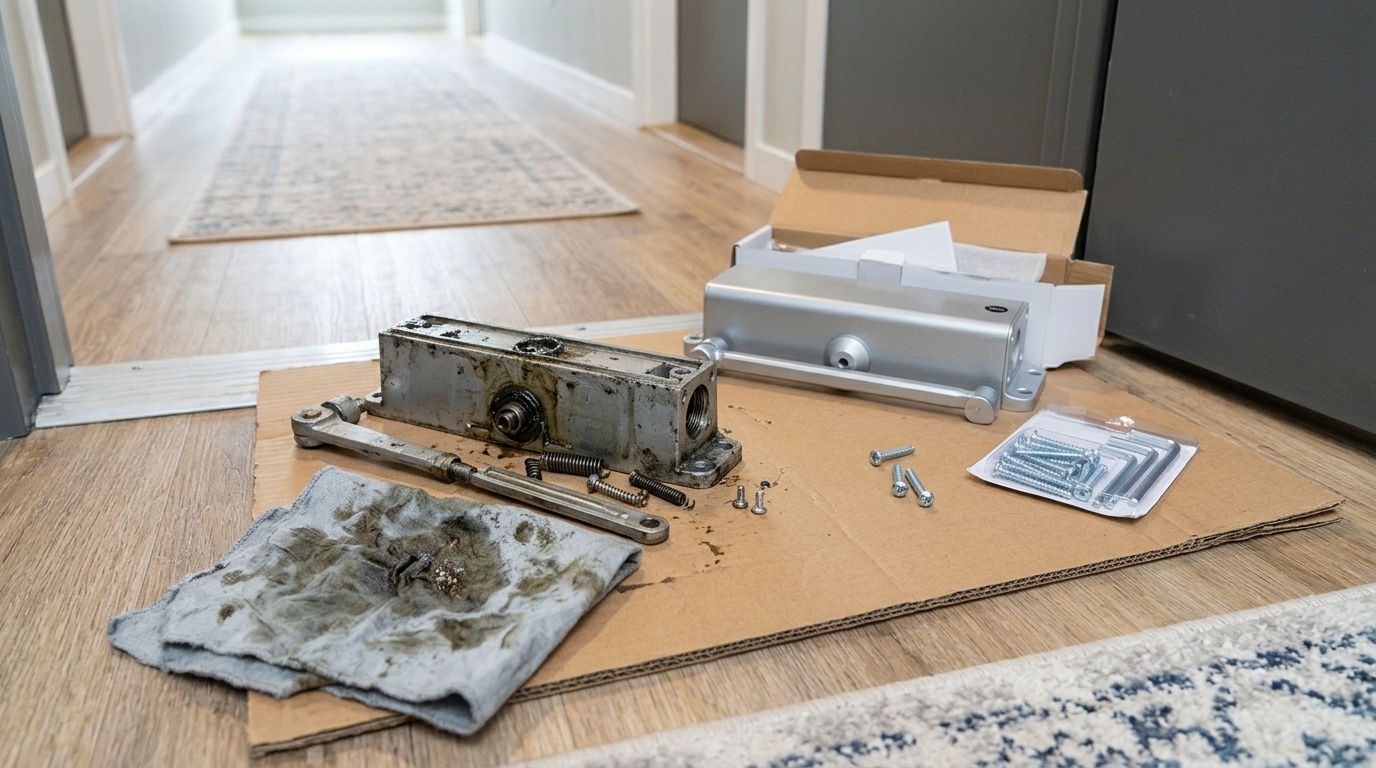
- ✓The retired metal body must be thoroughly wiped clean of residual mineral oil and sorted into municipal curbside scrap metal recycling, while oil-soaked rags and gloves belong in regular general trash.
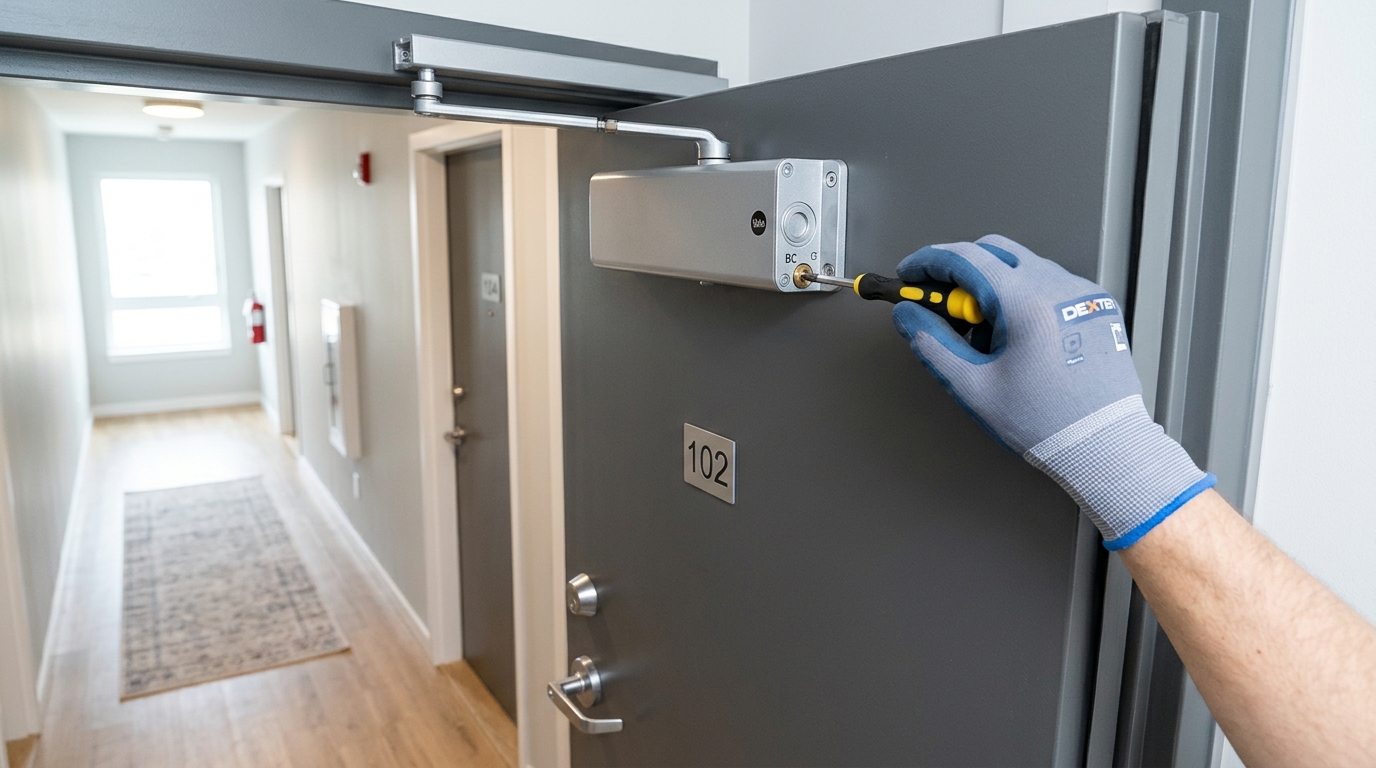
Follow these steps
- 1
Step 1 (Inspect Hydraulic Leakage & Match Replacement Specs): Check for dark mineral oil seepage along the cylinder underside and confirm complete loss of dampening. Inspect the existing door jamb mounting bracket type (straight flat vs. L-shaped angle bracket) and choose between standard auto-closing (King K630) or 90-degree hold-open stop arm (King K1630) models.
- 2
Step 2 (Uncouple Connecting Joint Arms & Unbolt Main Body): With the door cracked open slightly, loosen the center joint bolt connecting the main arm to the secondary link arm. Then use a Phillips screwdriver to back out the four mounting screws securing the closer body to the fire door panel and detach the failed unit.
- 3
Step 3 (Degrease Door Surface & Remove Residual Oil Sludge): Thoroughly clean black hydraulic fluid stains from the door surface using isopropyl alcohol, degreaser spray, or mild detergent with disposable towels. Leaving oily residue degrades new mounting stability and attracts airborne grime.
- 4
Step 4 (Mount New Closer Body & Connect Joint Arms): Align the new main arm parallel to the new closer cylinder body over the splined spindle shaft, securing it tightly with the provided washer and hex screw. Bolt the closer body into the preexisting door screw holes, align the main arm with the frame link arm, and secure the pivot joint screw firmly.
- 5
Step 5 (Calibrate Dual-Stage Speed Valves & Recycle Scrap Metal): Use a flathead screwdriver to fine-tune valve 1 (closing sweep from 180° to 30°) and valve 2 (latch action from 30° to 0°); turn clockwise to slow down or counterclockwise to speed up. Never back screws out past flush. Clean all grease off the retired aluminum closer body and steel arm to drop them into curbside scrap metal recycling, bagging oily rags into general municipal trash.
Frequently asked question
Can leaked hydraulic fluid inside a door closer be refilled or repaired?
No, it cannot be refilled. Hydraulic door closers rely on hermetically sealed chambers. Leaking oil indicates that internal synthetic rubber seals and O-rings have deteriorated beyond repair, permanently destroying pressure regulation. Refilling is impossible; total hardware replacement is mandatory.
What is the key difference between King K630 (standard) and K1630 (hold-open)?
Both share identical dimensions and screw holes. The K630 continuously closes the door automatically from any angle. The K1630 features an internal friction stop mechanism that holds the door open when swung past 90 degrees, making it ideal for households that frequently air out interiors or move large parcels.
Do I need to drill new holes into the steel door frame when installing a new door closer?
In most cases, drilling is completely unnecessary. Leading Korean manufacturers (Samhwa King, Star, Khan, Kedo) adhere to standardized KS screw mounting hole dimensions. As long as your previous closer was a standard residential unit, the new King closer aligns perfectly with the existing holes for a tool-free 1:1 swap.
Can the detached old door closer body and steel arm be recycled in curbside scrap metal bins?
Yes. The closer cylinder body is cast aluminum alloy, while the linkage arms, brackets, and bolts are solid structural steel. Containing zero electronics, all metal pieces are 100% recyclable. Once wiped clean of oil slick with rags, deposit them into curbside scrap metal recycling bins.