Front Door Soundproof Rubber Seal DIY Replacement and Waste Disposal Guide
- 1Around the perimeter of apartment steel fire door frames, a black synthetic rubber (EPDM) weatherstrip gasket sits inside a recessed metal channel to block hallway noise, cold winter drafts, smoke, and insects.
- 2After 3 to 5 years, the rubber oxidizes, flattens out, or cracks apart—allowing corridor footsteps, elevator noise, drafts, and odors indoors while causing the heavy metal door to rattle loosely against the digital lock latch.
- 3Purchasing a 6–7 meter roll of replacement fire door rubber gasket (₩5,000–₩10,000) allows a 15-minute glue-free DIY upgrade simply by pressing the rubber foot into the frame groove.
- 4This guide covers identifying cross-section profiles ('O-ring bulb type' vs.
- ✓'Winged fin type'), stretching techniques for easy channel seating, 45-degree corner cuts, and proper disposal of hardened EPDM/silicone rubber strips in standard municipal trash bags.
Follow these steps
- 1
Check Existing Gasket Profile (O-Type vs. Winged) and Measure Length: Pull out 1–2 cm of the existing rubber seal from the door frame corner to inspect its cross-section. Determine whether your door uses a round tubular 'O-type bulb gasket' or a finned 'Winged gasket,' and measure the perimeter of the left, right, and top jambs (typically 6 to 6.5 meters total for standard apartment doors) to order a matching EPDM seal.
- 2
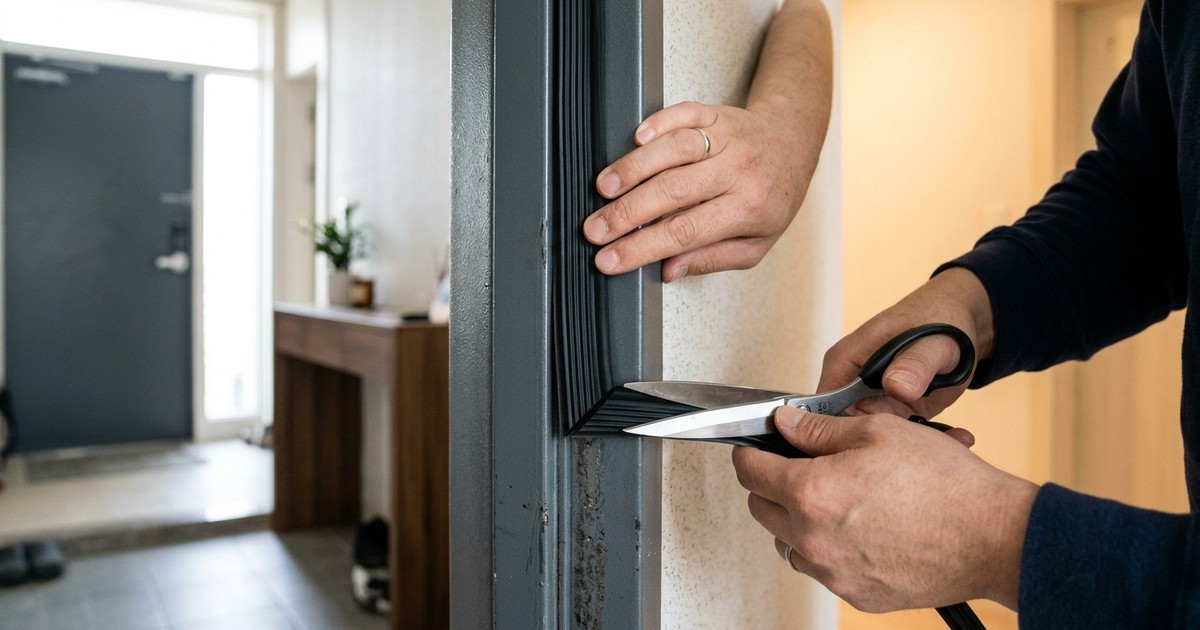
Pull Out Hardened Old Gasket and Clean Frame Channel: Grip the top corner of the flattened old rubber gasket and pull it steadily downward out of the recessed metal channel (use needle-nose pliers or a flathead screwdriver to pry out any brittle torn-off roots). Wipe away accumulated black dust and grit inside the metal groove using wet wipes and an old brush.
- 3
Press New Gasket into Channel (Stretch-to-Fit Trick): Fire door gaskets lock into the 6–8mm metal groove mechanically without glue. For winged gaskets, orient the flexible fin facing the door slab contact side. If the rubber foot resists entering the narrow groove, pull and stretch the rubber strip slightly lengthwise—which temporarily thins the barbed base—while pressing it smoothly into the slot with your thumb or a rounded tool handle.
- 4
Miter Corners at 45 Degrees and Adjust Strike Plate if Tight: Where the top horizontal seal meets the vertical side seals, cut the gasket ends at a 45-degree angle with heavy-duty scissors so the corners meet flush without bunching. If the plump new rubber cushion makes the digital door lock stiff to latch, slightly loosen the two screws on the door jamb strike plate, shift it 1–2mm outward, and retighten.
- 5
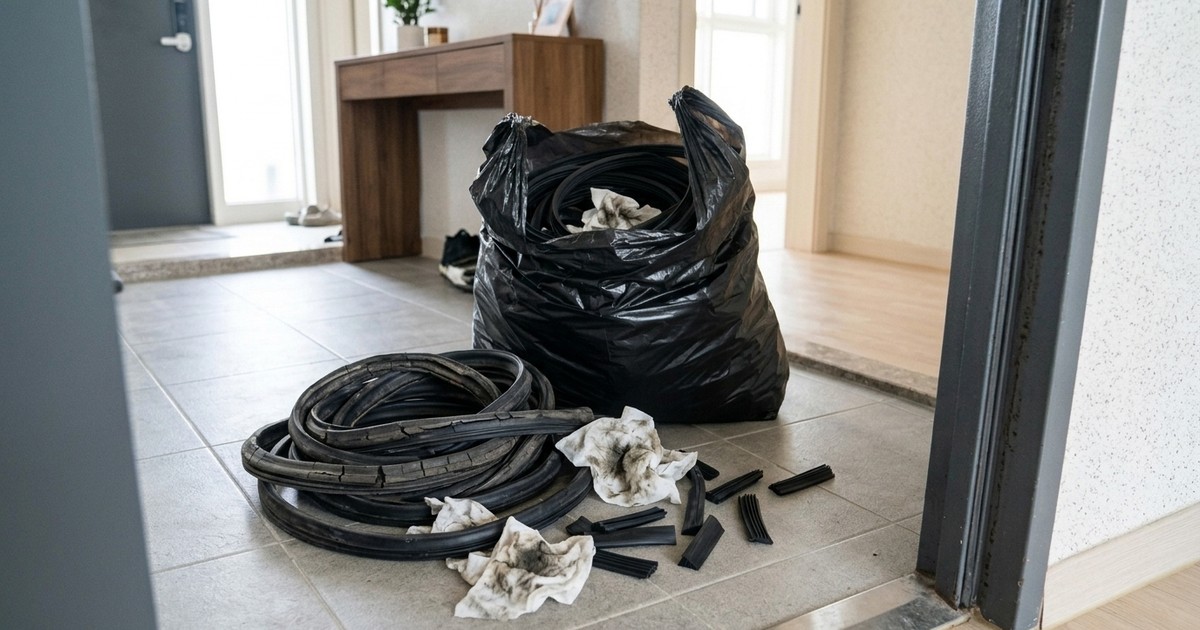
Verify Seal Tightness and Bag Old Rubber in Municipal Trash: Close the door and check that hallway light, drafts, and noises are completely sealed out. Because removed EPDM synthetic rubber and silicone door gaskets cannot be recycled as plastic or vinyl, coil the long old strips tightly, tie them into a compact bundle, and dispose of them in a standard municipal trash bag.
Frequently asked question
Can I interchange 'Winged' and 'O-type' fire door gaskets regardless of what was originally installed?
While both often fit the same 6mm frame channel, they suit different door-to-jamb clearance gaps. Installing a thick O-type bulb seal on a tight-fitting door designed for a thin winged seal can make the door too stiff to latch, whereas putting a thin winged seal on a wide-gap door may leave air leaks. Matching your original profile is always recommended.
After installing the new rubber gasket, I have to push the door hard for the digital lock to latch. How do I fix this?
Fresh EPDM rubber has full rebound cushion compared to flattened old seals. While the rubber naturally settles within 1–2 weeks, you can immediately fix stiff latching by loosening the two screws on the door jamb metal strike plate, sliding the plate 1–2mm outward toward the rubber seal, and retightening.
Can I apply soapy water when the rubber gasket is too tight to push into the metal groove?
Yes. Wiping a tiny amount of diluted dish soap along the barbed rubber base—or warming stiff rubber with a hair dryer in winter—acts as a safe lubricant. Combined with stretching the strip slightly lengthwise as you press, it slides into the metal channel effortlessly.
Since the removed door gasket is flexible, can it be recycled with plastics or vinyl?
No. Fire door gaskets are manufactured from vulcanized EPDM synthetic rubber or silicone elastomer, which cannot be melted down and reprocessed like thermoplastic resins. Always coil the removed strips into a compact bundle and discard them in a standard municipal trash bag.