DIY Window Sash Mohair Weatherstrip Replacement & Trash Disposal Guide
- 1The woven pile weatherstrip (commonly known as mohair) slotted into window sash grooves is an essential insulation barrier that blocks cold drafts, outdoor particulate pollution, road noise, and insects.
- 2However, after 8–10 years of unrelenting UV exposure and temperature cycling, the synthetic yarn undergoes severe embrittlement.
- 3Deteriorated mohair disintegrates into airborne microscopic polypropylene and fiberglass-like dust whenever sliding doors are moved, triggering allergic rhinitis, coughing, and skin irritation in occupants.
- 4When undertaking DIY replacement, wearing a snug-fitting KF94/N95 dust mask and safety goggles is mandatory.
- 5Pry the brittle backing strip free from the bottom rail slot using an awl or utility knife, then steadily draw the entire strip out.
- 6Keep a vacuum cleaner equipped with a HEPA filter running alongside the track to intercept dislodged fiber dust instantly.
- 7Wipe the channel with rubbing alcohol to remove accumulated soot before sliding in the new replacement pile.
- ✓Discard all stripped weathered pile, pulverized fiber fluff, and brittle plastic carriers into municipal general trash bags, as aged composite synthetics cannot be mechanically recycled.

Follow these steps
- 1
Step 1 (Wear PPE & Prepare HEPA Extraction Workspace): Put on a well-fitted KF94 or N95 dust mask and nitrile-coated gloves to guard against inhaling friable polypropylene fiber dust. Slide the window sash open to expose the vertical and horizontal frame channels, positioning a vacuum cleaner with a narrow crevice nozzle nearby.
- 2
Step 2 (Pry & Pull Brittle Backing Strip from Track Slot): Insert an awl or narrow flathead screwdriver beneath the rigid backing strip at the end notch of the window groove. Once lifted, pinch the end with pliers or gloved fingers and draw the continuous strip out steadily along the channel guide.
- 3
Step 3 (Simultaneous Vacuum Extraction & Track Sanitization): Run the vacuum crevice nozzle directly behind your pulling hand to intercept pulverized fiber fragments instantly before they become airborne. Wrap a damp microfiber cloth or static wipe around a flat tool and draw it through the empty slot to wipe away black soot and road grime.
- 4
Step 4 (Measure Base Width & Slide In New Pile Weatherstrip): Measure the groove width (typically 6.8 mm base) and pile height (6 mm, 9 mm, or 12 mm). Feed the new flexible pile strip into the lead-in slot, sliding it smoothly across the frame (or press it firmly into the track using a roller/screwdriver blade if working without removing heavy double-pane sashes), trimming flush with shears.
- 5
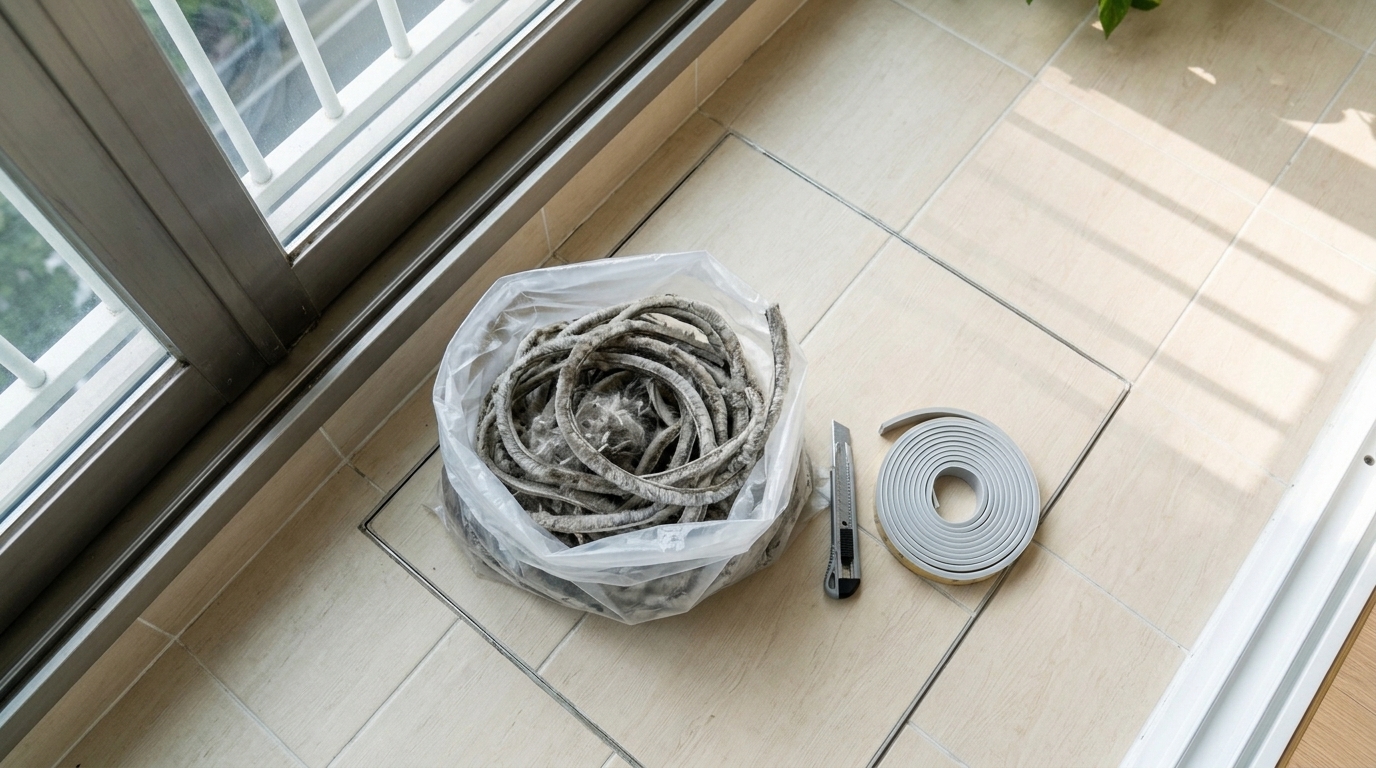
Step 5 (Bag Waste Fibers & Discard in Municipal General Trash): Bundle the coils of pulled weathered mohair, crumbled fiber lint, and vacuum dust together. Because contaminated composite synthetic polymers cannot be recycled, seal the loose fibers securely inside a small plastic bag before depositing them inside your municipal general trash bag.
Frequently asked question
Can window sash mohair be replaced without removing heavy window panels?
Yes, by sliding window sashes fully to one side, you can access the track ends without unhanging heavy double-pane sashes. If threading from the edge is obstructed, purchase flexible-base mohair and press it directly into the channel slot using a small flathead screwdriver or roller tool.
How do I measure the correct mohair base width and pile height for my window frame?
Measure the rigid plastic base width with a ruler; over 90% of residential vinyl sashes use standard 6.8 mm backing. For pile height, measure the clearance gap between the sash and frame, choosing a pile 1–2 mm taller than the gap (typically 6 mm for inner sash tracks and 9–12 mm for exterior balcony perimeters) so the fibers compress snugly without impeding sliding motion.
What should I do if the plastic backing has embrittled and snaps inside the track?
If aged backing snaps into brittle chunks, warm the channel gently with a hair dryer for 10–20 seconds to soften the plastic backing, allowing continuous pulling. For isolated stuck fragments, hook beneath the broken end with an awl or curved pick tool and grasp with needle-nose pliers.
What if the window feels too stiff to slide smoothly after installing new mohair?
Stiffness occurs when the new pile height is slightly too thick for the frame tolerance. The fibers typically compress and soften after several days of regular sliding. To relieve resistance immediately, adjust the bottom roller leveling screws clockwise to raise the sash slightly, or mist a light coat of dry silicone lubricant onto the contact guide rail.