Sink Drain Trap & Hose Replacement: PVC Pipe & Strainer Disposal Guide
- 1When replacing old kitchen sink drain kits and flexible PVC hoses due to foul odors or leaks, the disassembled waste cannot simply be placed in plastic recycling bins.
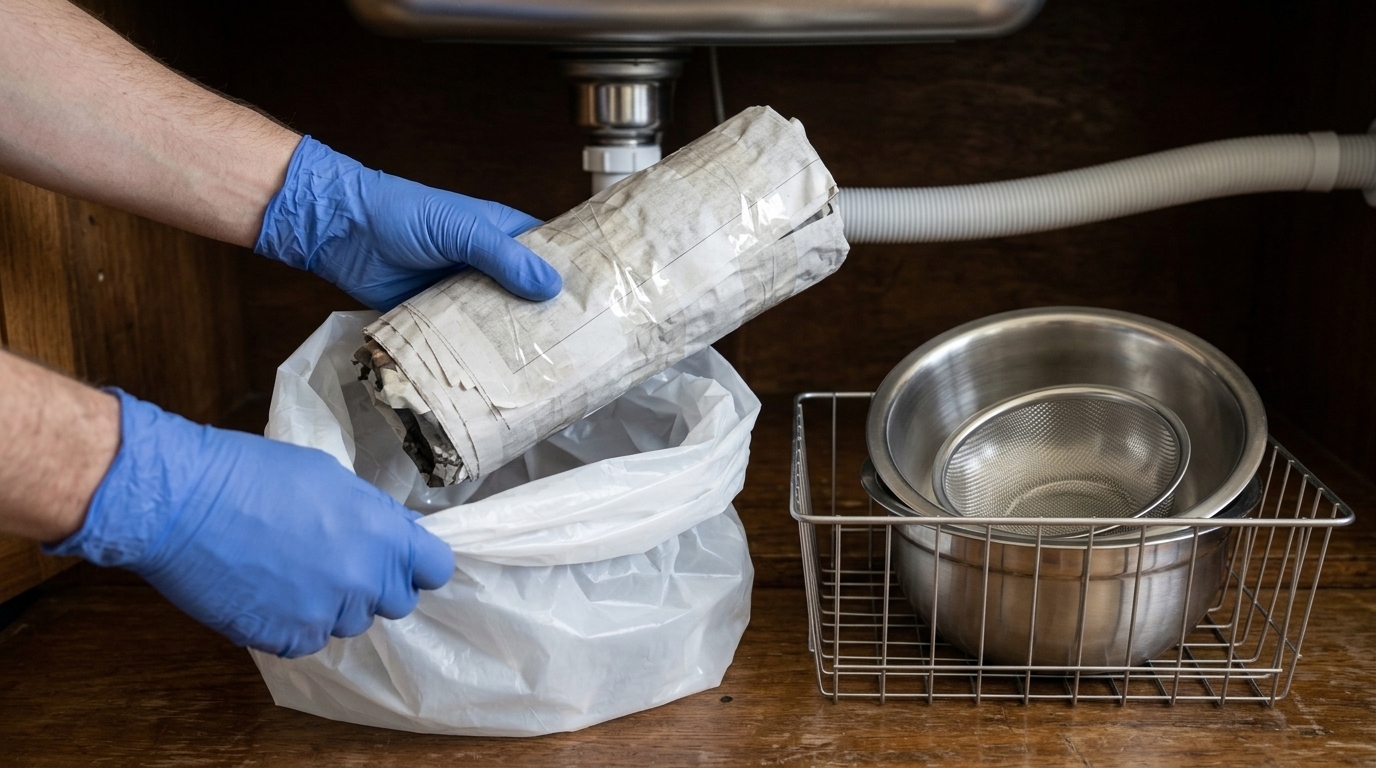
- 2Flexible corrugated hoses and overflow pipes heavily coated with solidified cooking grease, oil residue, and food waste cause severe contamination during mechanical recycling, so they must be cut to size, wrapped securely in newspaper or plastic to prevent foul leaks, and discarded in standard municipal general trash bags.
- 3Conversely, pure stainless steel parts such as inner bowls, mesh strainer baskets, and sink covers should be rinsed clean of grease and sorted into scrap metal recycling.
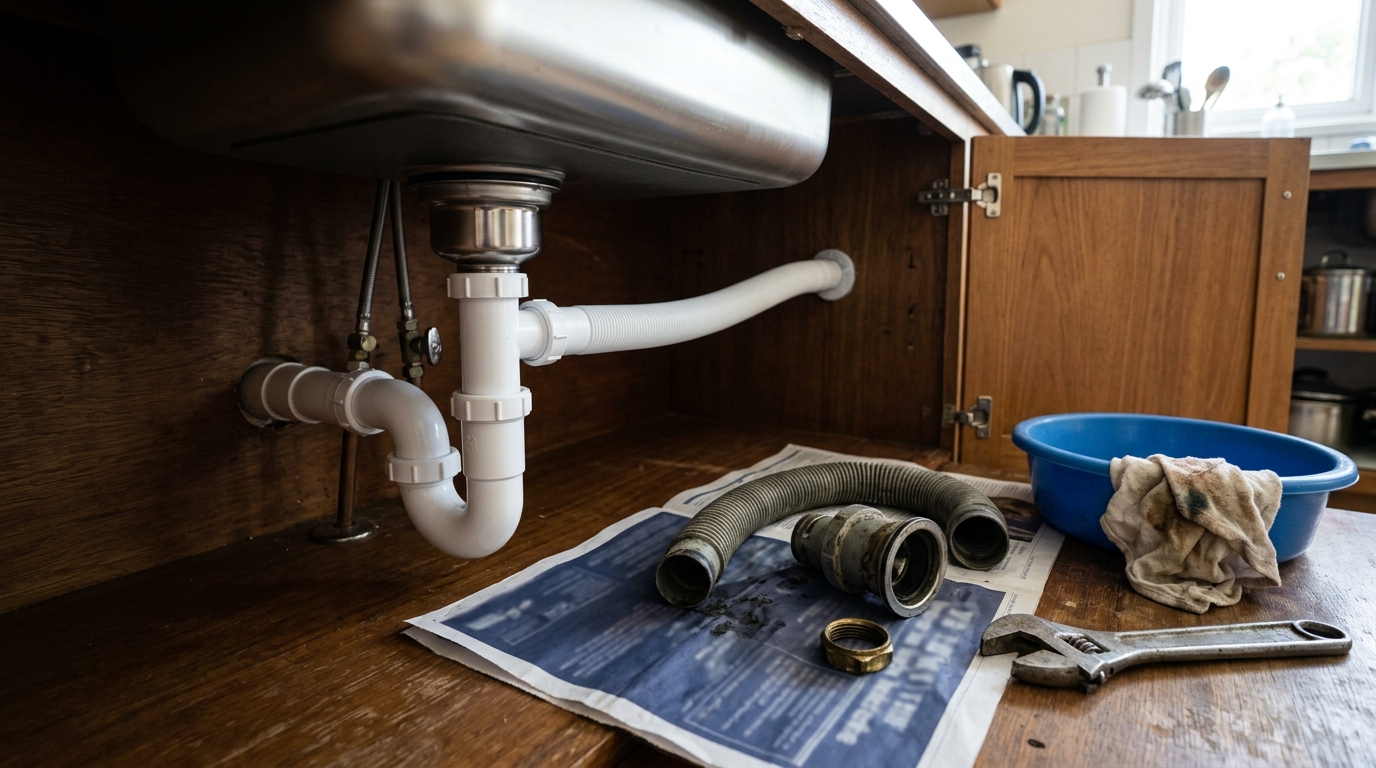
- ✓To prevent spills, always place a shallow basin and rags beneath the trap before unscrewing connectors, and temporarily seal open floor drain pipes while working.
Follow these steps
- 1
Empty cabinet & place drain basin: Clear the under-sink cabinet and position a wide basin and rags directly below the trap to catch stagnant, foul-smelling dirty water upon disconnection.
- 2
Disconnect floor pipe & seal open drain: Pull the flexible hose from the floor drain pipe into the basin to drain residual wastewater, and temporarily cover the open floor drain with a plastic bag to block sewer gases.
- 3
Disassemble drain kit body & overflow tube: Unscrew the large bottom mounting ring counter-clockwise to detach the main drain basin and remove the side overflow connecting tube.
- 4
Cut greasy PVC hoses & pack in trash bag: Cut greasy, sludge-coated flexible corrugated tubes into 30–40 cm manageable segments with utility shears, wrap securely in newspaper, and place inside a municipal general trash bag.
- 5
Rinse stainless parts & sort as scrap metal: Wash pure stainless steel strainer baskets and sink caps with dish soap and place into scrap metal recycling (discard inseparable plastic bodies and rubber gaskets in general trash).
Frequently asked question
Can I put the oil-coated flexible sink drain pipe into the plastic recycling bin?
No. Kitchen sink corrugated hoses are coated internally with rancid grease sludge that cannot be washed clean. Furthermore, flexible PVC composite tubes cannot be recycled and must be wrapped in paper and thrown into general trash bags.
What should I do if the sink drain body combines plastic and stainless steel and cannot be separated?
If the outer plastic casing and inner stainless steel liner are fused together and cannot be pried apart cleanly, it is classified as composite non-recyclable waste and must be discarded whole inside a general municipal trash bag.
Is the rubber odor prevention trap cap reusable or recyclable?
Rubber floor sealing caps and silicone anti-odor check valves are classified as general municipal waste. They cannot be recycled as plastic and should be thrown into general trash bags.
How do I measure my kitchen sink drain basket size (large 162mm vs. small 110mm) before buying a replacement?
Measure the outer rim diameter of the drain flange from the top of the sink bowl rather than the strainer basket itself. Standard Korean apartment kitchen sinks use the large 160–162mm outer diameter (145mm inner diameter) specification, while studio or auxiliary sinks typically use the small 110mm outer diameter specification.