Stainless Steel Faucet Limescale Removal & Mirror Polish Guide | Citric Acid Solution
Simple polishing guide for dissolving cloudy white calcium deposits and stubborn limescale water spots on stainless faucets and bathroom sinks using warm citric acid solution.
🛠️ Required Tools & Cleaning Agents
🔄 Alternative Detergents & Eco Tips
- Citric Acid → Alt: White Vinegar (1:1 with warm water) (Natural acidic liquid that dissolves alkaline calcium carbonates)
- Microfiber Cloth → Alt: Dry Dental Floss or Cotton Swab (Cleans tight seams between faucet base and counter countertop)
✨ Step-by-Step Care Instructions
Step 1: Dissolve Citric Acid Powder in Warm Water
- Mix 1-2 tablespoons of citric acid into 200ml of warm water in a small bowl.
- Stir until all crystals dissolve completely into a clear acidic solution.
- Citric acid chemically dissolves alkaline calcium and magnesium carbonates.
Step 2: Wrap Faucet with Citric Acid Soaked Paper Towels
- Dip paper towels into the citric acid solution and wrap them snugly around the faucet body, handle, and base.
- Ensure tight contact over heavy white mineral crust areas without air pockets.
- Leave undisturbed for 10 to 15 minutes to soften the mineral scale.
Step 3: Remove Aerator & Soak Separately
- Unscrew the aerator filter nozzle from the tip of the faucet spout.
- Place it in the remaining citric acid bowl to dissolve fine mineral sand clogging the mesh.
- Lightly brush away loosened grit with an old toothbrush.
Step 4: Wipe Softened Scale with Soft Toothbrush & Cloth
- Remove and discard paper towels.
- Gently brush the faucet base and seams using an old soft toothbrush.
- Wipe the entire chrome/stainless body with a soft microfiber cloth.
Step 5: Rinse with Clean Water & Polish Dry with Microfiber Towel
- Rinse the entire faucet with clean warm water to remove all acid residue.
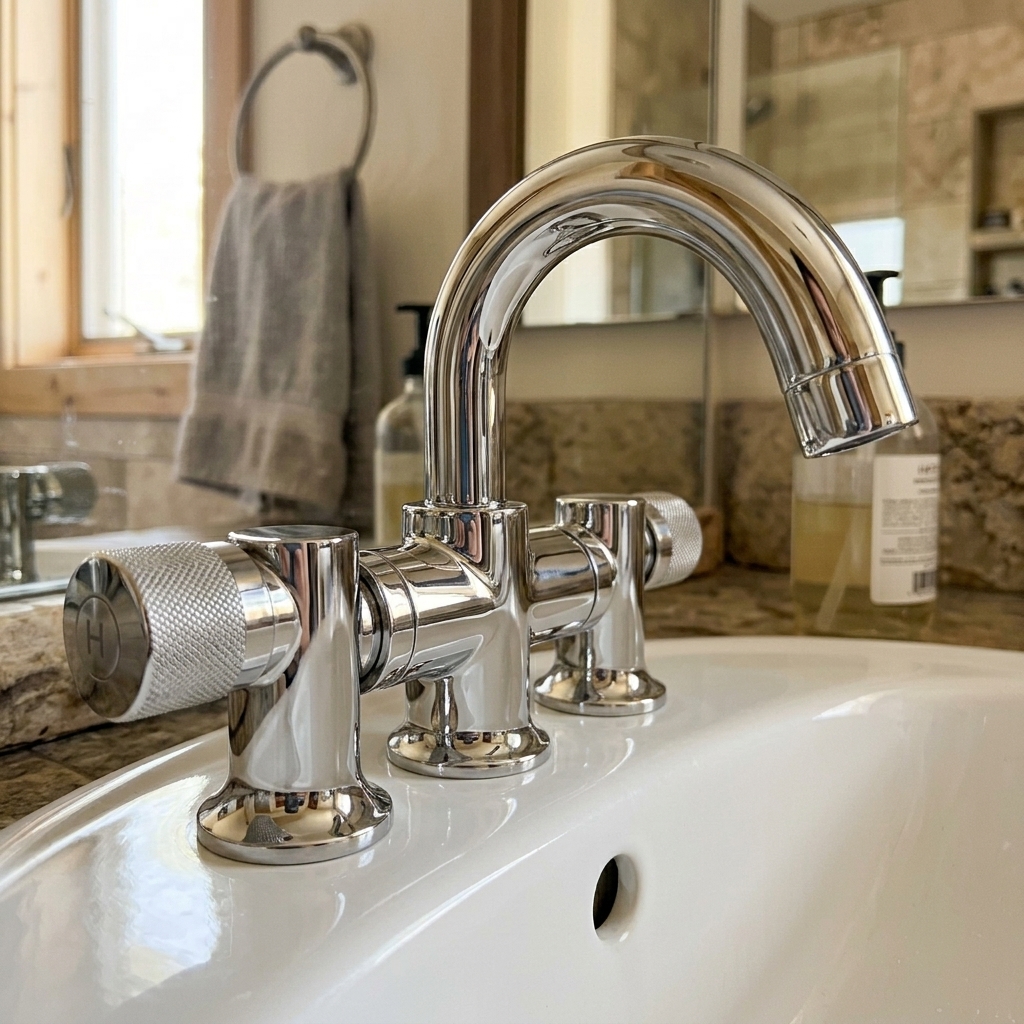
- Wipe 100% dry immediately with a dry microfiber cloth.
- Drying immediately prevents fresh tap water mineral droplets from forming new spots.
🩺 Self-Diagnosis Guide
✅ Can be restored with care
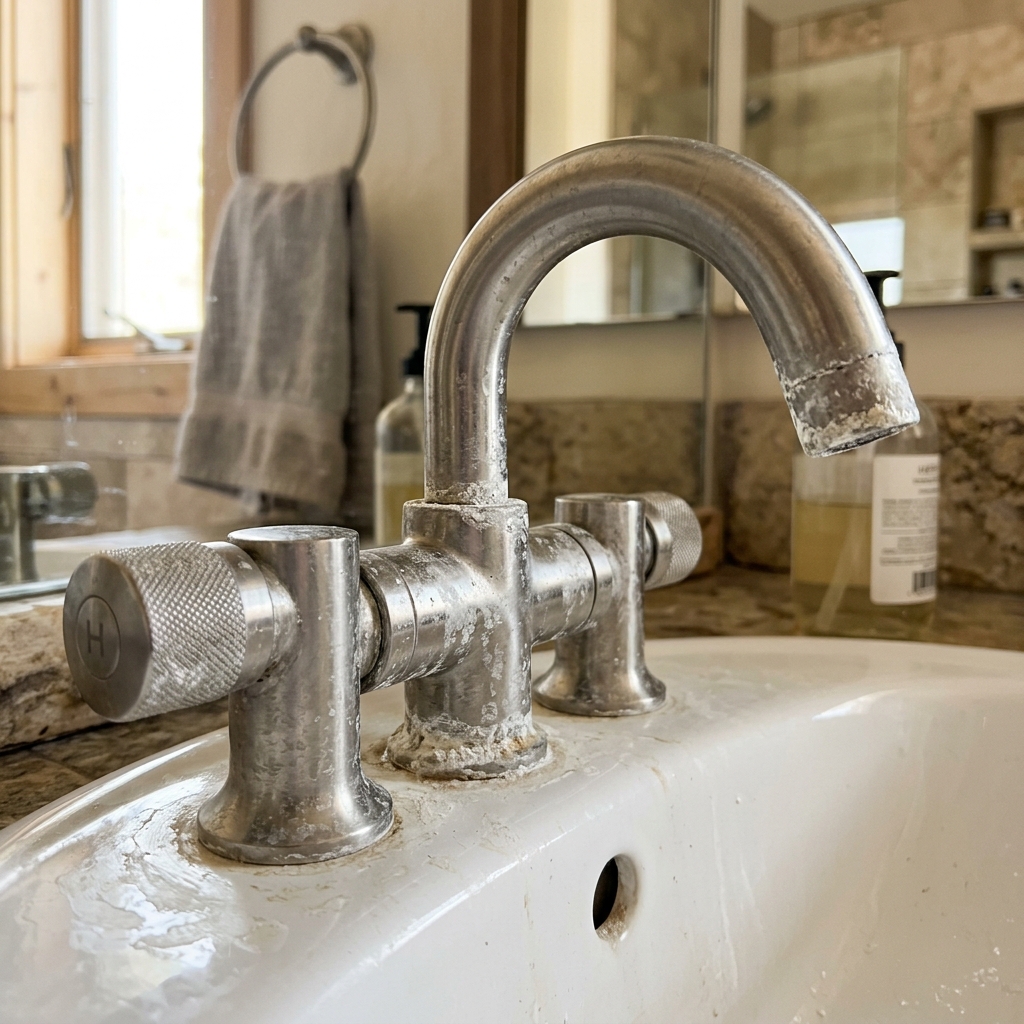
- Cloudy white chalky mineral scale coating chrome/stainless faucet surface
- Limescale crust accumulated around the faucet aerator spout and handle base
- Water splashing unevenly due to clogged aerator screen
❌ Reached end of lifespan (Proper disposal required)
- Cracked internal ceramic disc cartridge with water continuously dripping from spout
- Corroded brass housing under chrome plating leaking water inside bathroom vanity
- Stripped threads on water supply line connection causing persistent flooding
⚠️ Important Safety Precautions
- Do NOT use harsh abrasive scouring pads or steel wool (scratches delicate chrome plating).
- Do NOT use strong hydrochloric acid toilet bowl cleaners on faucets (causes permanent black tarnishing).
- Always rinse acid completely with clean water before polishing.
💡 Kitchen & Bathroom Faucet Replacement Guide: 3 Key Technical Specs Before Buying
♻️ Reached end of lifespan?
Check local disposal regulations instead of forcing reuse.
❓ Frequently Asked Questions (FAQ)
Q. Why do white water spots keep forming on bathroom faucets?
A. Tap water contains dissolved minerals like calcium and magnesium. When water droplets evaporate on warm metal surfaces, these minerals crystallize into hard, chalky white limescale.
Q. Can I use toothpaste to polish faucets?
A. Yes, standard toothpaste contains mild abrasives and surfactants that can remove light surface film. However, citric acid is much more effective at chemically dissolving thick mineral scale.
Q. How do I fix a faucet that sprays water sideways?
A. Unscrew the aerator nozzle at the tip of the faucet, soak the mesh screen in warm citric acid or vinegar for 15 minutes to dissolve mineral pebbles, and reattach.