How to Descale an Electric Kettle with Citric Acid in 5 Minutes | Sparkling Stainless Steel
A simple 5-minute natural descaling guide using citric acid to dissolve stubborn white mineral limescale and hard water calcium deposits inside stainless steel electric kettles.
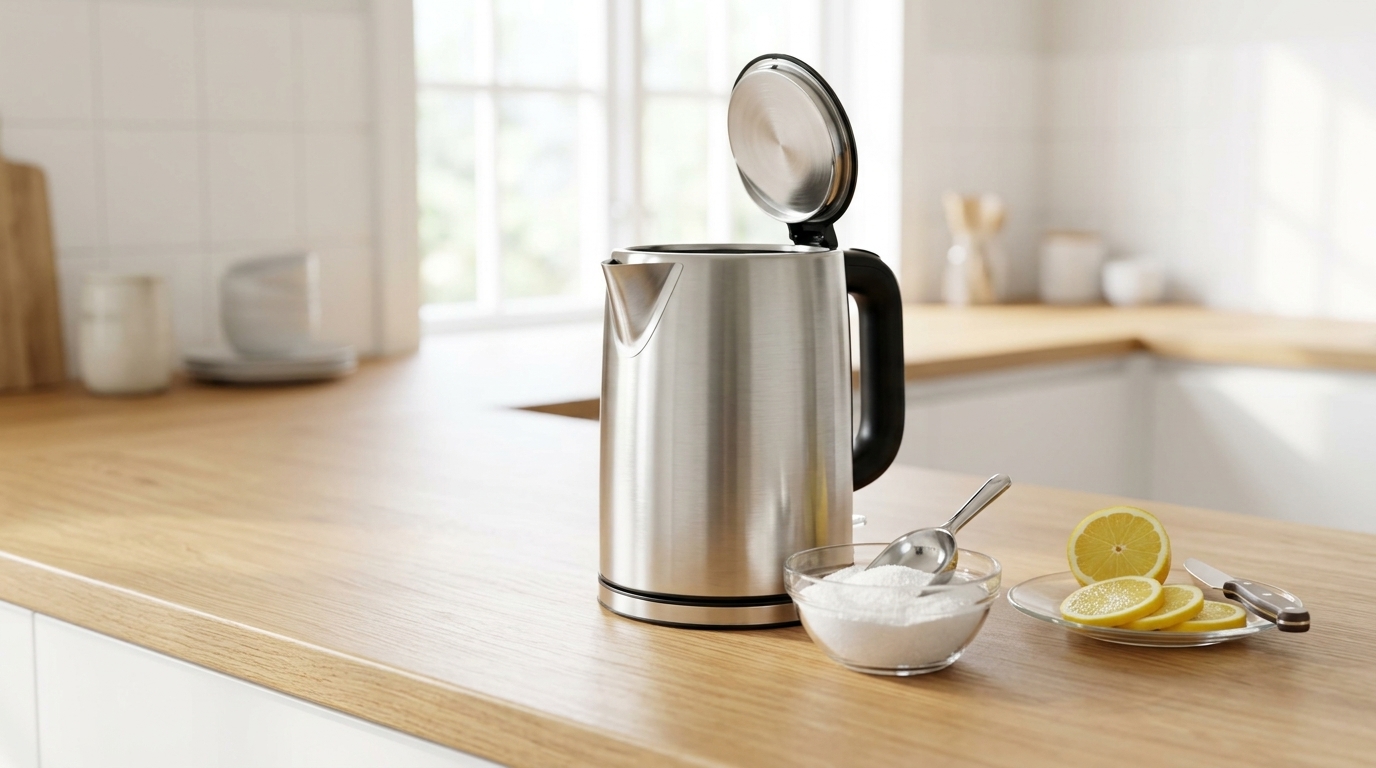
🛠️ Required Tools & Cleaning Agents
🔄 Alternative Detergents & Eco Tips
- Citric Acid Powder → Alt: White Distilled Vinegar (1/2 Cup / 100ml) (Acetic acid in vinegar dissolves mineral calcium scale with identical chemical efficacy)
- Citric Acid Powder → Alt: 1 Fresh Lemon (Sliced) (Natural citric acid provides gentle descaling while infusing a refreshing citrus aroma)
- Soft Sponge → Alt: Silicone Dish Scrubber (Protects stainless steel mirror finish and heating element from surface micro-scratches)
✨ Step-by-Step Care Instructions
Step 1: Fill Kettle with Water & Add Citric Acid
- Fill the kettle with fresh tap water up to 70-80% of the maximum (MAX) fill line.
- Never overfill past the MAX mark to avoid boiling water overflowing from the spout.
- Sprinkle 1 to 2 tablespoons of food-grade citric acid powder evenly into the water.
Step 2: Inspect Limescale Deposits & Close Lid
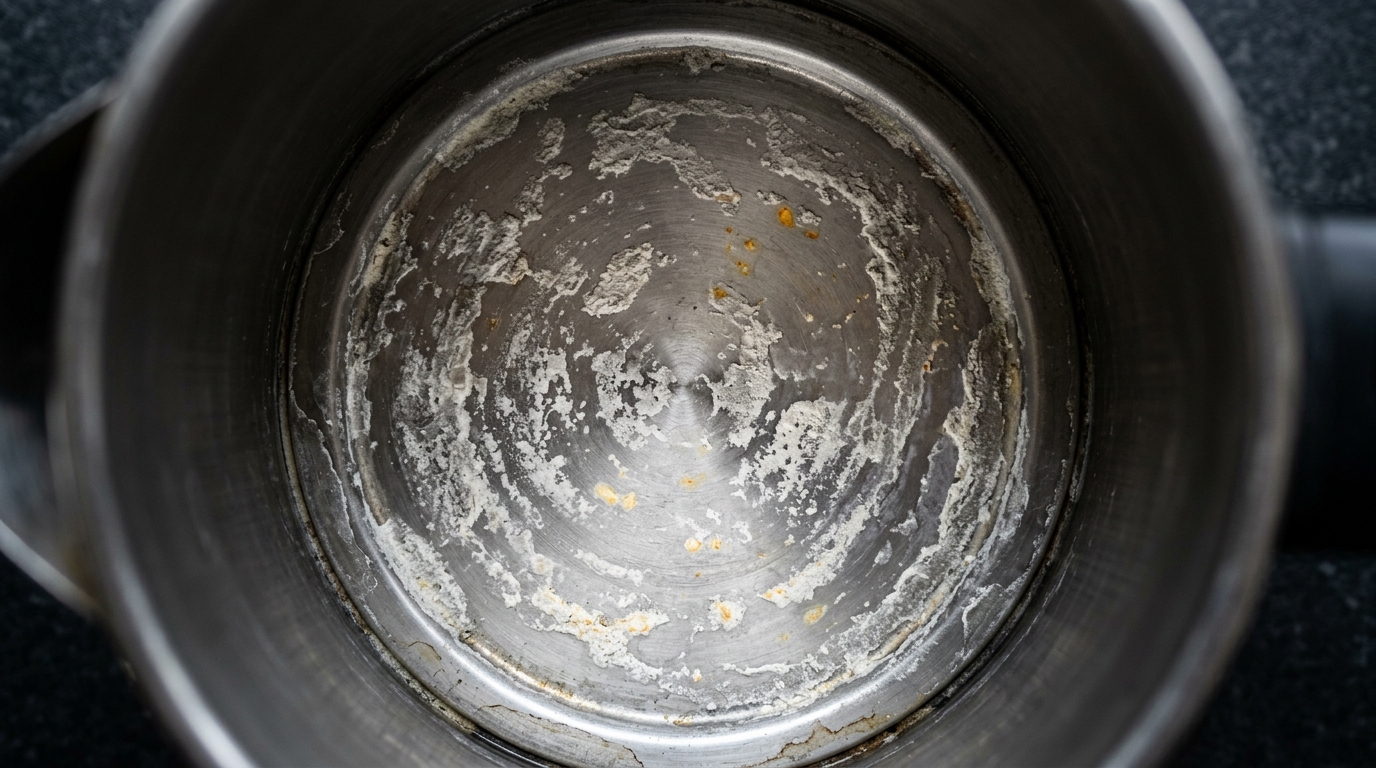
- Ensure all white mineral buildup on the bottom heating plate is completely submerged.
- Stir gently with a spoon to dissolve the citric acid crystals into the water.
- Secure the kettle lid firmly until it clicks to ensure safe steam exhaust.
Step 3: Boil Kettle & Trigger Effervescent Acid Reaction
- Switch on the kettle power and bring the water to a full rolling boil (100°C).
- The heated acidic reaction instantly breaks down alkaline calcium carbonate scale.
- Once the kettle automatically clicks off, let it sit with the lid closed for 5 to 10 minutes.
Step 4: Discard Hot Solution & Wipe Spout Filter
- Slowly pour out the hot citric water down the kitchen sink drain (helps deodorize sink pipes).
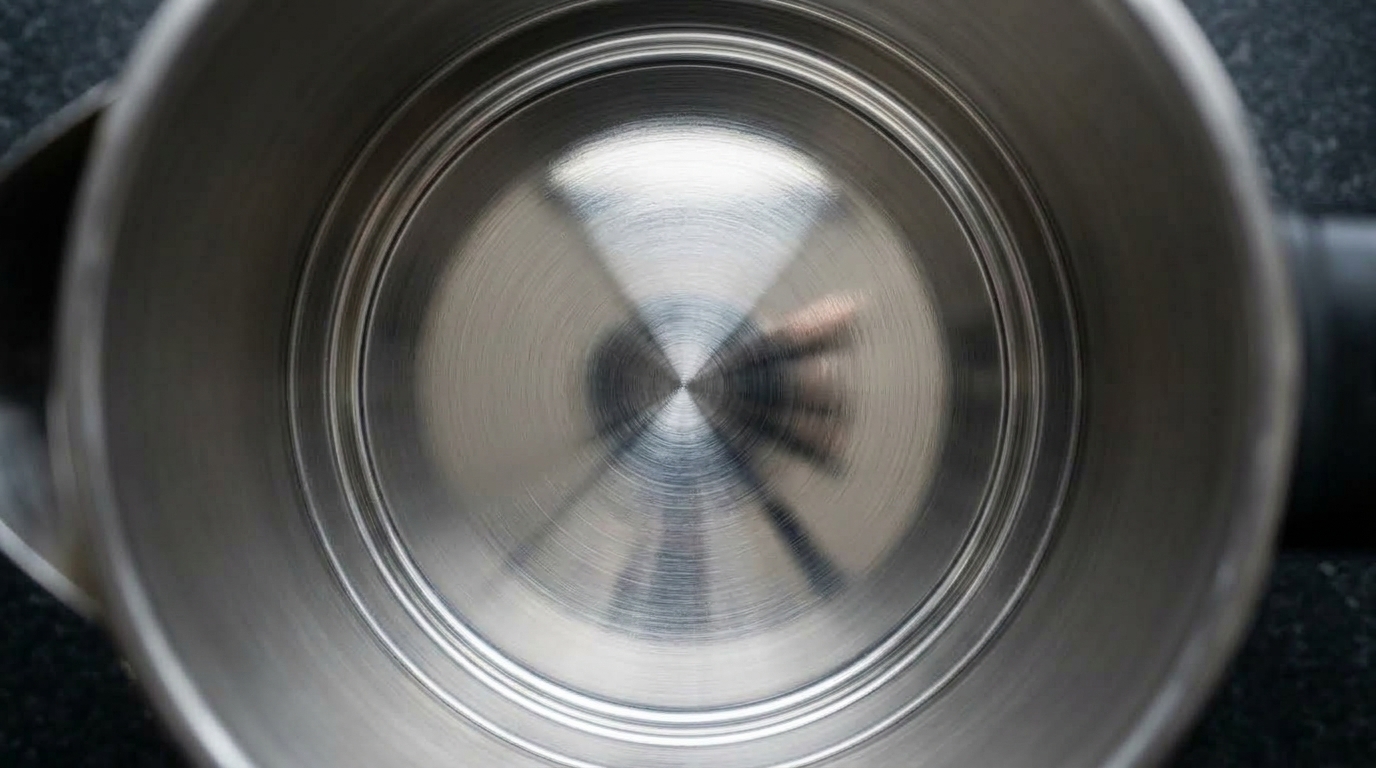
- Gently wipe the stainless base and inner walls with a soft sponge to remove loosened residue.
- Clean the spout mesh filter screen with a soft brush to clear any trapped particles.
Step 5: Rinse Twice with Fresh Water & Dry Completely
- Refill with clean water and boil once or twice to thoroughly flush out residual citric acid.
- Discard the rinse water and leave the lid open to air-dry the interior naturally.
- Wipe the exterior body and power base dry with a clean microfiber cloth.
🩺 Self-Diagnosis Guide
✅ Can be restored with care
- White chalky mineral spots or ring marks coating the circular stainless heating base
- Rainbow-colored mineral haze or faint yellowish water residue on inner stainless walls
- Kettle makes slightly louder rumbling bubble noises during boiling due to limescale insulation
- Power base electrical terminals are clean with no scorch marks or burning smells
- Automatic shut-off switch functions properly when water reaches a boil
❌ Reached end of lifespan (Proper disposal required)
- Kettle base power socket is scorched, blackened, or emitting melted plastic odor
- Water leaks from the base joint into the electrical contact terminals
- Heating element fails to heat up or generates sparks when turned on
- Glass or ceramic kettle body has visible cracks causing structural water leakage
- Automatic shut-off sensor fails, causing water to boil dry uncontrollably
⚠️ Important Safety Precautions
- Never scrape calcium scale with steel wool, wire brushes, or knives (destroys the protective stainless passivation layer and causes rusting).
- Never submerge the kettle base or electrical bottom connector in water (causes short circuits and fire hazards).
- Never mix citric acid with chlorine bleach (generates hazardous toxic chlorine gas).
- Keep hands and face away from the steam spout while the kettle is actively boiling.
💡 Electric Kettle Replacement Guide: 3 Key Technical Specs Before Buying
♻️ Reached end of lifespan?
Check local disposal regulations instead of forcing reuse.
❓ Frequently Asked Questions (FAQ)
Q. Is the white powder on the kettle bottom harmful to health?
A. No, it is not mold or harmful chemicals. It consists of calcium and magnesium minerals naturally dissolved in tap water. As water boils and evaporates, these minerals crystallize into harmless calcium carbonate (limescale). However, regular descaling is necessary as buildup reduces heating efficiency and alters the taste of beverages.
Q. Can I use baking soda instead of citric acid to remove kettle scale?
A. Baking soda is ineffective for descaling. Limescale is alkaline, so it requires an acidic solution like citric acid or white vinegar to neutralize and dissolve it. Baking soda is alkaline and will not break down calcium deposits.
Q. How do I properly dispose of a broken electric kettle?
A. Electric kettles are categorized as small domestic electronic waste. You can recycle them free of charge at dedicated small appliance e-waste drop-off bins in residential complexes or local community centers.