How to Clean Electric Toothbrush: Drive Shaft Limescale, Handle Black Mold & Charging Base Sanitizing Guide
A complete 10-minute professional hygiene guide for eliminating foul-smelling black mold and calcified white toothpaste scum from electric toothbrush metal drive shafts, rubber seals, and charging docks using warm citric acid soaks, detail cotton swab brushing, and 70% isopropyl alcohol sanitization.
🛠️ Required Tools & Cleaning Agents
🔄 Alternative Detergents & Eco Tips
- Food-Grade Citric Acid → Alt: Diluted White Distilled Vinegar (1:1 warm water mix) (A readily accessible household alternative that dissolves stubborn calcium carbonate crust around metal drive shafts without pitting metal.)
- Cotton Swabs & Detail Brush → Alt: Silicone Interdental Brush & Microfiber Cloth (Engineered for safe micro-crevice cleaning around flexible waterproof rubber seals without risking tears or seal puncture.)
- Rubbing Alcohol (70% IPA) → Alt: Individually Wrapped Alcohol Prep Pads (Delivers zero-moisture rapid sanitization for silicone grips and inductive charging contacts without causing electrical shorts.)
✨ Step-by-Step Care Instructions
Step 1: Vertical Head Detachment & Warm Water Pre-Rinse
- Hold the electric toothbrush upright and pull the brush head straight off the handle without twisting.
- Rinse the hollow socket inside the brush head under warm running tap water (~40°C) for 10 seconds to flush loose toothpaste.
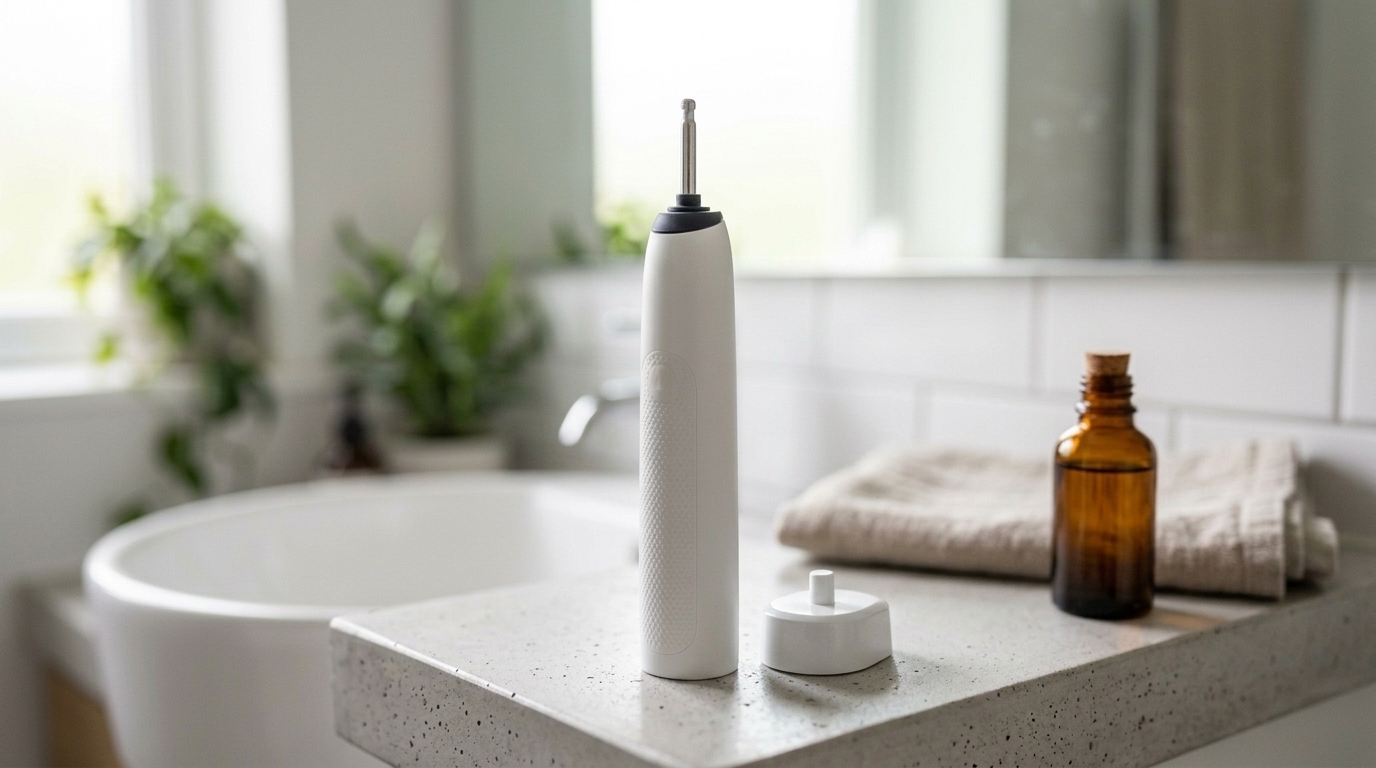
- Gently rub away dried surface toothpaste foam around the exposed metallic drive shaft with bare fingers.
- Caution: Never submerge the entire toothbrush handle in standing water; clean strictly under gentle running tap water.
Step 2: Dissolve Shaft Mineral Crust with Warm Citric Acid Soak
- Dissolve 1 teaspoon of food-grade citric acid into 50ml of lukewarm water in a small cup to create a gentle acidic descaling wash.
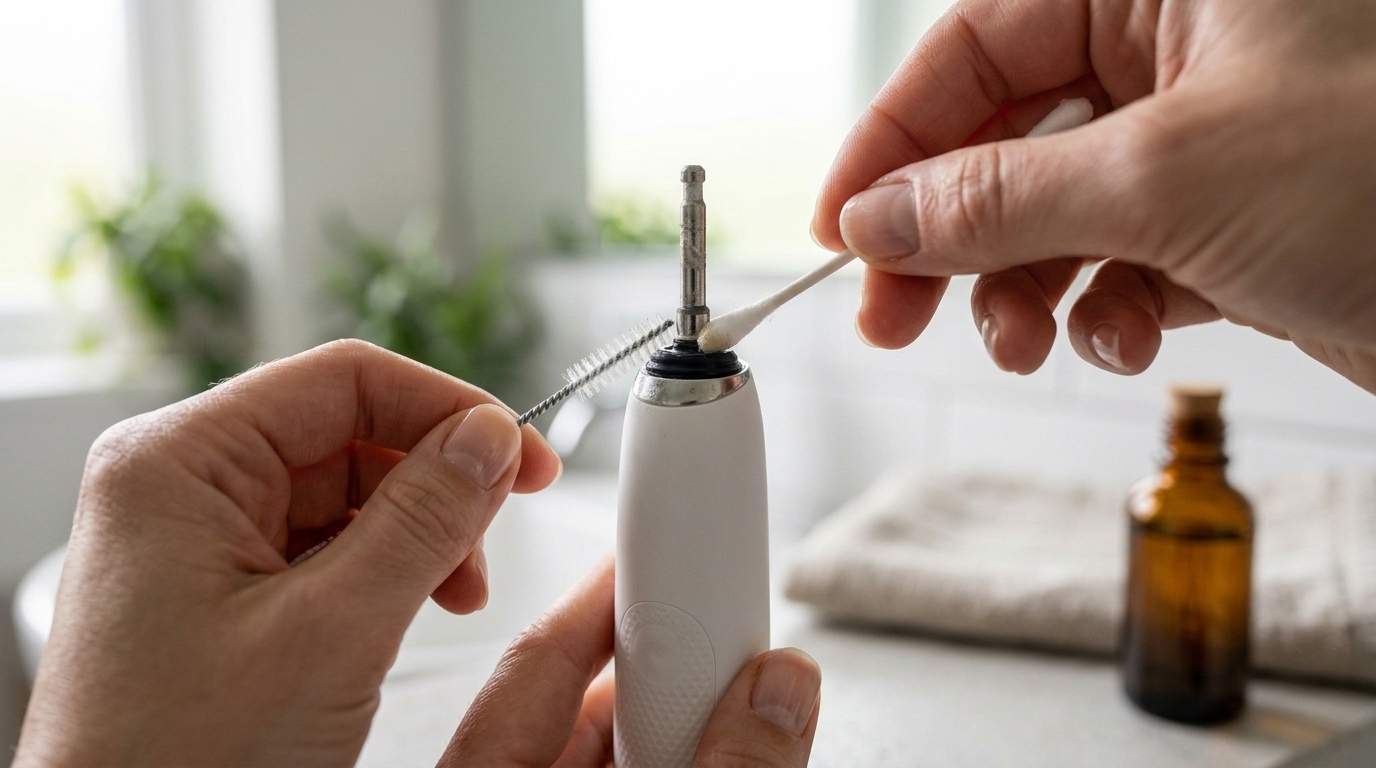
- Saturate a clean cotton swab and generously dab the solution around the metal vibration shaft and flexible rubber gasket.
- Allow the solution to dwell undisturbed for 3 to 5 minutes so the mild acid chemically softens hard calcium carbonate deposits.
- Using odorless citric acid provides superior descaling without leaving behind strong pungent vinegar odors.
Step 3: Detail Shaft & Gasket with Swabs (Strictly No Sharp Tools)
- Gently scrub away softened chalky residue in small circular motions using cotton swabs and a soft-bristled detail brush.
- The flexible rubber seal is the critical barrier against water ingress; never scrape with needles, toothpicks, or metal blades.
- Apply gentle pressure using only the cotton swab head to lift pink Serratia slime and dark mold spores from seal folds.
- Briefly rinse under warm tap water to wash away dissolved mineral salts and wipe dry with a soft cloth.
Step 4: Eradicate Black Mold & Disinfect Handle with 70% Alcohol
- Dampen a clean microfiber towel with 70% isopropyl rubbing alcohol and rub down the silicone rubber handle grip.
- Detail button seams, power switch bezels, and the recessed induction charging base with an alcohol swab for 99.9% germ kill.
- Swab inside the detached toothbrush head socket to eliminate musty fungal odors at their root source.
- Rubbing alcohol evaporates within seconds, sanitizing thoroughly without leaving trapped water inside mechanical seams.
Step 5: Waterless Charging Dock Wipe & Complete Air Drying
- Unplug the wireless inductive charging base from the wall and wipe off yellowed waterline scum using an alcohol towel.
- The charging dock houses electrical induction coils; never rinse it under a faucet or submerge in cleaning water.
- Allow the handle and detachable brush head to air-dry separately in a well-ventilated area for at least 1 hour.
- Store upright on an open, dry bathroom shelf with natural airflow rather than enclosed damp medicine cabinets.
🩺 Self-Diagnosis Guide
✅ Can be restored with care
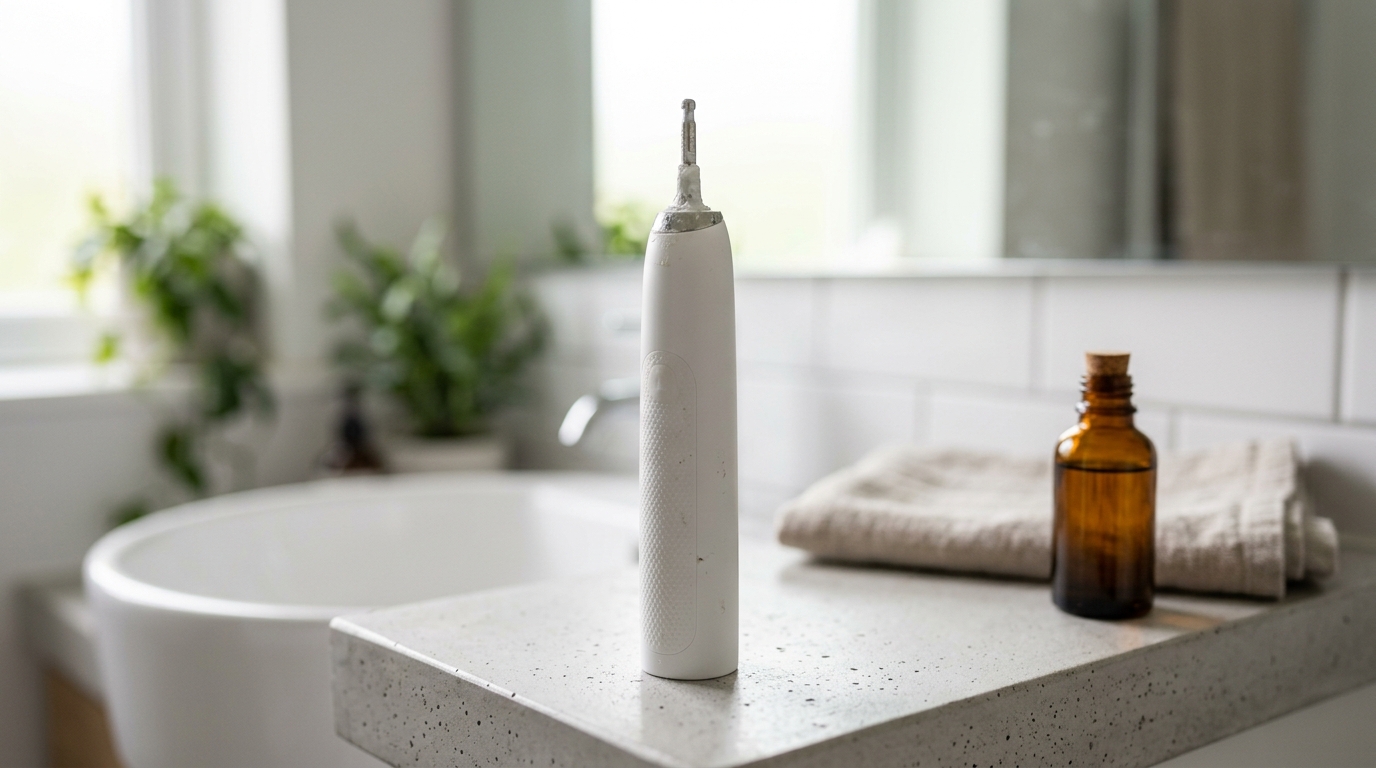
- Thin white calcified toothpaste mineral crust coating the metal drive shaft and rubber seal perimeter
- Slippery pink bacterial biofilm or superficial dried water spots along the silicone handle grip
- Slight stiffness when seating replacement brush heads while the high-speed acoustic motor runs smoothly
- Yellowed dried toothpaste slurry pooling at the bottom concave slot of the wireless charging dock
❌ Reached end of lifespan (Proper disposal required)
- Torn, punctured, or disintegrated elastomeric rubber drive shaft seal allowing liquid ingress into motor housing
- Loose drive shaft rattling with harsh mechanical grinding screeching sounds and severely weakened sonic vibrations
- Dangerous handle overheating during wireless charging cycles or complete failure to hold lithium battery charge
- Swollen rechargeable battery pack forcing the bottom inductive cap to bulge outward or crack the outer casing
⚠️ Important Safety Precautions
- Never wash in a dishwasher: Dishwasher wash temperatures (60–75°C) and heated drying cycles permanently warp the elastomeric waterproof seals, causing instant water ingress and motor short circuits.
- Never probe with sharp instruments: Using needles, toothpicks, or knife tips around the drive shaft gasket tears micro-punctures into the seal, destroying waterproof integrity; use only soft cotton swabs.
- Never submerge the charging cradle: The wireless inductive charger contains active electrical coils; submerging or rinsing it under a tap creates shock hazards; clean exclusively with an unplugged alcohol wipe.
💡 Cost Efficiency & Professional Inspection Guide
💡 Electric Toothbrush Replacement Guide: 3 Key Technical Specs Before Buying
♻️ Reached end of lifespan?
Check local disposal regulations instead of forcing reuse.
❓ Frequently Asked Questions (FAQ)
Q. What is the crusty white deposit around the metal shaft, and is it harmful?
A. It is a calcified mineral crust formed by toothpaste abrasives (calcium carbonate, silica) reacting with minerals in tap water. While not inherently toxic, its porous structure traps oral bacteria and saliva, producing unpleasant smells and serving as a breeding ground for black mold. Soaking with warm citric acid or diluted vinegar dissolves it within minutes.
Q. Since electric toothbrushes are waterproof, can I submerge the handle in water to clean it?
A. Submersion is not recommended. Although most models carry an IPX7 water resistance rating (protection against temporary immersion), micro-degradation in the rubber seals over time can allow hydrostatic pressure to force moisture into the motor compartment. Rinsing under running tap water followed by immediate towel drying is the safest method.
Q. Can I use chlorine bleach to remove black mold spots on the silicone handle grip?
A. Avoid concentrated chlorine bleach. Strong oxidizing agents degrade silicone rubbers, causing them to become gummy, discolor, and compromise waterproof seams, while leaving chemical residues unsuitable for dental hygiene tools. Rubbing alcohol (70% IPA) or gentle baking soda paste safely eradicates mold without attacking elastomers.
Q. Why has my electric toothbrush become unusually loud with weak vibration?
A. This symptom indicates either hardened toothpaste residue binding the magnetic drive mechanism or water ingress through a worn rubber seal that has rusted internal motor bearings. Try a warm citric acid soak on the shaft joint first; if loud rattling or weak pulsation persists, the internal linkage is damaged, requiring professional authorized repair or certified e-waste recycling.