Sticky Foam Block & Moldy Wallpaper Removal and Trash Disposal Guide
- 1Self-adhesive foam block insulation installed against cold outer walls or balconies often traps condensation over time, creating severe toxic black mold colonies behind the foam.
- 2Ripping the material off forcefully tears the PE foam while leaving petrified acrylic adhesive bonded to the drywall or concrete, leading to surface gouges and rental deposit deductions.
- 3The safe process requires pre-treating mold spores with disinfectant, softening the glue using warm airflow or adhesive removers, and lifting edges cleanly with wide scrapers.
- ✓Stripped foam block waste belongs in standard incinerable trash bags, while chipped plaster or masonry fragments must be segregated into non-combustible woven PP sacks.
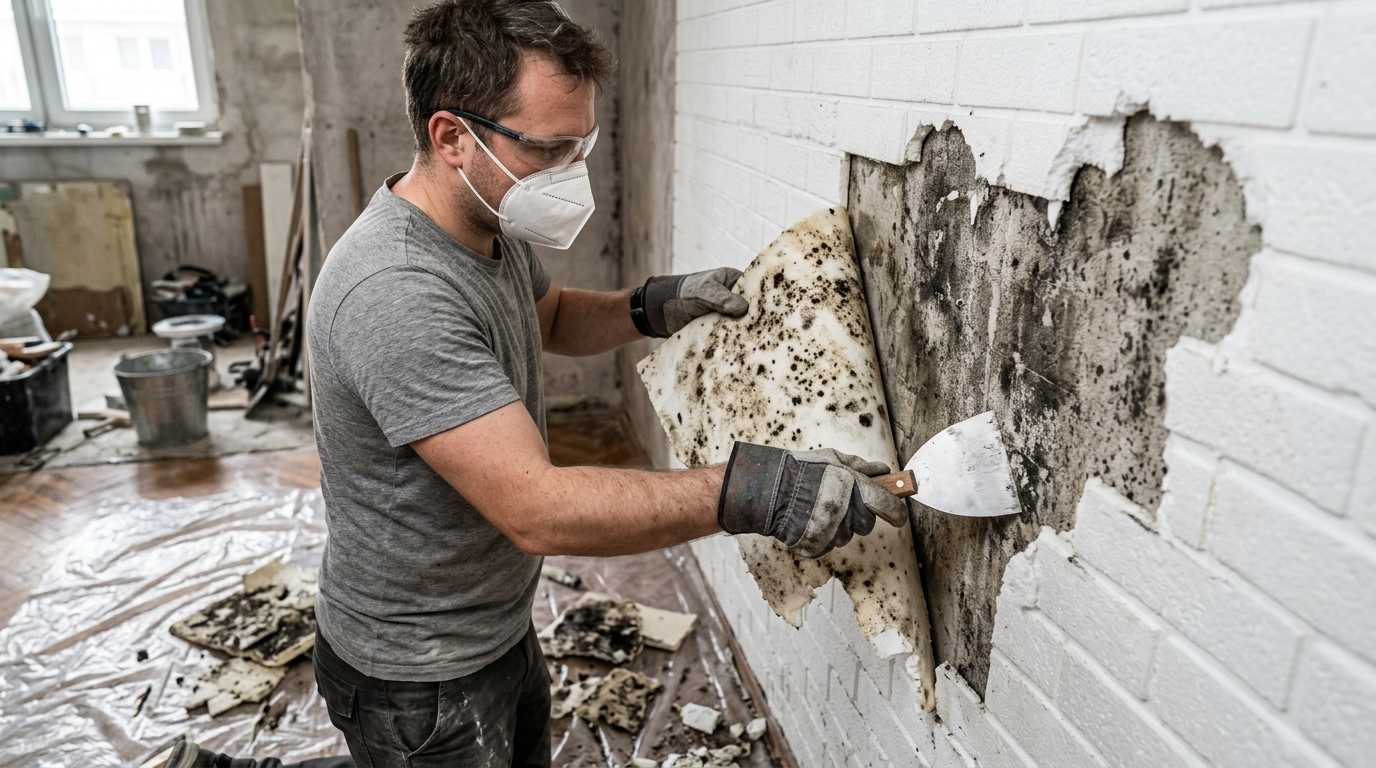
Follow these steps
- 1
Step 1 (Respirator Fitting & Floor Poly Cover Setup): Put on a tight-fitting KF94/N95 respirator, safety goggles, and heavy-duty nitrile gloves, open all windows for cross-ventilation, and lay down drop cloths to catch adhesive lint and black mold residue.
- 2
Step 2 (Low-Angle Foam Peeling & Surface Disinfection): Slide a wide putty knife at a shallow 15–30 degree angle to gently peel off the top foam layer, immediately misting the exposed concrete mold colony with diluted bleach to knock down airborne fungal spores.
- 3
Step 3 (Hot Air Softening & Adhesive Residue Removal): Warm the hardened sticky acrylic glue layer with a hair dryer on high for 20–30 seconds or press an alcohol/adhesive remover-soaked paper towel against the surface for 5 minutes, then glide a scraper to lift the gum without gouging drywall.
- 4
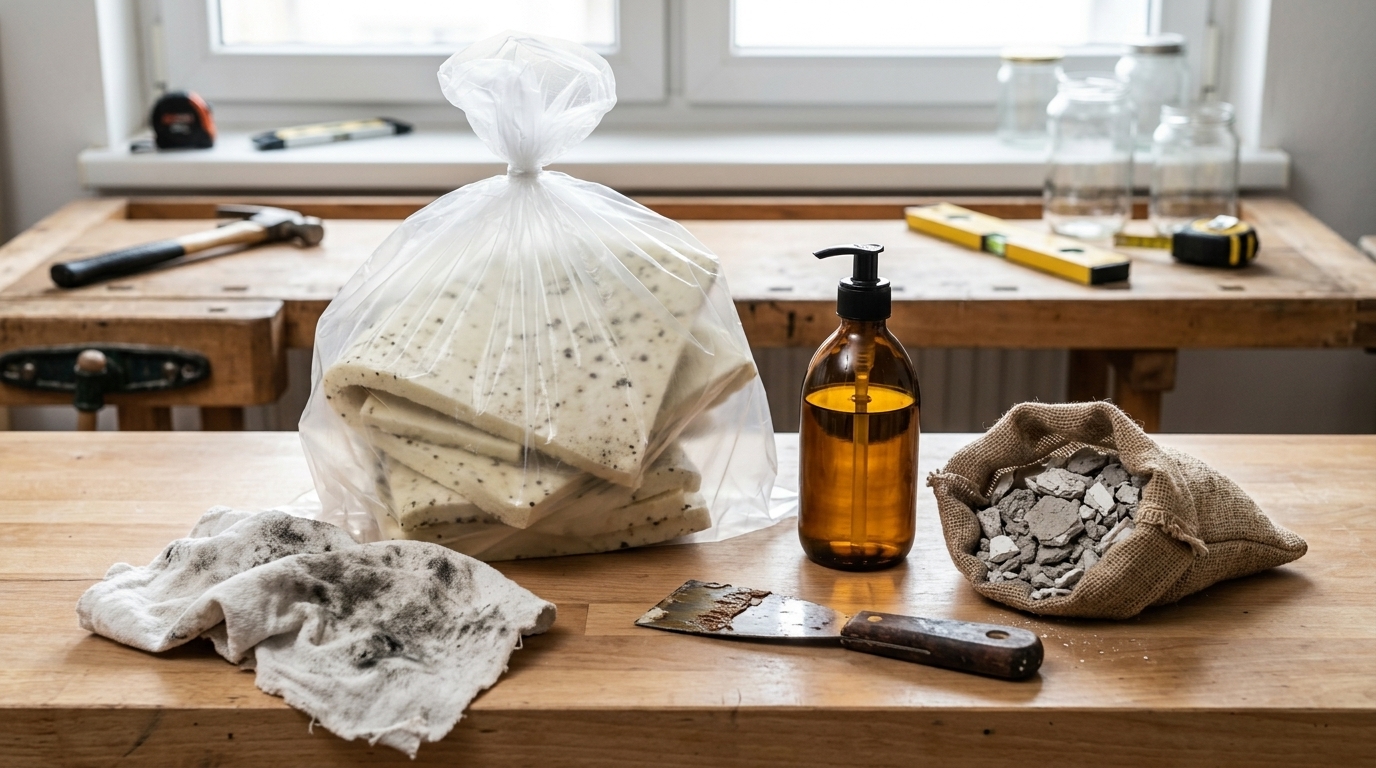
Step 4 (Compacting Stripped Foam into Municipal Trash Bags): Dried moldy foam sheets and shredded wallpaper fragments are non-recyclable composite resins; compress them flat by stepping on the pile and seal tightly inside regular combustible municipal trash bags.
- 5
Step 5 (Sorting Chipped Drywall and Plaster into PP Sacks): Loose chunks of crumbling gypsum drywall, plaster dust, and cement flakes pulled off during removal are non-combustible construction debris and must be packed separately into designated municipal woven PP rubble sacks.
Frequently asked question
How can I remove petrified foam adhesive that has turned gummy and resists scraping?
Saturate paper towels with automotive tar/sticker remover, WD-40, or rubbing alcohol and press them flat against the sticky residue for 5 to 10 minutes. The solvent softens the petrified synthetic polymer, allowing you to glide a plastic scraper or expired credit card smoothly without gouging the wall.
Can stripped foam block insulation be recycled as plastic or Styrofoam?
No, never. Foam blocks consist of expanded polyethylene (PE) laminated with metallized printed film and heavy synthetic adhesives. Contaminated by glue and mold residues, it cannot be recycled with EPS Styrofoam or rigid plastics; it must be discarded in regular combustible trash bags.
Am I liable for full room repapering costs if peeling foam blocks torn wallpaper upon moving out?
If self-adhesive foam blocks were installed without landlord consent and tore the underlying wallpaper, tenant restoration liability applies. However, standard legal precedent and lease mediation typically limit damages to re-papering the single affected focal wall (usually around ₩100,000–₩200,000), rather than bearing the cost for the entire room.
Can new wallpaper be applied immediately onto the concrete wall after scraping off mold?
No. After scraping, disinfect the bare concrete with diluted bleach and run fans or dehumidifiers for at least 24 to 48 hours until core masonry moisture drops completely. Apply two coats of anti-mold primer or insulating condensation-resistant paint and allow full cure before hanging new wallpaper.