How to Clean Toothbrush Sanitizer: Pink Mold, Toothpaste Scum & UV Lamp 10-Minute Sanitizing Guide
Complete 10-minute DIY hygiene guide for eliminating slimy pink mold (Serratia), stubborn toothpaste scum, and black mold from wall-mounted toothbrush sanitizers and UV lamp chambers using warm vinegar soaks, baking soda detailing, and rubbing alcohol sanitization.
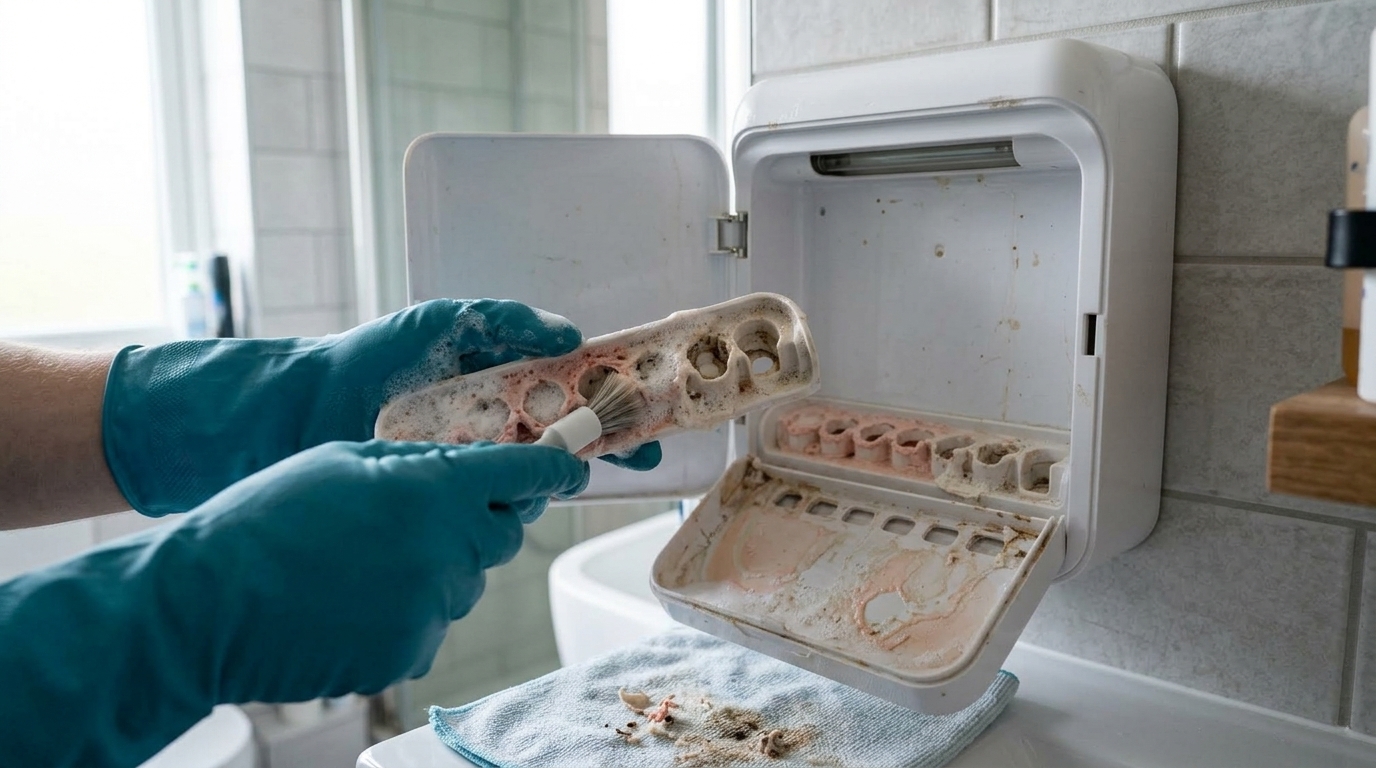
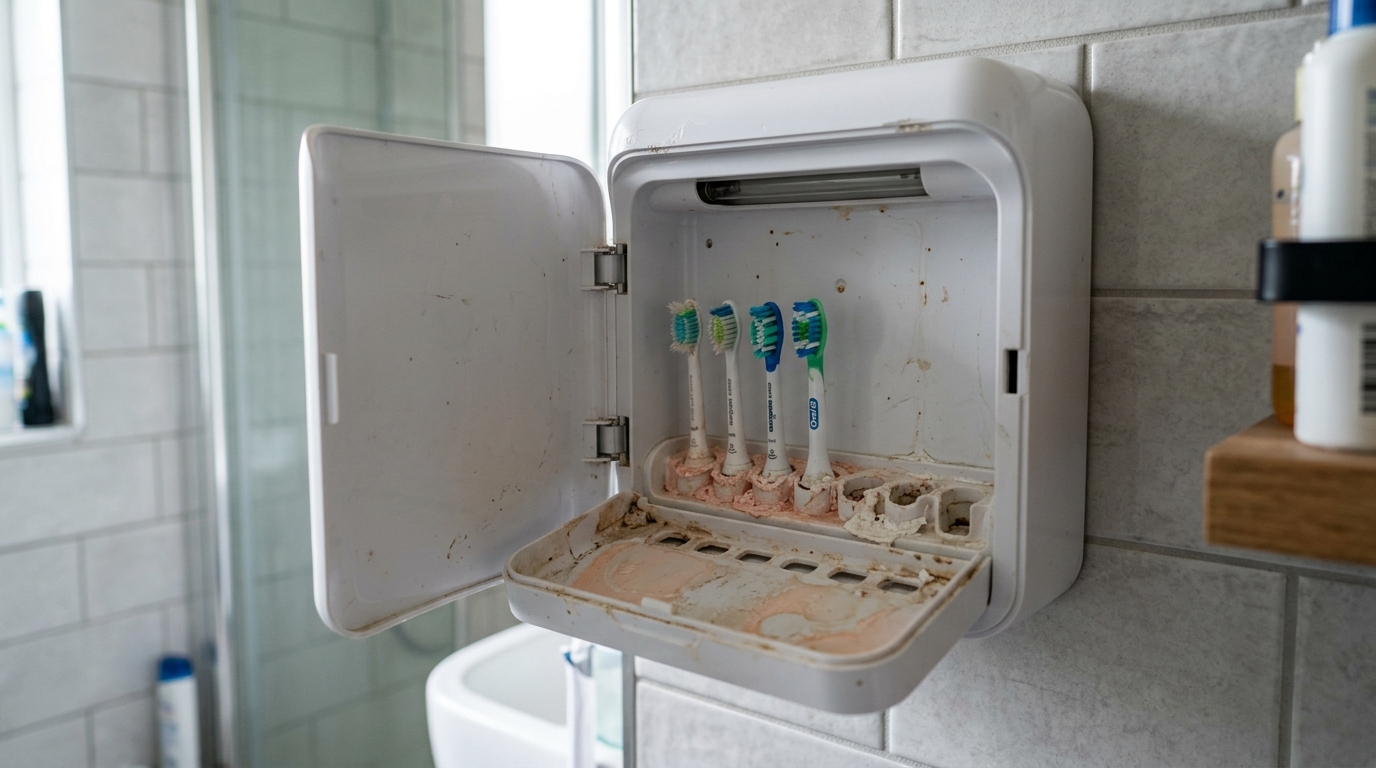
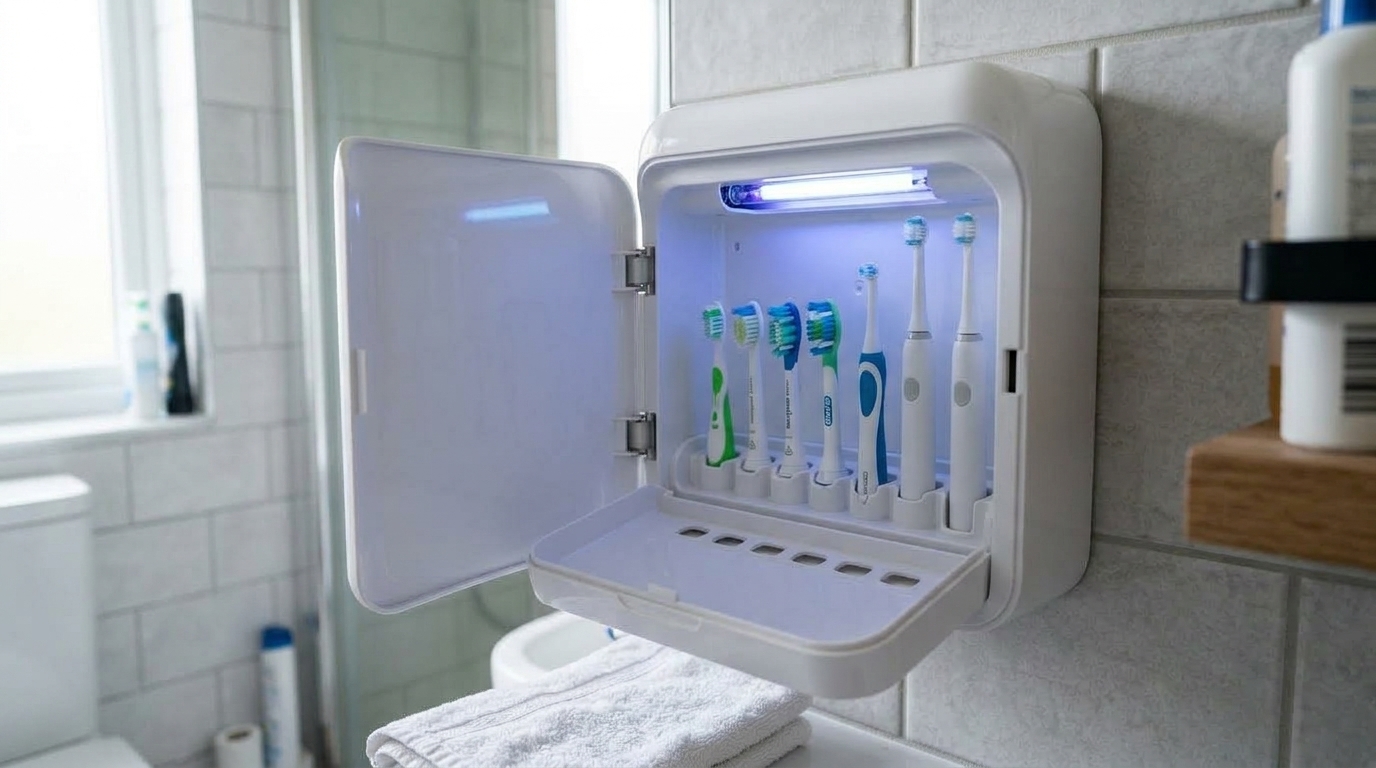
🛠️ Required Tools & Cleaning Agents
🔄 Alternative Detergents & Eco Tips
- Distilled White Vinegar → Alt: Food-Grade Citric Acid Solution (1 tsp citric acid in 200ml warm water) (Ideal for those sensitive to vinegar smell; dissolves hard mineral crust and pink biofilms equally well.)
- Detail Cleaning Brush → Alt: Interdental Brush & Pointed Cotton Swabs (Perfect for detailing narrow U-shaped toothbrush neck slots and shaver holder corners.)
- Rubbing Alcohol → Alt: Individually Wrapped Alcohol Prep Pads (Allows waterless zero-moisture sanitization of UV-C quartz lamps and heating plates safely.)
✨ Step-by-Step Care Instructions
Step 1: Power Safety Cutoff & Detaching Sanitizer Rack
- Unplug the power cord from the bathroom outlet or disconnect rechargeable battery units to prevent electric shocks.
- Remove all toothbrushes, toothpaste tubes, and razors and store temporarily in a clean dry cup.
- Gently lift and unclip the detachable toothbrush holder rack/tray from the main interior body.
- Never submerge the wall-mounted main housing in water as it contains internal circuit boards and PTC heaters.
Step 2: Warm Vinegar Soak & Baking Soda Crevice Detailing
- Mix lukewarm water and white vinegar (1:1 ratio) in a basin and soak the detached rack for 5 mins to dissolve calcified toothpaste scum.
- Sprinkle a pinch of baking soda over the slots to trigger mild effervescent neutralizing action.
- Detail narrow U-shaped neck slots, base grooves, and razor holder corners using an old soft toothbrush.
- Rinse thoroughly under running warm water to ensure zero chemical or paste residues remain.
Step 3: Waterless Alcohol Interior Disinfection & UV-C Lamp Polishing
- Avoid running water inside the main housing; dampen a microfiber cloth with 70% rubbing alcohol and wipe all interior walls thoroughly.
- Gently polish the UV-C quartz tube and reflective mirrors with an alcohol prep swab to restore 100% germicidal UV transmittance.
- Detail toothpaste dispenser nozzle slits and magnetic door edges using pointed cotton swabs.
- Avoid applying excessive pressure against delicate quartz glass tubes to prevent accidental cracking.
Step 4: 30-Minute Thorough Air Drying & Reassembly
- Wipe the rinsed rack with a clean dry towel and air dry in a well-ventilated shaded spot for at least 30 minutes.
- Leave the sanitizer door wide open to allow all residual alcohol vapors and ambient bathroom moisture to evaporate completely.
- Snap the 100% bone-dry rack back into the main housing clips until securely locked.
- Place vigorously shaken dry toothbrushes into slots, close door, and plug in to verify normal UV sterilization.
Step 5: Sterilization Restoration & Long-Term Hygiene Upkeep
- Eliminates 100% of slimy pink bacterial biofilms and stale bathroom dampness.
- Restores maximum UV-C germicidal irradiance to achieve verified 99.9% brush head sterilization.
- Establish a weekly quick tray rinse habit and always shake water off toothbrushes before inserting to prevent mold recurrence.
🩺 Self-Diagnosis Guide
✅ Can be restored with care
- Pink bacterial slime (Serratia marcescens) forming at the base of toothbrush slots
- Dried white chalky toothpaste scum and mineral crust built up around neck holders
- Musty damp odor escaping whenever the sanitizer door is opened
- Dust and water droplets clouding the surface of the UV-C quartz lamp tube
- All electronic components, UV-C lamp lighting, and PTC heating fans functioning normally
❌ Reached end of lifespan (Proper disposal required)
- Frayed internal wiring insulation or burning electrical odors upon plugging in
- Severe water ingress causing GFCI circuit breakers to trip during bathroom use
- Cracked door hinges preventing magnetic interlock switches from engaging UV safety cycle
- Scorched circuit boards or corroded bulb sockets that fail to light after bulb replacement
⚠️ Important Safety Precautions
- Never spray water or liquid detergents directly into the plugged-in housing as it risks severe short circuits and electrical shock hazards.
- Avoid concentrated chlorine bleach or abrasive scouring pads as they corrode reflective mirror baffles and degrade housing plastics.
- Never stare directly into active UV-C germicidal lamps with bare eyes to prevent corneal irritation and photochemical keratitis.
💡 Cost Efficiency & Professional Inspection Guide
💡 Toothbrush Sanitizer Replacement Guide: 3 Key Technical Specs Before Buying
♻️ Reached end of lifespan?
Check local disposal regulations instead of forcing reuse.
❓ Frequently Asked Questions (FAQ)
Q. Why does pink slime grow inside even when the UV sanitizing lamp is constantly turned on?
A. UV-C germicidal light only disinfects exposed brush head surfaces within direct line-of-sight. It cannot penetrate standing water puddles or dried organic toothpaste scum collected in the bottom tray slots. Airborne Serratia marcescens bacteria thrive in humid stagnant water, creating slimy pink biofilms. Regular physical scrubbing and moisture removal are essential.
Q. Can I sanitize the inside of my toothbrush sterilizer with chlorine bleach?
A. No, bleach is not recommended. Strong chlorine chemicals corrode aluminum reflection mirrors, degrade interior plastics, and leave hazardous chemical residues that can transfer onto toothbrush bristles. Food-grade white vinegar, baking soda, and 70% rubbing alcohol provide 99.9% pathogen elimination safely.
Q. How often should the UV-C germicidal lamp bulb be replaced?
A. Traditional CCFL quartz tube lamps lose over 50% of their 253.7nm germicidal irradiance after 6 to 12 months (~6,000–8,000 operating hours), even if visible purple light is still emitted. Replace traditional bulbs annually for guaranteed sterilization. Modern UV-C solid-state LED models last semi-permanently (20,000+ hours) and only require surface alcohol wiping.