Complete Bidet Nozzle Descaling & Mold Sanitizing! 10-Minute Self Deep Cleaning Guide
Complete guide to eliminating 99.9% of uric scale, mold spores, and bacteria from bidet nozzles and toilet mounts using citric acid, micro brushes, and high-temp steam without damaging delicate parts.
🛠️ Required Tools & Cleaning Agents
🔄 Alternative Detergents & Eco Tips
- Citric Acid Solution → Alt: Baking Soda Water or Neutral Bidet Foam Cleaner (Citric acid is mildly acidic and most effective for dissolving alkaline uric calcium scale)
- Bidet Detail Brush → Alt: Interdental Brush & Pointed Cotton Swabs (Ideal for unclogging micro spray nozzle apertures without scratching metal)
- Steam Cleaner → Alt: Hot Water Soaked Damp Microfiber Cloth (Delivers 99.9% thermal sanitation against E. coli and mold spores without chemical fumes)
✨ Step-by-Step Care Instructions
Step 1: Power Safety Check & Extend Cleaning Mode
- Inspect the waterproof GFCI plug cover to ensure no water splashes onto electrical outlets.
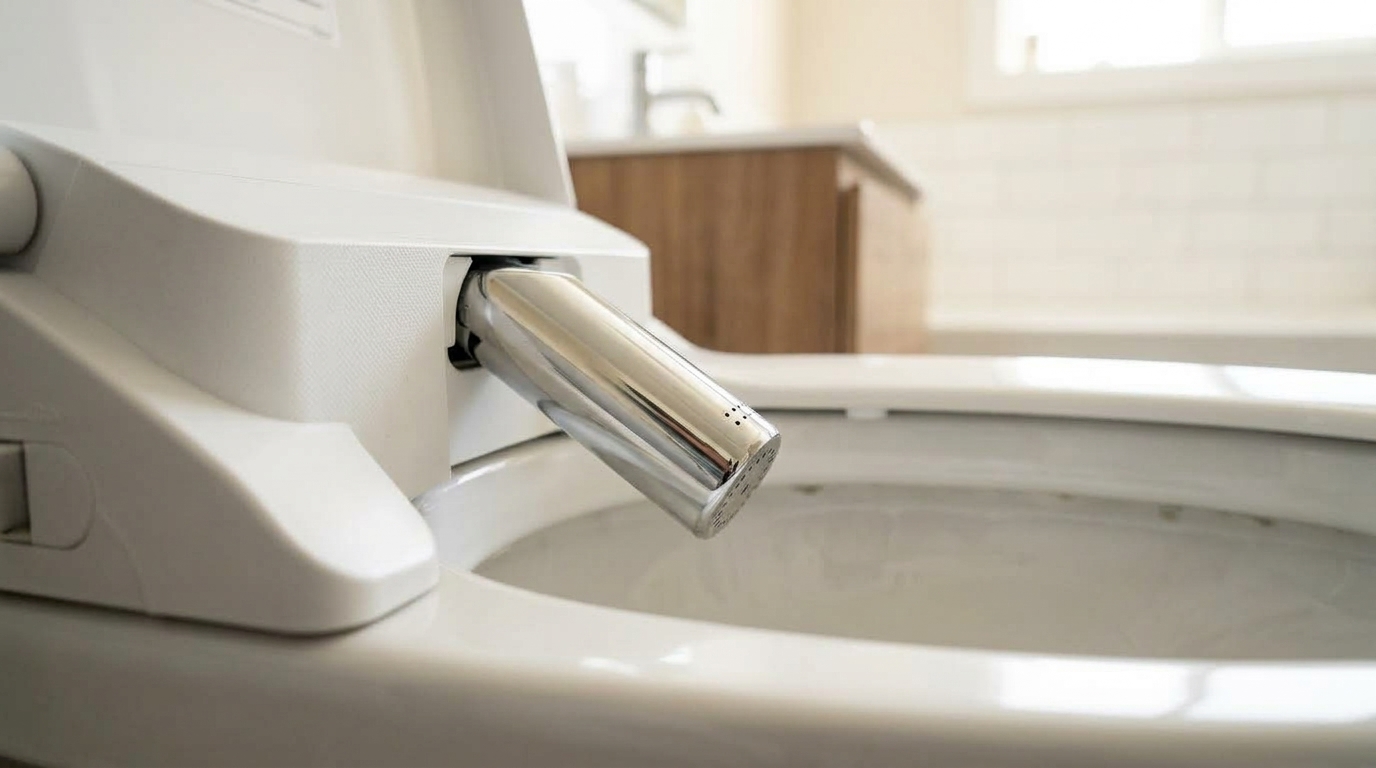
- Press and hold the 'Nozzle Clean' button for 3 seconds to extend the nozzle.
- For models without a clean button, unplug power and gently pull nozzle forward by hand.
- Shield electrical cords and nearby outlets with a dry towel before starting.
Step 2: Spray Citric Acid & Dissolve Uric Scale
- Dissolve 1 tablespoon (approx. 10g) of citric acid powder into 300ml of warm water in a spray bottle.
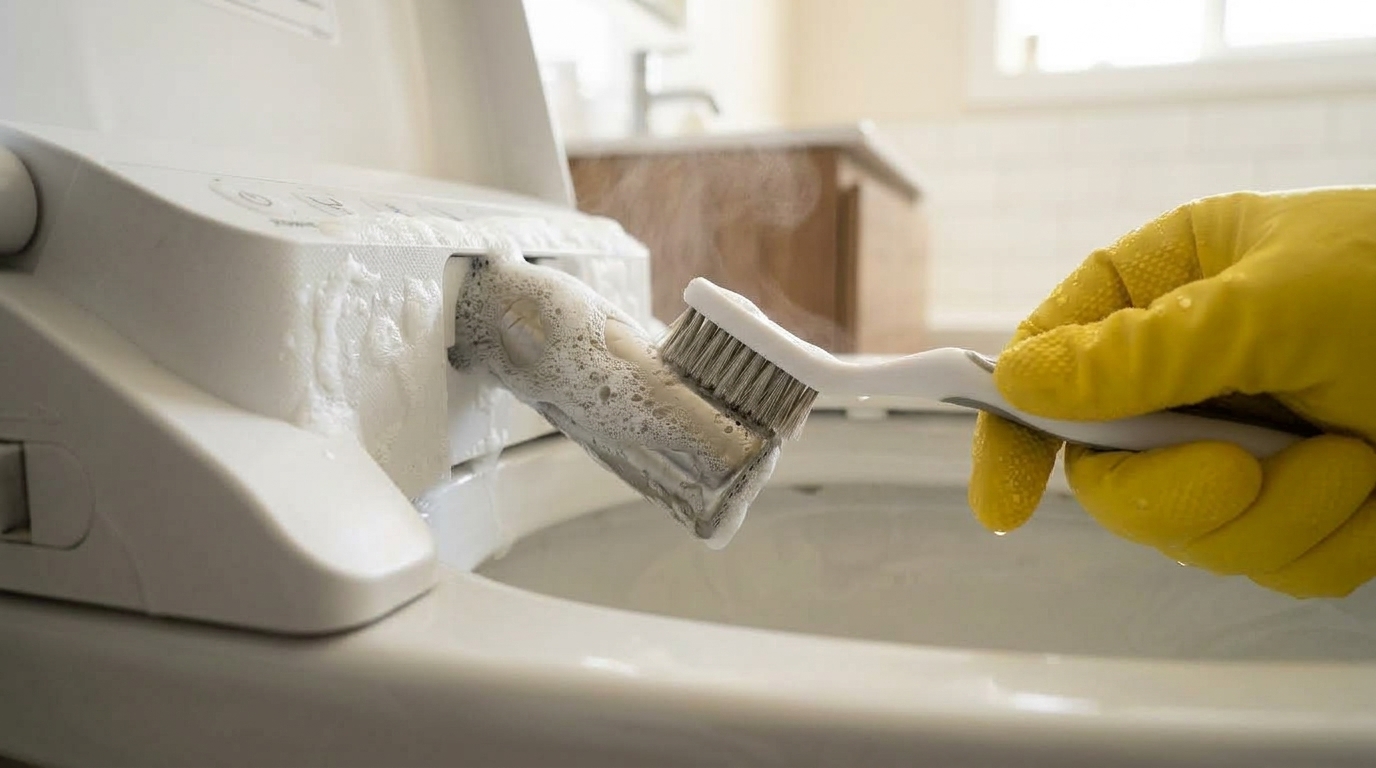
- Liberally mist the extended nozzle rod, spray tip, and nozzle door recess.
- Allow the solution to sit for 3 to 5 minutes to chemically dissolve alkaline uric scale.
- For stubborn encrustations, wrap the nozzle in a citric-acid-soaked paper towel for 5 minutes.
Step 3: Detail Micro-Brushing & High-Temp Steam Sanitation
- Gently scrub the nozzle rod and spray apertures using a soft-bristled brush or interdental brush.
- If the nozzle tip cap is detachable, twist counter-clockwise to remove and clean inner orifices.
- Apply 100°C steam using a concentrated nozzle attachment to eradicate 99.9% of hidden E. coli.
- If steam is unavailable, rinse thoroughly with warm 60°C water to flush away loosened scale.
Step 4: One-Touch Detachment & Toilet Mount Deep Clean
- Press the one-touch release catch button located on the right (or left) side of the bidet unit.
- While holding the button, gently slide the entire bidet seat forward to detach from the porcelain toilet bowl.
- Spray citric acid onto the hidden uric deposits and mold trapped on the porcelain mounting area and scrub clean.
- Wipe the bottom sensor area and filter connection zone with a damp microfiber cloth.
Step 5: Microfiber Dry Wipe & Nozzle Retraction
- Thoroughly wipe all moisture from the nozzle, bidet underside, and porcelain bowl with a dry microfiber cloth.
- Slide the bidet body back onto the mounting bracket until it clicks firmly into place.
- Press the 'Stop' button on the remote/panel to retract the nozzle back into its housing.
- Plug into power, run 1 automatic self-clean test cycle, and turn on ventilation fan to dry the room.
🩺 Self-Diagnosis Guide
✅ Can be restored with care
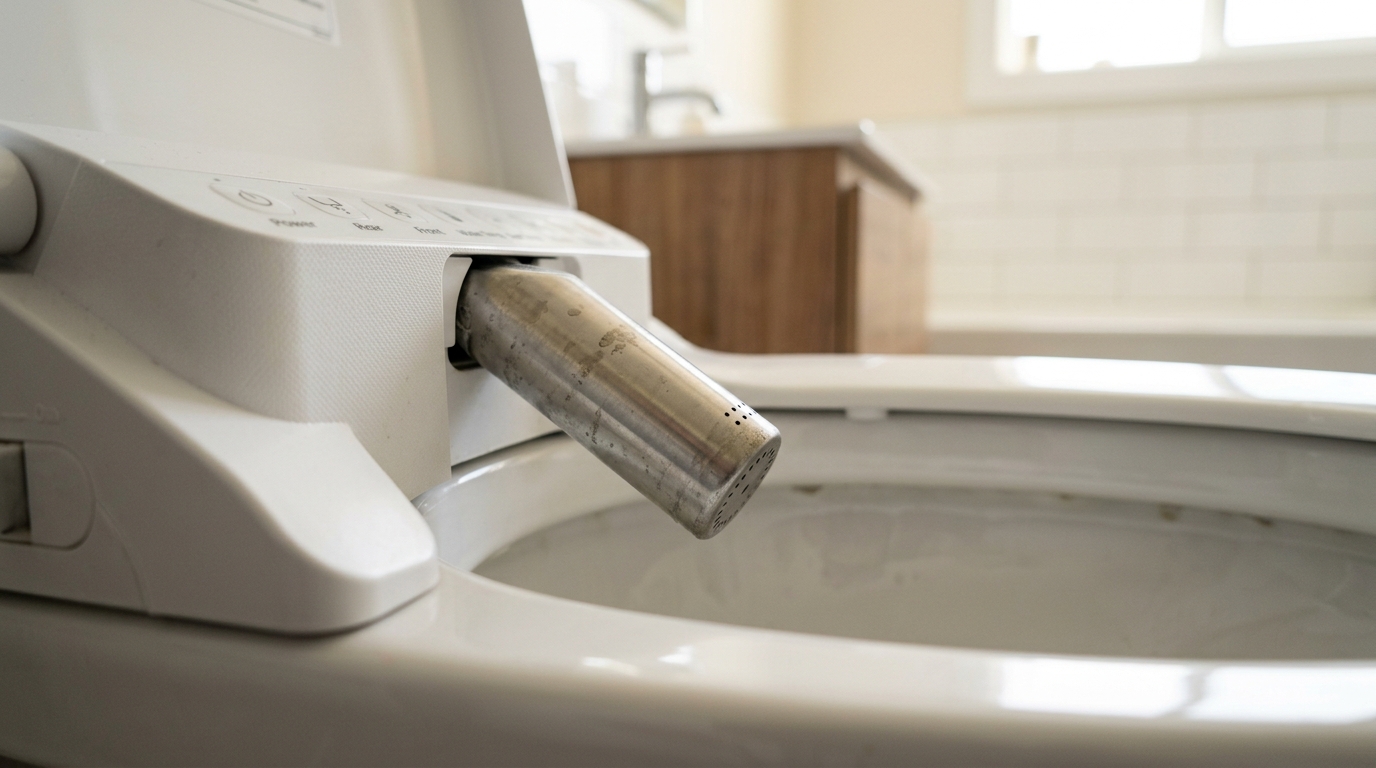
- Yellow uric scale or pink bacterial biofilm visible around nozzle casing
- Water jet spraying unevenly or spray pressure significantly reduced
- Persistent ammonia toilet odor originating from underneath bidet seat mount
- Residue remaining on nozzle even after automatic self-cleaning cycle
- Motor extension mechanism and electronic touch controls fully functional
❌ Reached end of lifespan (Proper disposal required)
- Nozzle motor gear stripped or broken, failing to extend or retract
- Water infiltrated internal circuit board causing immediate short circuits and GFCI breaker trips
- Internal water heating element corroded or seat heating coil completely dead
- Mounting bracket cracked and plastic housing fractured causing continuous bottom leakage
⚠️ Important Safety Precautions
- Electrical Shock Safety: Keep water and cleaning spray strictly away from power plugs and wall outlets.
- Do NOT Use Chlorine Bleach: Bleach severely corrodes stainless steel coatings and degrades internal rubber O-rings, leading to leaks.
- Avoid Excessive Mechanical Force: Never twist or forcefully yank the extended nozzle, as this will damage the precision gear motor.
- Caution with Rim Toilet Blocks: Acidic or bleaching in-tank blue cleaners emit vapor that can corrode bottom bidet sensors.
💡 Cost Efficiency & Professional Inspection Guide
💡 Bidet Replacement Guide: 3 Key Technical Specs Before Buying
♻️ Reached end of lifespan?
Check local disposal regulations instead of forcing reuse.
❓ Frequently Asked Questions (FAQ)
Q. Can I sanitize the bidet nozzle with chlorine bleach?
A. No, never use chlorine bleach on bidet nozzles. Harsh chlorine oxidizes stainless steel finishes and chemically degrades internal rubber O-rings, leading to leaks and mechanical failure. Food-grade citric acid solution or warm soapy water is the safest and most effective choice.
Q. What should I do if the nozzle doesn't extend when pressing the clean button?
A. Unplug the bidet for 10 seconds and plug it back in to reset the microprocessor. If it still does not extend, gently open the nozzle guard flap and carefully pull the tip forward while wearing rubber gloves. If you feel strong resistance, the gear motor may be jammed—contact manufacturer service rather than forcing it.
Q. Why does my toilet still smell bad even after cleaning the bathroom?
A. The persistent odor is almost always trapped underneath the bidet seat where it mounts to the porcelain bowl. Urine splashes and moisture seep into this hidden junction, forming stubborn uric scale and bacterial biofilm. Use the quick-release button on the side to detach the seat and clean underneath monthly.
Q. How much does a professional bidet deep cleaning service cost?
A. Professional home appliance deep cleaning services typically charge between $30 to $50 per bidet unit. These services usually include complete disassembly, high-pressure steam sanitization, UV sterilization, and filter replacement. Booking a professional service once a year alongside monthly self-care is ideal.