Bicycle Chain Degreasing & Lubrication Maintenance Guide | Citrus Degreaser Care
Complete drivetrain maintenance guide for removing black grime sludge from bicycle chains and cassettes, preventing chain stretch, and applying lube for quiet, smooth shifting.
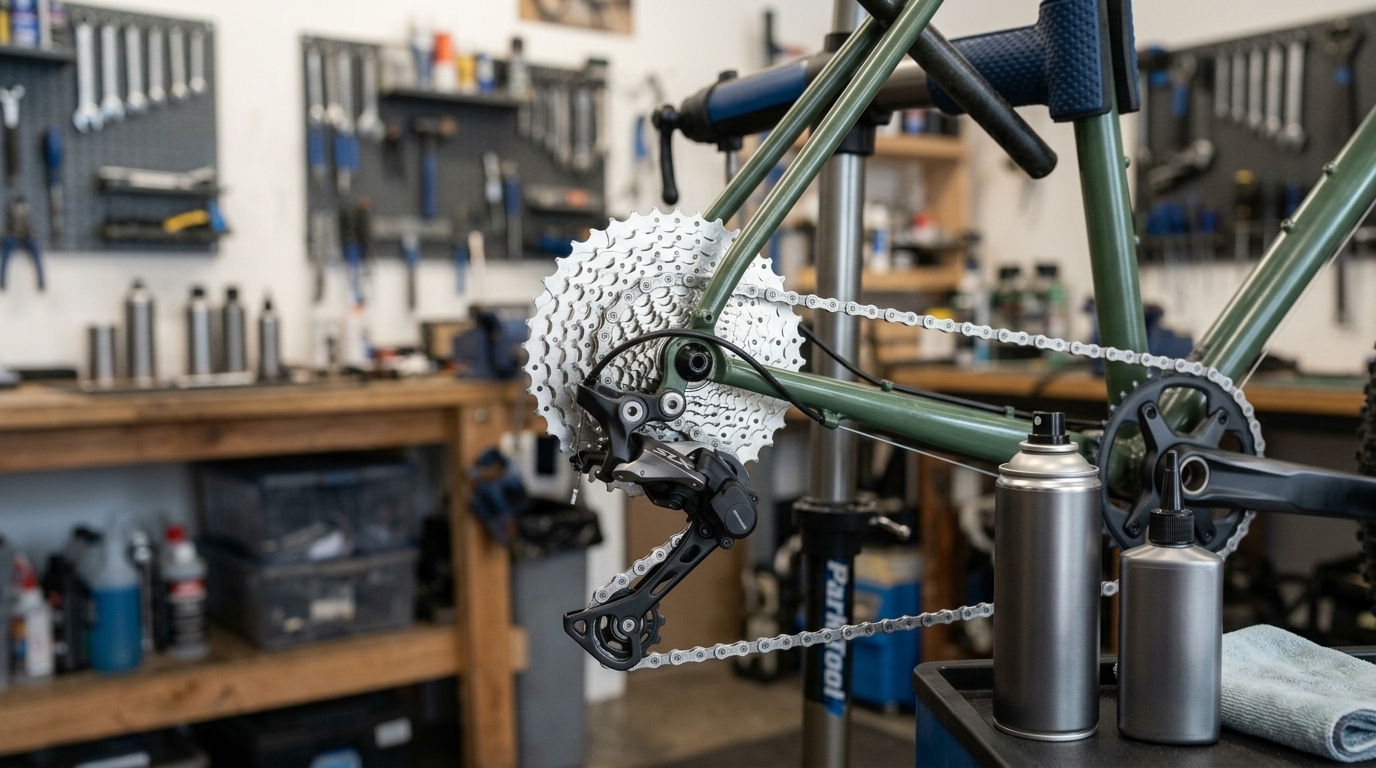
🛠️ Required Tools & Cleaning Agents
🔄 Alternative Detergents & Eco Tips
- Chain Degreaser → Alt: Dish Soap + Warm Water Solution (Mild eco-friendly degreasing option for light road dust)
- Chain Cleaning Brush → Alt: Two Toothbrushes Taped Face-to-Face (Simultaneously cleans top, bottom, and side plates of the chain links)
✨ Step-by-Step Care Instructions
Step 1: Position Bike & Protect Floor with Cardboard
- Place bicycle on a repair stand or rest against a wall in a well-ventilated area.
- Lay cardboard or newspaper beneath the drivetrain to catch black oily drippings.
- Shift chain to the smallest rear cog for slack and wear protective nitrile gloves.
Step 2: Apply Citrus Degreaser & Scrub with Chain Brush
- Spray or apply citrus chain degreaser generously across all chain links.
- Backpedal the crank while clamping the chain with a stiff-bristled chain cleaning brush.
- Scrub between rear cassette cogs and derailleur jockey wheels to remove compacted grime.
Step 3: Wipe Off Black Sludge with Clean Rags
- Wrap a clean shop rag firmly around the chain and backpedal continuously.
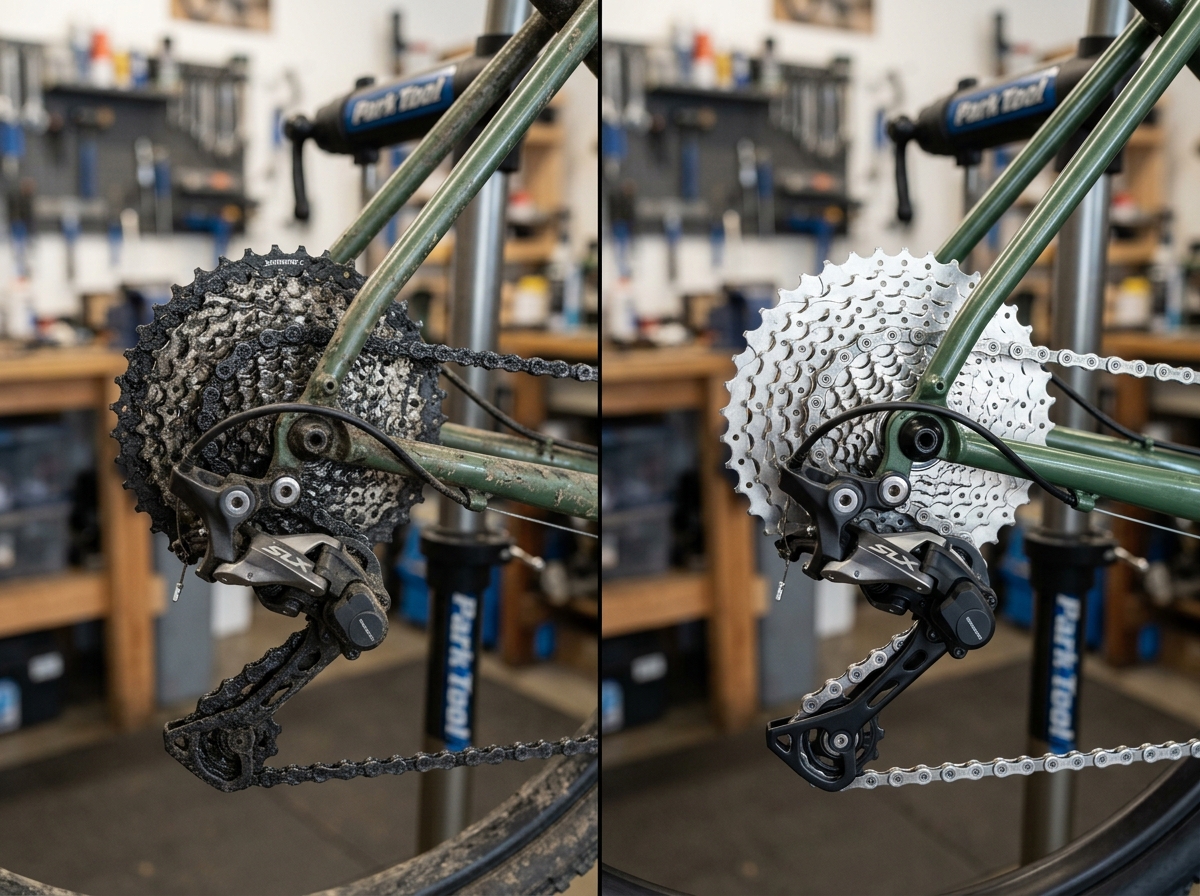
- Repeat with fresh sections of the rag until the chain plates shine silver and leave no black streaks.
- Rinse with a light spray of clean water if using water-soluble degreaser, then wipe 100% dry.
Step 4: Apply 1 Drop of Chain Lube to Every Roller Link
- Find the chain quick link / master link as a starting reference point.
- Carefully apply exactly 1 drop of chain lube onto the inside of each roller link as you backpedal.
- Allow 5 minutes for the lubricant to penetrate deep into internal pin bushings.
Step 5: Wipe Excess Lube Off Outer Plates
- Lightly backpedal through a clean rag to wipe off all excess lube from the outside of the chain.
- Lubricant is only needed inside the rollers; excess oil on the outside only attracts road dirt.
- Shift through all gears to verify smooth, quiet, crisp gear changes.
🩺 Self-Diagnosis Guide
✅ Can be restored with care
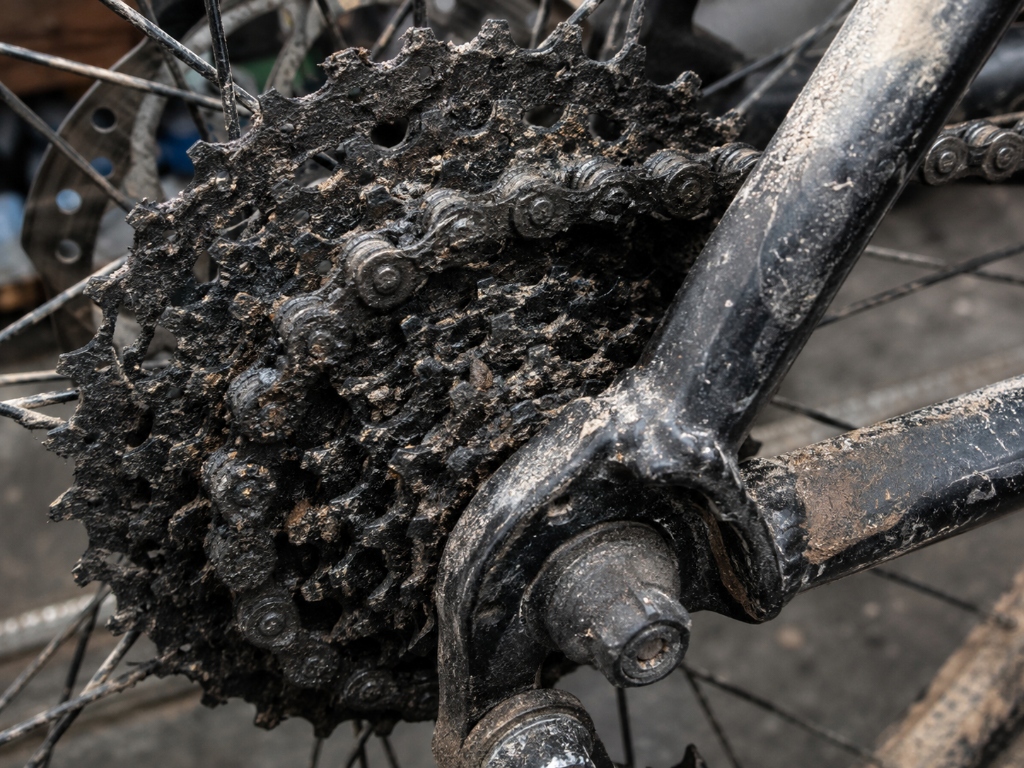
- Black oily grime and grit coating chain links, derailleur pulleys, and rear cassette cogs
- Squeaking, chirping, or grinding noise coming from the drivetrain while pedaling
- Light surface oxidation or surface rust spots on outer chain plates
❌ Reached end of lifespan (Proper disposal required)
- Chain wear indicator tool shows chain stretch exceeding 0.75% or 1.0%
- Stiff frozen chain links with deep structural rust causing chain skipping under load
- Rear cassette gear teeth worn into sharp 'shark fin' shapes causing chain slip
⚠️ Important Safety Precautions
- Never get degreaser or oil lubricant on disc brake rotors or brake pads (causes severe brake failure).
- Do NOT use automotive engine oil (too viscous and attracts heavy road grit).
- Always wipe excess lube off outer chain plates to prevent rapid dirt accumulation.
💡 Bicycle Chain Replacement Guide: 3 Key Technical Specs Before Buying
♻️ Reached end of lifespan?
Check local disposal regulations instead of forcing reuse.
❓ Frequently Asked Questions (FAQ)
Q. Why should WD-40 never be used as a bicycle chain lubricant?
A. Standard WD-40 is a penetrating solvent and water displacer, not a long-lasting lubricant. It dissolves and flushes away the high-pressure grease inside chain pins, leaving metal-on-metal friction and accelerating chain wear.
Q. What is the difference between Dry Lube and Wet Lube?
A. Dry Lube uses a wax/PTFE base in a fast-drying carrier, creating a dry film that repels dust (ideal for dry weather). Wet Lube is a thick, water-resistant synthetic oil that stays on during wet rain but attracts more dirt.
Q. Why does an overly dirty chain damage the whole bike?
A. Grit and sand mixed with old chain oil form an abrasive grinding paste. This grinds down teeth on expensive rear cassettes and front chainrings, leading to chain skipping and requiring costly drivetrain replacements.