How to Dispose of Wireless Keyboard
- 1Keyboards and mice feature internal PCB circuit boards, metal switch springs, and wiring beneath plastic shells, making them non-recyclable as standard plastic.
- ✓Remove all AA/AAA batteries and deposit the electronic units into small household e-waste collection bins (or general waste bags).
How to Dispose (5 Steps)
- 1
Verify Non-Recyclable E-Waste Construction: Keyboards and mice contain printed circuit boards, copper wiring, and metal switches, prohibiting disposal in regular plastic recycling.
- 2
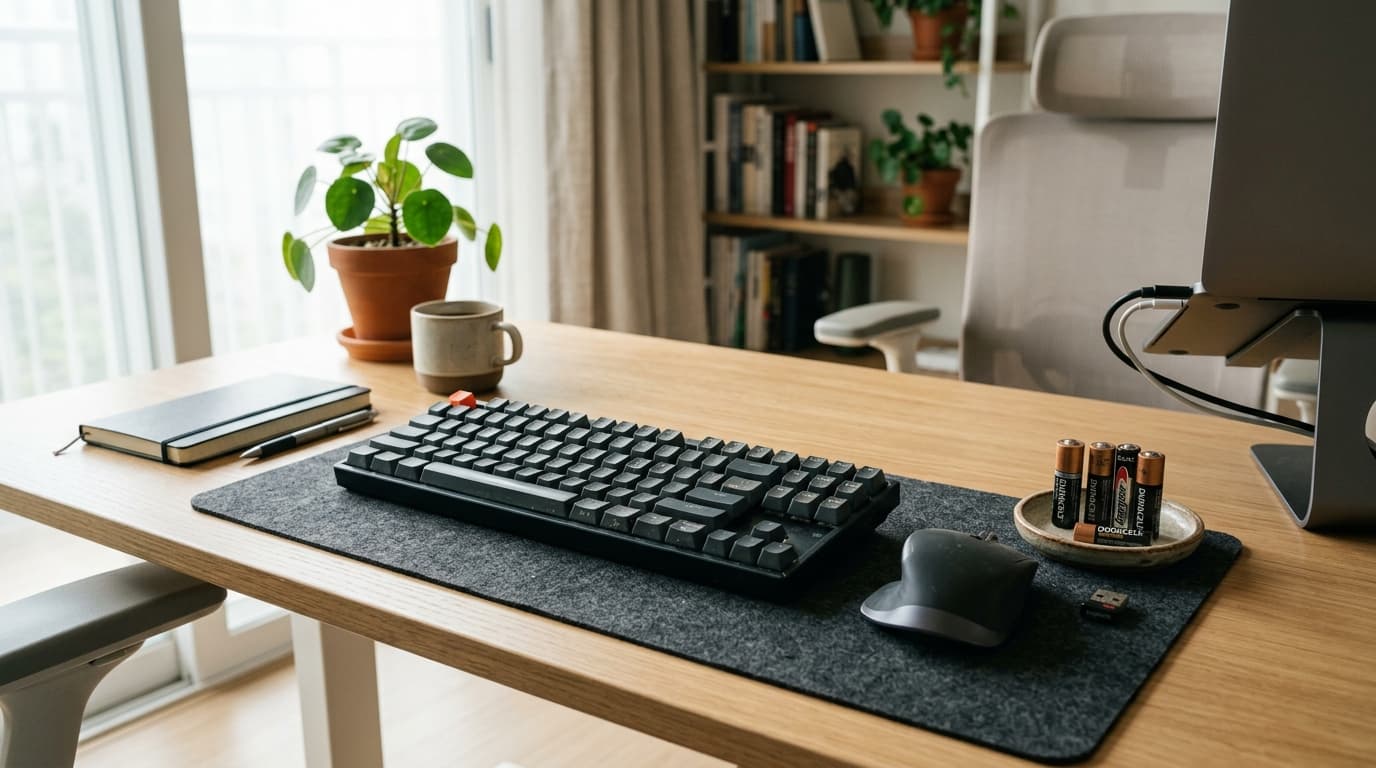
Remove Alkaline / Dry Cell Batteries: Open the battery compartment of battery-powered models, remove AA/AAA batteries, and drop them into designated battery recycling bins.
- 3
Handle Built-in Lithium Rechargeables Safely: Do not attempt to pry open sealed USB-C rechargeable models; keep the unit intact to prevent battery puncture fires.
- 4
Bundle USB Dongles and Charging Cables: Pack the 2.4GHz wireless USB receiver dongle and charging cables together with the peripherals for electronic recycling.
- 5
Deposit into Small Household E-Waste Bins: Drop the devices into small e-waste collection bins located in apartment recycling stations or local district community centers for free.
Real-World Examples
Battery-operated wireless keyboard & mouse: Remove dry cells (to battery bin) ➔ unit to small e-waste bin
USB-C rechargeable Bluetooth mouse: Drop intact into small e-waste collection container
Wired mechanical gaming keyboard: Wrap cable and place in apartment/community e-waste bin
Bulk small electronics (5+ items): Book free home pickup via the Korean E-Waste Collection Service (1599-0903)
Frequently Asked Questions
Q. Why cannot keyboards and mice be recycled as plastic when their casings are plastic?
A. While the outer shell is ABS or PBT plastic, keyboards and mice house printed circuit boards, copper traces, solder alloys, metal springs, optical sensors, and rubber domes. Plastic recycling shredders cannot process these composite electronic assemblies, which must instead undergo specialized e-waste recovery to salvage valuable metals.
Q. How should I dispose of them if my neighborhood lacks a small e-waste bin?
A. If you live in standalone housing without dedicated e-waste bins, dry-battery models may be placed in municipal general trash bags once all AA/AAA batteries are fully removed. Built-in lithium rechargeable models should always be carried to the nearest community welfare center to eliminate trash compactor fire hazards.
Q. Is there any risk of personal data leakage from discarded keyboards or mice?
A. Standard keyboards and mice do not possess persistent storage drives (like SSDs or flash drives) and cannot store typed text or sensitive credentials. High-end gaming peripherals with onboard macro memory can be factory-reset via their configuration software before disposal for complete peace of mind.