How to Dispose of Flower Pot
- 1Disposing of potted plants requires a 3-way separation: shake off soil from dead plants and discard in municipal general trash, seal potting soil and ceramic/clay pots in non-combustible PP bags, and rinse plastic planter pots for plastic recycling.
- 2Separate Dead Plant Remains into General Trash: Pull out withered plants, shake off all clumped root soil, and discard stems, leaves, and roots into municipal general trash bags.
- 3Collect Potting Soil in Non-Combustible PP Bags: Discard spent soil, perlite, pumice, and gravel into heavy-duty non-combustible woven PP bags purchased from local district marts.
- ✓Dispose of Ceramic, Clay & Cement Pots via PP Bag or Sticker: Place small ceramic and terracotta pots into non-combustible PP bags; arrange large bulky garden planters via municipal oversized waste stickers.
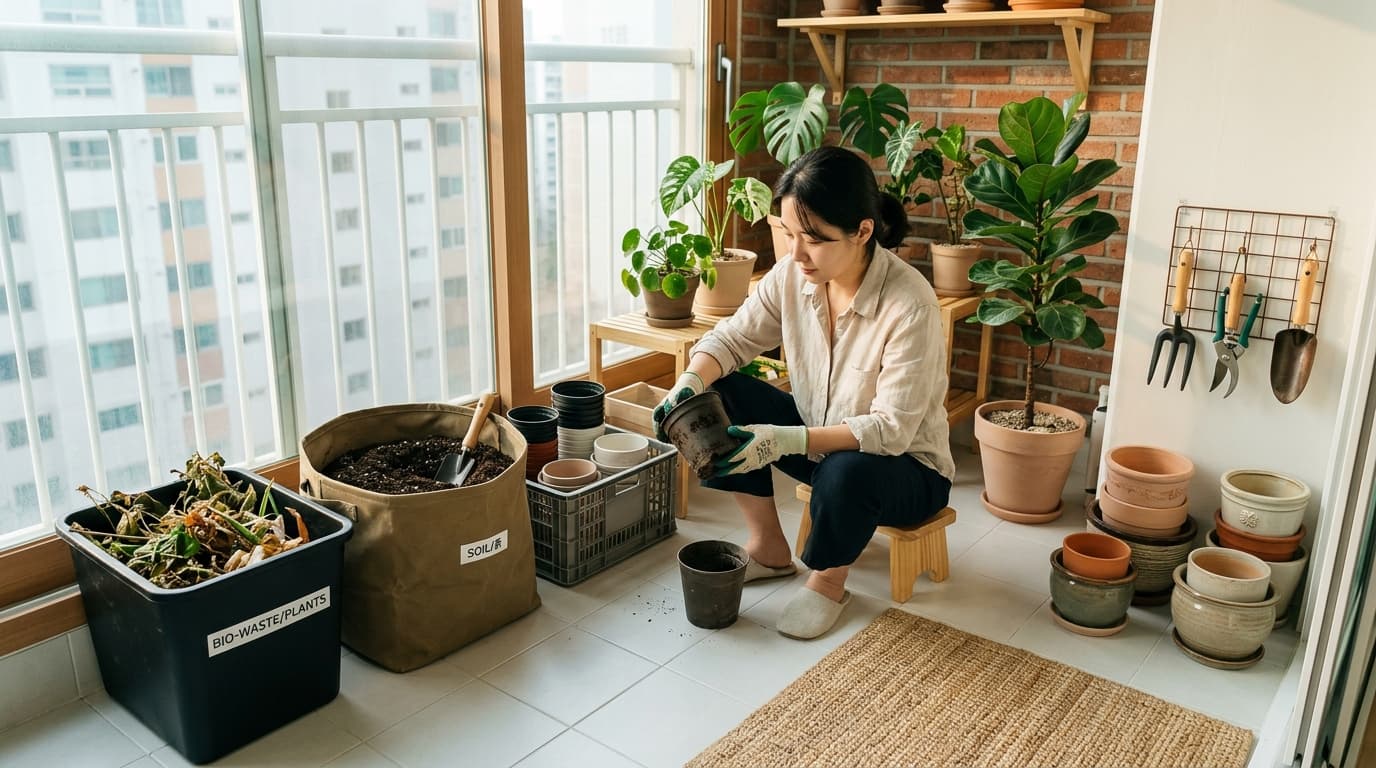
How to Dispose (5 Steps)
- 1
Separate Dead Plant Remains into General Trash: Pull out withered plants, shake off all clumped root soil, and discard stems, leaves, and roots into municipal general trash bags.
- 2
Collect Potting Soil in Non-Combustible PP Bags: Discard spent soil, perlite, pumice, and gravel into heavy-duty non-combustible woven PP bags purchased from local district marts.
- 3
Dispose of Ceramic, Clay & Cement Pots via PP Bag or Sticker: Place small ceramic and terracotta pots into non-combustible PP bags; arrange large bulky garden planters via municipal oversized waste stickers.
- 4
Safely Wrap Broken Planter Shards: Wrap broken ceramic shards in multiple layers of newspaper or cardboard before bagging to prevent puncturing the PP waste sack.
- 5
Rinse & Recycle Plastic Pots in Plastic Bins: Wash away residual mud and dirt from plastic nursery pots and planters before sorting into plastic recycling bins.
Real-World Examples
Potting soil, compost, pumice, and grit gravel: Seal inside certified non-combustible PP woven waste bags.
Dead leaves, roots, stems, and withered indoor greenery: Discard in general trash bag after shaking off soil.
Ceramic, terracotta, and porcelain pots: Place in non-combustible PP bags (or book bulky waste stickers for large oversized pots).
Plastic nursery pots & planter containers: Rinse mud clean and recycle in designated plastic bin.
Frequently Asked Questions
Q. Since soil is natural earth, can I dump spent flower pot soil in public apartment gardens or nearby hills?
A. No. Commercial indoor potting soils contain synthetic fertilizers, chemical additives, and potentially plant pests or mold spores. Dumping them in public landscape beds or green spaces violates the Waste Management Act (fines up to ₩1,000,000) and disrupts local soil biology. Always dispose of them in municipal non-combustible PP bags.
Q. If I only have a tiny handful of potting soil, do I still need to buy a special PP bag?
A. Technically, all mineral soil is non-combustible and requires designated PP bags. For negligible amounts (a single cup), you may mix it into your private yard soil or wrap it securely in newspaper before tossing into general trash, but using small 10L–20L non-combustible PP bags is the safest standard practice.
Q. Where can I purchase non-combustible PP woven trash bags in Korea?
A. Non-combustible bags are generally sold at local community service centers (Dong Administrative Welfare Centers), large neighborhood supermarkets, and designated Jongnyangje retail shops upon asking for Bulyeonseong Madae (불연성 마대).