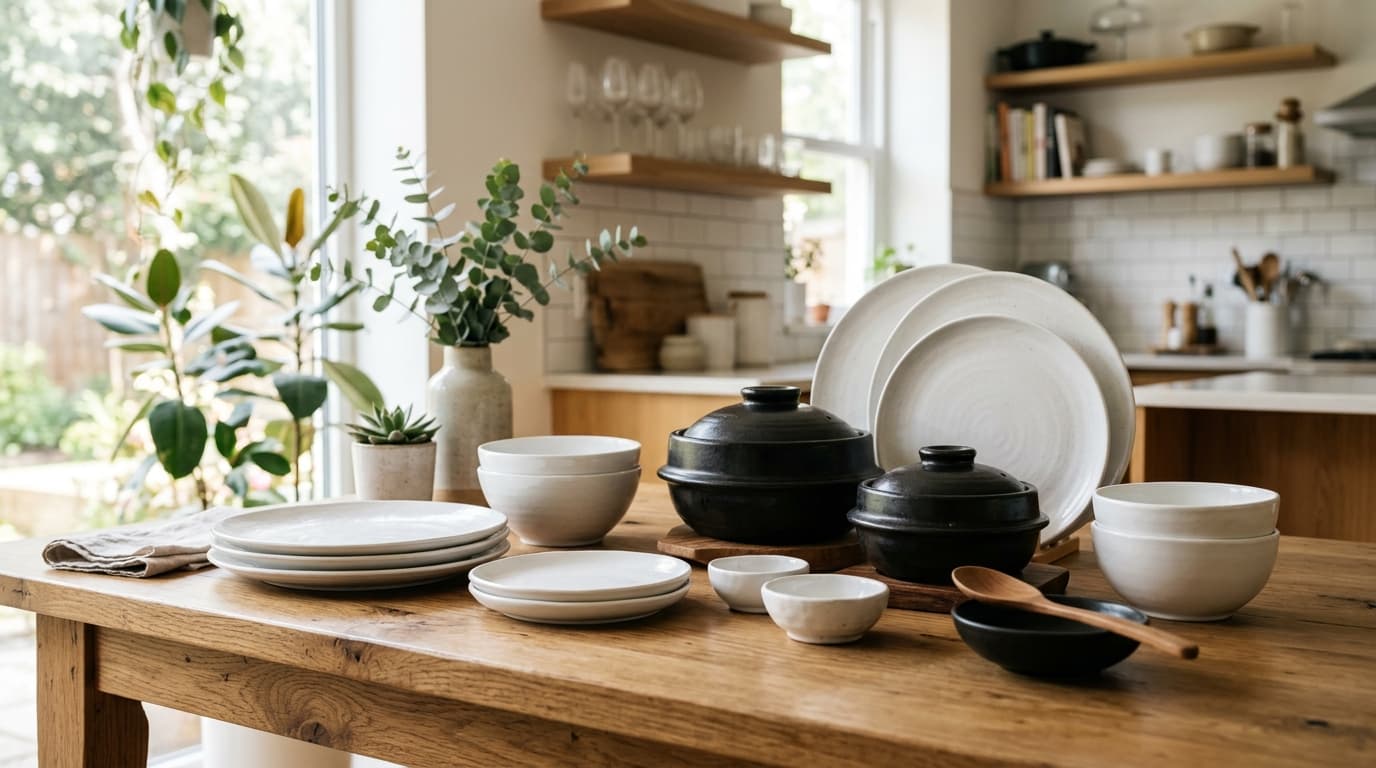
Ceramic Plates & Porcelain Dishes & Earthenware Clay Pots (Ttukbaegi)
Ceramic tableware, porcelain plates, earthenware pots (ttukbaegi), and clay flowerpots cannot be recycled with glass bottles due to high melting temperatures. Small amounts should be wrapped in newspaper and discarded in general trash bags, while bulk amounts require non-combustible PP bags.
How to Dispose (5 Steps)
- 1
Small quantities (1-2 items): Wrap chipped or broken porcelain dishes securely in 3-4 layers of newspaper, seal firmly with tape, and discard in general household trash bags.
- 2
Bulk quantities (dinnerware sets, heavy planters, moving cleanout): Purchase heavy-duty non-combustible waste sacks (woven PP bags) from local community centers, designated convenience stores, or hardware shops.
- 3
Never mix into glass bottle recycling: Ceramic clay, earthenware, and heat-resistant glass have distinct melting points that contaminate glass recycling furnaces.
- 4
Puncture prevention: Place sharp broken ceramic shards inside empty milk cartons or cardboard boxes before placing them into waste bags.
- 5
Worker safety labeling: Write 'Caution - Broken Ceramics' visibly on the exterior of the trash bag to protect municipal sanitation workers from cut injuries.
Real-World Examples
Chipped coffee mug (1 item): Wrap tightly in 3 sheets of newspaper, tape securely, and toss into general household trash bag
Broken clay earthenware pot (ttukbaegi): Pack inside a sturdy cardboard box and discard in general trash or non-combustible PP sack
Bulk set of 20 old ceramic dinner plates from moving cleanout: Purchase a 20L or 50L non-combustible woven PP bag at a local community center or convenience store
Frequently Asked Questions
Q. Why can't ceramic and porcelain dishes be placed in glass recycling bins?
A. Ceramics and porcelain are fired non-combustible minerals crafted from kaolin clay at extreme temperatures above 1,200°C. Because their chemical composition and melting points differ completely from soda-lime glass bottles (approx. 1,500°C), introducing them into glass furnaces creates solid unmelted inclusions that ruin recycled container integrity and cause equipment malfunction.
Q. Where can I purchase non-combustible waste bags (PP woven sacks) in Korea?
A. You can purchase official non-combustible sacks (bul-yeon-seong ma-dae) at local Community Service Centers (Dong Community Centers), designated convenience stores (GS25, CU, 7-Eleven), supermarkets, or local hardware stores. Pricing typically ranges from ₩1,000 to ₩1,500 for 10L, ₩2,000 to ₩3,000 for 20L, and approx. ₩5,000 for 50L bags.
Q. Can I dispose of broken ceramic flowerpots along with potting soil in non-combustible sacks?
A. Yes. Ceramic planters, terracotta pots, dry soil, sand, and gravel are non-burnable waste and should be placed together inside non-combustible sacks. However, organic plant stems, leaves, and roots should be separated and discarded in standard general trash bags.