Studio & One-Room Move-Out Cleanout: Waste Disposal & Deposit Return Guide
- 1When moving out of a studio or one-room officetel in Korea, the most frequent security deposit disputes involve excessive cleaning fee deductions for abandoned trash and unreasonable interior restoration claims.
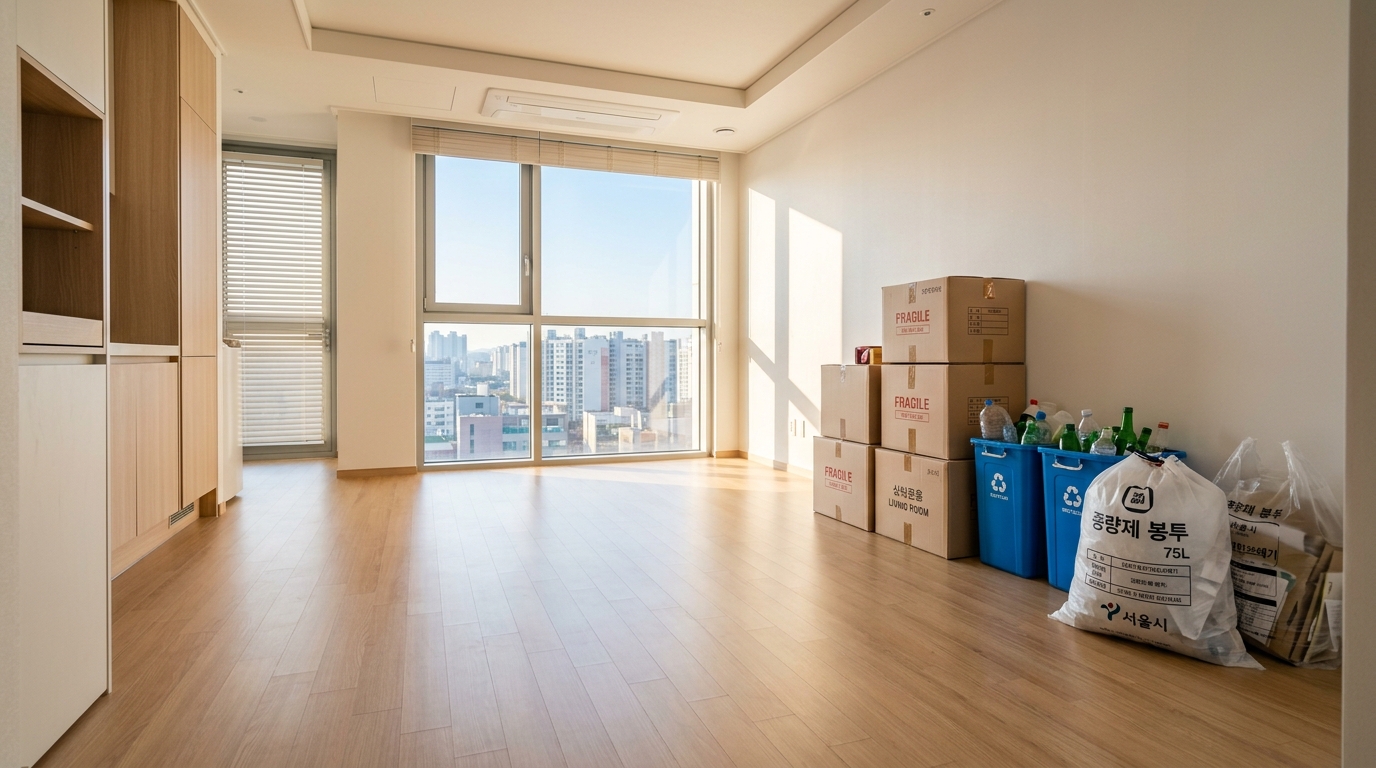
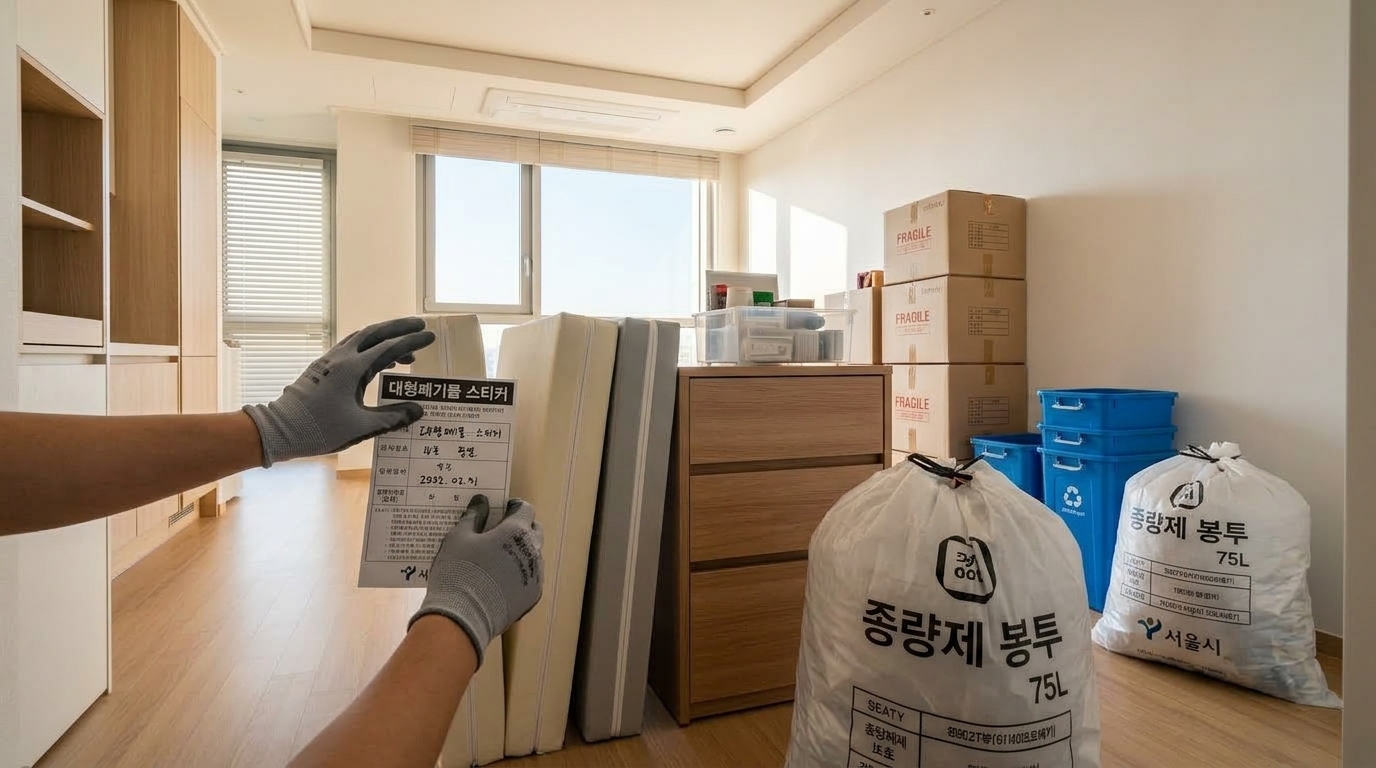
- 2Bulky furniture items you leave behind (mattresses, clothes racks, MDF dressers) must be registered for municipal bulky waste stickers prior to move-out day, while broken electronics should go to dedicated small e-waste bins.
- ✓Thoroughly emptying refrigerator food waste, clearing drain strainers, and distinguishing natural wear-and-tear from tenant-caused damage (adhesive tape residue, deep wallpaper tears) ensures hassle-free inspection and full deposit refund.
Follow these steps
- 1
Step 1 (Check Landlord Inventory & Sort Unwanted Items): Cross-check the lease agreement inventory (AC remote controls, washing machine, fridge, induction cooktop, shoe racks) to ensure all landlord-provided items remain intact, and sort personal items (mattresses, desks, shelving, mirrors) to be discarded.
- 2
Step 2 (Register Bulky Waste Stickers & Small E-Waste Drop-Off): Apply for municipal bulky waste collection stickers via district websites or mobile apps (e.g., Bbegi) 2–3 days before moving out, attach the permit codes to discarded furniture at the 1st-floor designated spot, and deposit small e-waste into community center boxes.
- 3
Step 3 (Empty Refrigerator & Clear All Food / Recyclables): Dispose of all leftover perishable food and frozen items in food waste bags, pack broken ceramic mugs and potted soil in non-combustible PP sacks, and clear rinsed recyclables from the unit completely.
- 4
Step 4 (Adhesive Removal & Hygiene Restoration): Gently remove two-sided tape, wall sticker residue, and adhesive hooks from walls using heat from a hair dryer or adhesive remover to prevent wallpaper tears, and clean bathroom/sink drain traps to pass final hygiene inspections.
- 5
Step 5 (Utility Meter Settlement & Security Deposit Refund): On checkout morning, photograph electrical (KEPCO 123), city gas, and water meter numbers, settle final usage charges via immediate bank transfer, claim the Long-term Repair Reserve (Jangi Suseon Chungdanggeum) from the landlord, and verify 100% deposit wire transfer.
Frequently asked question
Do pinholes (Kokkopin) or light nail holes on studio wallpaper require tenant compensation?
Under Ministry of Land and LH Rental Restoration Guidelines, minor pinholes from non-marking pins (Kokkopin) and natural UV fading are classified as normal wear-and-tear, which landlords cannot charge against tenants. However, deep masonry anchor holes, wall gouges from ripping double-sided foam tape, heavy indoor smoking yellowing, or unauthorized paint require partial repair compensation.
Am I responsible for disposing of furniture or kitchenware left behind by previous tenants?
No. Any leftover items not listed in your move-in condition report or inventory photos are the landlord's responsibility. Provide dated move-in photos to the landlord or property manager to prove prior existence so you are not wrongfully charged for their removal.
What if checkout day does not coincide with the neighborhood scheduled trash collection night?
For apartments and officetels, leave sticker-tagged bulky items in designated ground-floor waste zones and share the permit number with the building manager. For general trash on non-pickup days, coordinate with the landlord to place sealed bags in the internal holding corner rather than dumping them illegally on public sidewalks.
How do tenants receive a refund for the 'Long-Term Repair Reserve Fund' upon checkout?
The Long-Term Repair Reserve Fund (Jangi Suseon Chungdanggeum) is a capital maintenance cost legally owed by the property owner, even though it is billed through the tenant's monthly maintenance fees. On checkout day, obtain a payment certificate from the management office and present it to the landlord to receive a full cash refund (typically ₩100,000–₩300,000 for 1–2 years).