Blender Blade & Silicone Gasket Deep Cleaning Guide | Remove Stubborn Odors, Mold & Stains with Eggshells and Baking Soda
Complete guide to safely deep cleaning blender blades and silicone gaskets: eliminating stubborn smoothie stains, odor, and black mold using crushed eggshells, baking soda, and vinegar without risking finger cuts.
🛠️ Required Tools & Cleaning Agents
🔄 Alternative Detergents & Eco Tips
- Eggshells → Alt: 2 Tablespoons Coarse Salt + 3-4 Ice Cubes (Salt grains and hard ice safely scrub away stuck-on garlic, ginger, and fruit pulp from spinning blades.)
- White Vinegar → Alt: 1 Teaspoon Citric Acid or Fresh Lemon Rind (Leaves a fresh citrus scent while breaking down hard water limescale without pungent sour vinegar odors.)
- Toothpick for Gasket Removal → Alt: Silicone Scraper or Blunt Tip Paperclip (Use blunt tools instead of sharp metal awls to avoid tearing the delicate airtight silicone gasket ring.)
✨ Step-by-Step Care Instructions
Step 1: Whirlpool Clean with Warm Soapy Water
- Fill the blender jar halfway with 40-50°C warm tap water.
- Add 1 to 2 drops of mild liquid dish soap and 1 teaspoon of baking soda.
- Secure the lid tightly and run on high speed or Pulse mode for 30 to 60 seconds.
- Let the powerful vortex dislodge superficial fruit pulp and protein residue, then pour out dirty water.
Step 2: Safely Disassemble Blade Assembly & Silicone Gasket
- Unscrew the bottom blade locking base ring counterclockwise from the container jar.
- Use a wooden toothpick or dull butter knife to carefully pop the silicone gasket ring out of its groove.
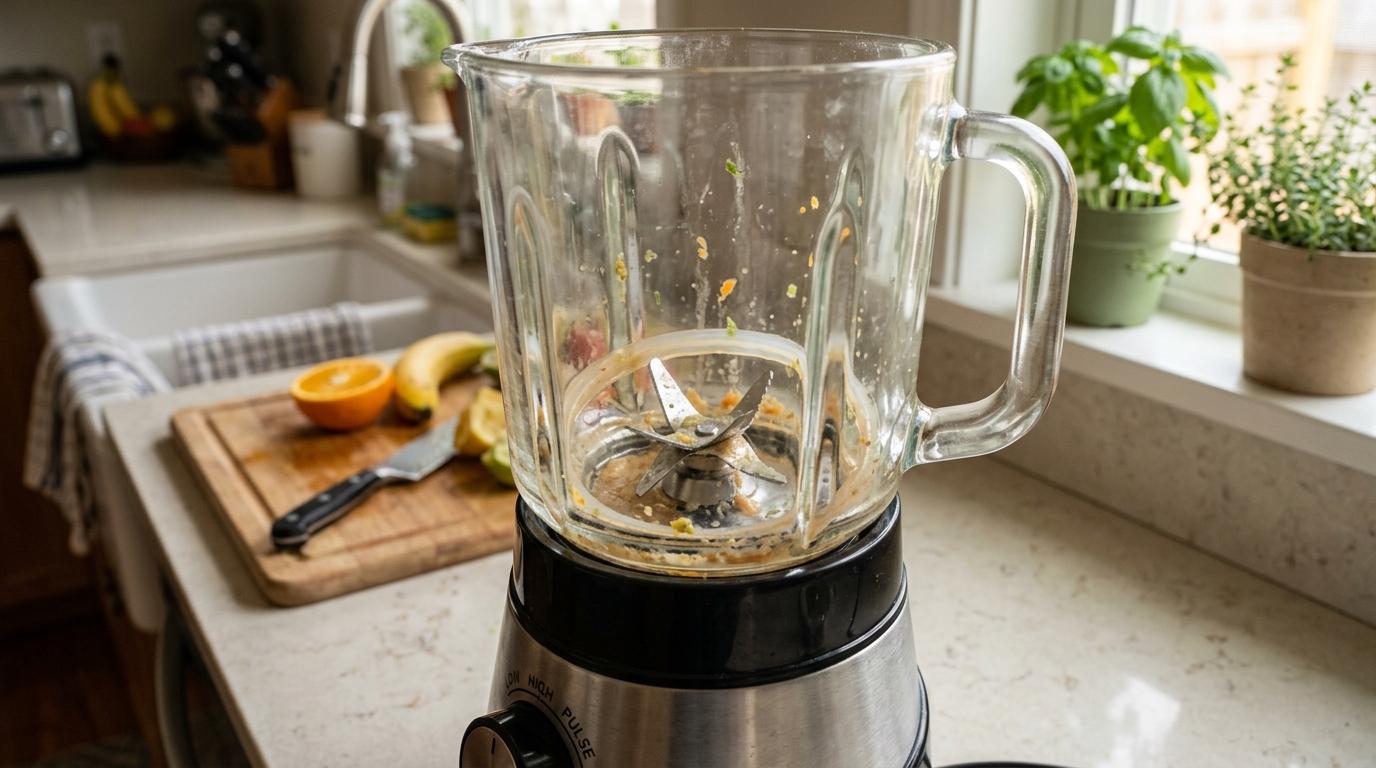
- Inspect the black mold specks, trapped bacteria, and sour garlic/smoothie odors hidden behind the gasket.
- Handle the sharp stainless steel blade assembly with care to prevent accidental finger cuts.
Step 3: Soak in Warm Baking Soda Bath & Detail Brush Scrubbing
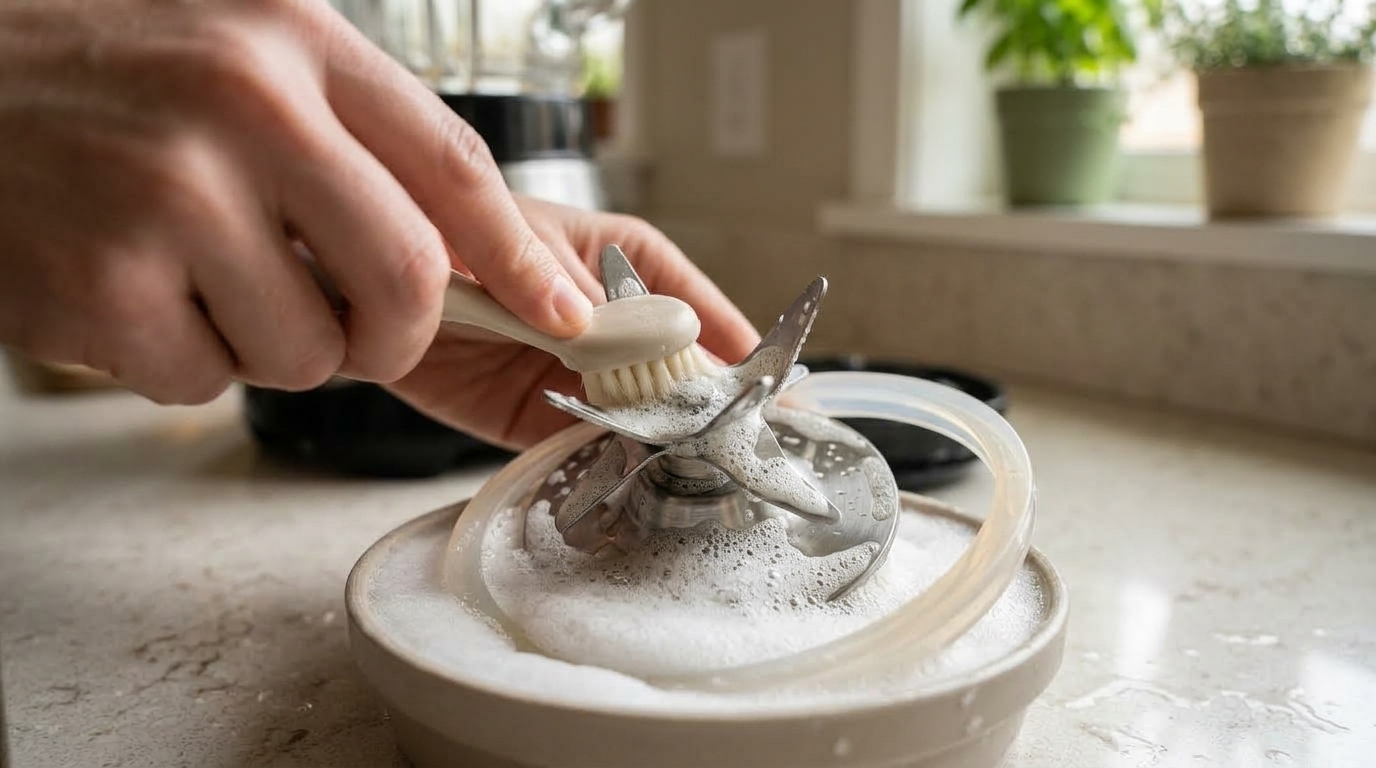
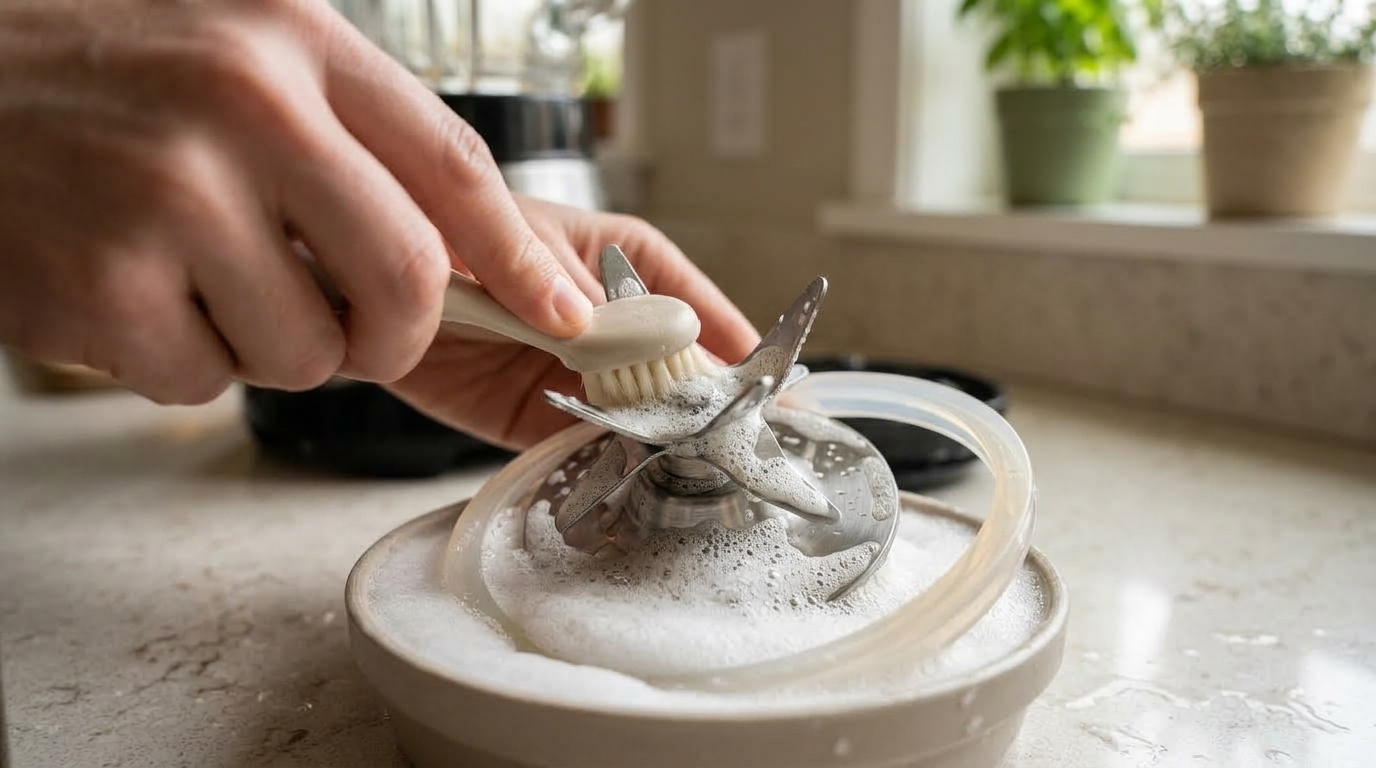
- Fill a small basin with warm water and dissolve 1 tablespoon of baking soda plus 1 tablespoon of white vinegar.
- Submerge the detached silicone seal ring and blade assembly for 10 minutes to loosen grease and mold spores.
- Dip a fine-bristle detail brush or toothbrush in baking soda paste and scrub the underside crevices and gasket grooves.
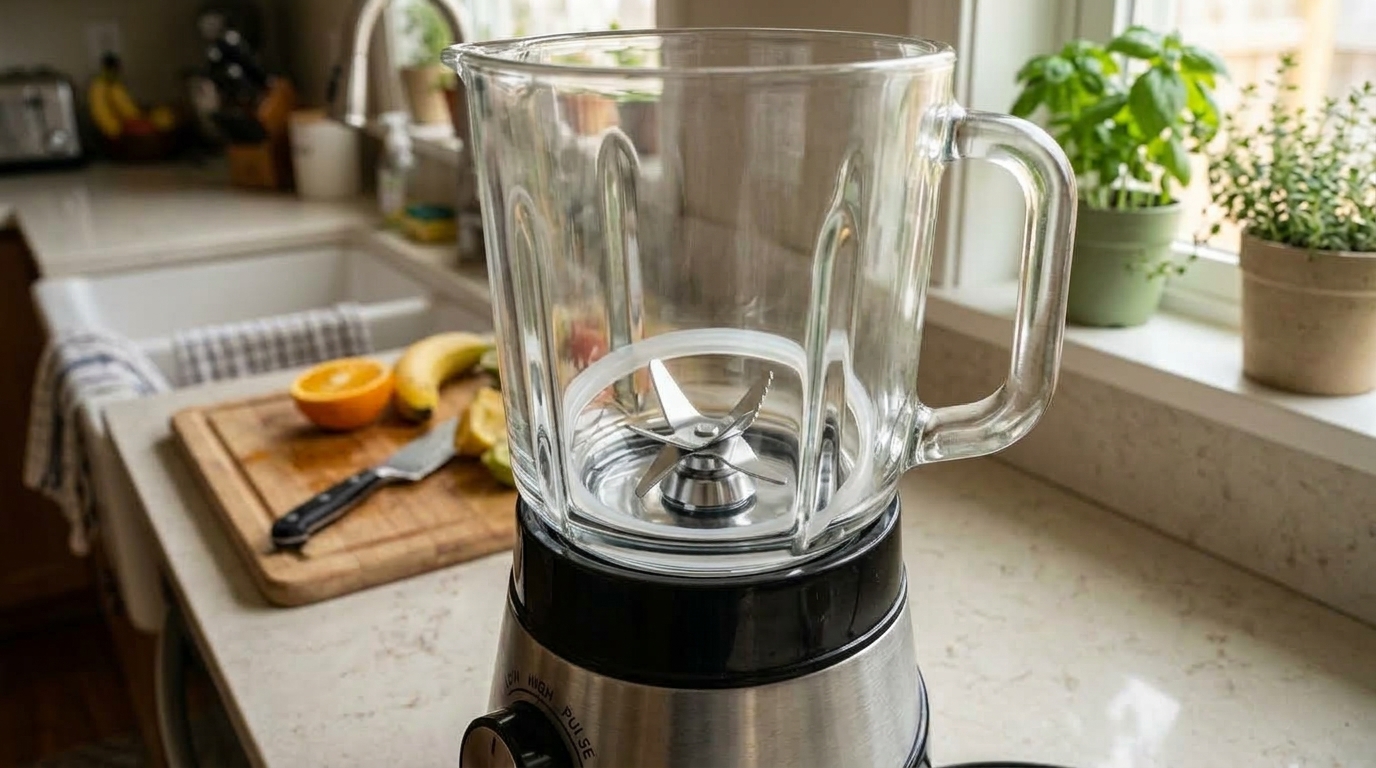
- Rinse thoroughly under running warm water until all detergent and baking soda residues are completely gone.
Step 4: Eggshell & Baking Soda Pulse Polish for Blade Sharpening
- Reassemble the jar lightly and drop in 2 to 3 crushed, clean dried eggshells.
- Add 1 tablespoon of baking soda and approximately 200ml of water to submerge the eggshell pieces.
- Pulse the blender on high for 1 minute; the calcium carbonate eggshell fragments naturally abrade stubborn stains and polish blade edges.
- Discard the pulverized eggshell slurry and rinse the jar thoroughly with clean water 2 to 3 times.
Step 5: Final Sanitizing Rinse & Inverted Air-Drying
- Fill with warm water and 1 tablespoon of vinegar, running a final 20-second whirlpool cycle to eliminate limescale haze.
- Wipe the exterior of the container, base ring, and gasket dry with a clean microfiber towel.
- Leave the jar inverted upside-down on a well-ventilated dish rack without the lid on to achieve 100% moisture evaporation.
- Once completely dry, reseat the silicone gasket firmly to preserve elasticity and prevent future leaks.
🩺 Self-Diagnosis Guide
✅ Can be restored with care
- Yellowish smoothie residue and juice discoloration coating the jar walls and blade base
- Black mold spots or stubborn garlic/onion odors trapped inside the silicone rubber seal ring
- Cloudy white mineral scale and hard water haze dulling the transparent glass or Tritan jar
- Food particles dried hard under spinning blades where reaching with bare hands is unsafe
❌ Reached end of lifespan (Proper disposal required)
- Black mechanical grease or lubricant leaking from the blade center bearing into food
- Drive socket coupler gear stripped, spinning freely with heavy burning plastic odor and smoke
- Deep structural cracks in the glass or Tritan container causing liquid leakage during operation
- Motor base internal board shorted out from water immersion, tripping home circuit breakers
⚠️ Important Safety Precautions
- Never stick bare hands or loose washcloths inside the jar near spinning blades (severe laceration hazard).
- Never submerge the motorized base unit in water or rinse under running taps (fatal electric shock and motor burnout).
- Always blend eggshells with water; blending dry hard shells causes severe motor overheating and blade bluntness.
- Never blend boiling liquids above 60°C with a tightly sealed lid, as sudden steam expansion causes explosive lid blowout.
💡 High-Speed Blender Replacement Guide: 3 Key Technical Specs Before Buying
♻️ Reached end of lifespan?
Check local disposal regulations instead of forcing reuse.
❓ Frequently Asked Questions (FAQ)
Q. Will blending crushed eggshells scratch or dull the stainless steel blender blades?
A. No. Eggshells are composed of calcium carbonate (Mohs hardness ~3), which is significantly softer than hardened kitchen stainless steel blades (hardness ~5-6). Instead of scratching metal, eggshells act as a gentle, natural abrasive compound that strips off polymerized protein residue and polishes blade edges safely. Always blend with 1 cup of water for 30-60 seconds to protect motor bearings.
Q. How do I permanently remove sour garlic odors and mold from silicone blender gaskets?
A. Silicone rubber is porous and traps odor molecules deep within its microstructure. Soak the detached gasket in a solution of warm water, 1 tablespoon of baking soda, and 2 tablespoons of clear vodka/soju (or white vinegar) for 30-60 minutes, then sun-dry thoroughly. If black mold has deeply stained the inner silicone substrate, replace it with a new OEM gasket for food safety.
Q. My blender emits a burning plastic smell and smoke while operating. Is it safe to continue?
A. Stop and unplug immediately. This indicates motor overload from blending dense ice/frozen fruits, or a seized blade bearing generating high frictional heat that scorches electrical winding coils. Allow it to cool for 30 minutes; if the burning smell persists during an empty water run, the motor is irreparably damaged and must be serviced or recycled.
Q. How should I properly dispose of a broken or unusable blender?
A. Blenders are categorized as small electronic home appliances (under 1 meter). In South Korea, you can drop them off free of charge in municipal small e-waste collection bins at community centers and apartment complexes, or schedule a free nationwide home pickup when discarding 5 or more small appliances together.