Kimchi Season Vegetable Waste Disposal and Temporary General Trash Bag Guidelines
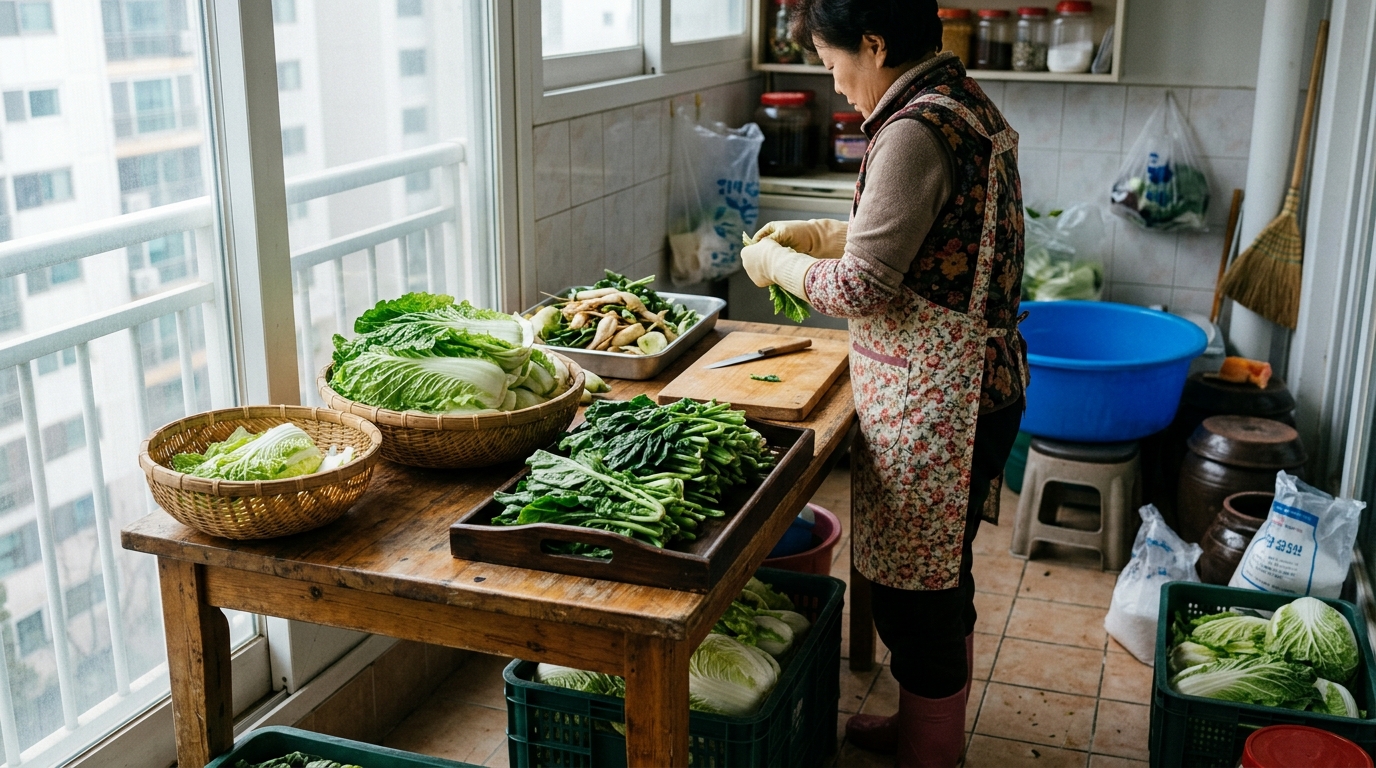
- 1During the annual kimchi making season (November to December), local municipalities temporarily allow dry, raw vegetable scraps like outer napa cabbage leaves and radish tops in standard general trash bags.
- 2However, all soil, strings, and foreign matter must be removed.
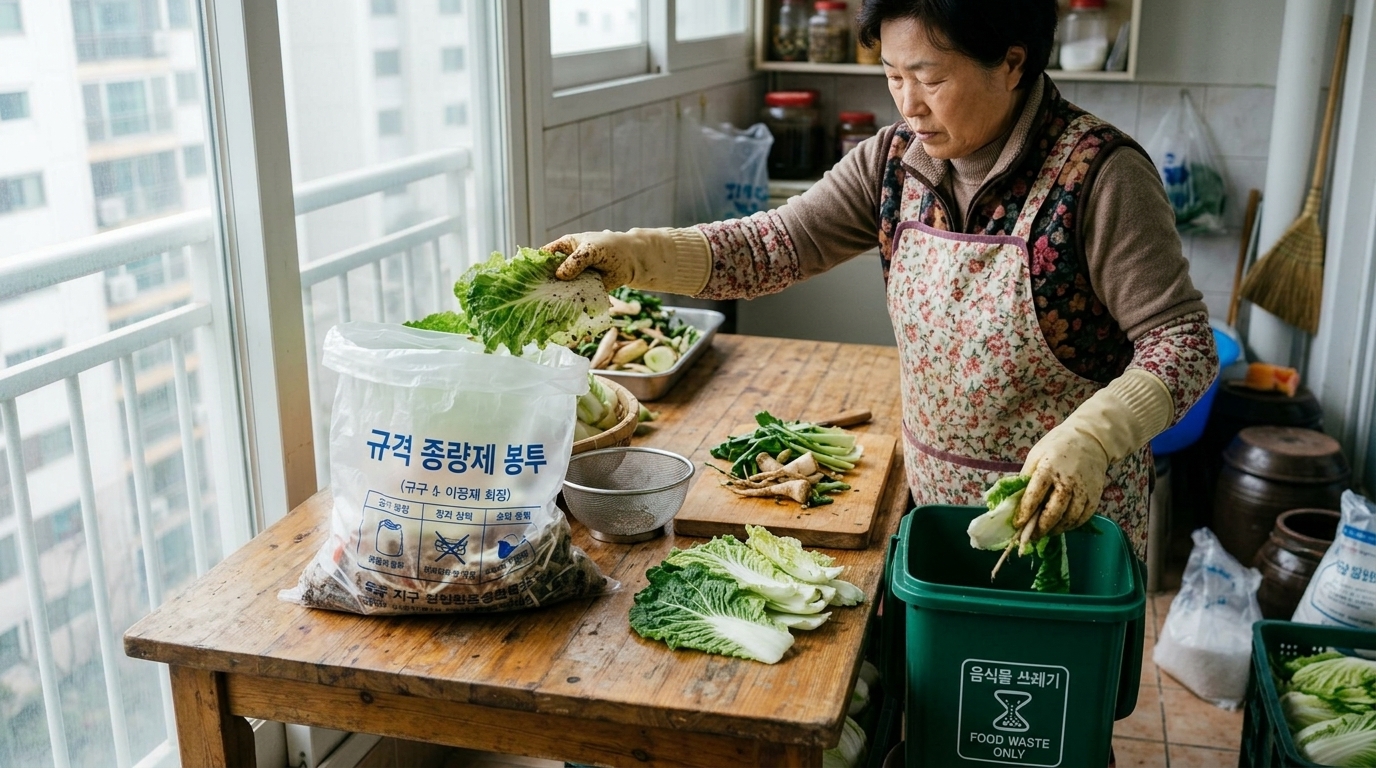
- ✓Heavily salted, seasoned, or wet vegetable residues must be drained and disposed of in dedicated food waste bags to prevent administrative fines.
Follow these steps
- 1
Prep raw dry vegetable scraps: Remove dirt, straw, rubber bands, and plastic packaging ropes completely from outer napa cabbage leaves and radish greens.
- 2
Chop to minimize volume: Cut large bulky leaves and stalks into smaller pieces with kitchen scissors or knives for volume compression.
- 3
Bag dry scraps in general waste bags: Check local district temporary season notices (typically Nov–Dec) and place dry scraps into standard volume-based bags (do not mix with general household trash; write 'Kimchi Waste' on bag).
- 4
Separate seasoned & salted residue: Heavily salted or chili-sauced cabbage remnants must be squeezed thoroughly to remove moisture and disposed of in dedicated Food Waste bags/bins.
- 5
Place at collection spots on schedule: Set sealed bags out at designated curb collection points after sunset on designated pickup days to prevent odors and leachate.
Frequently asked question
Why can raw cabbage leaves be placed in general trash bags during kimchi season instead of food waste?
Kimchi making generates massive volumes of fibrous dry leaves in a short window, which can clog industrial food waste rendering and composting machines. Municipalities nationwide grant temporary exemptions during November and December to allow dry, unseasoned raw greens in general trash bags.
How should garlic skins, onion skins, chili seeds, and scallion roots be discarded?
Garlic peels, onion skins, scallion roots, and rigid chili seeds lack nutritional value and cannot be digested by livestock, meaning they must always be discarded in general waste bags year-round.
Can salted or brined cabbage scraps be discarded in general trash bags?
No. Salt-cured or seasoned cabbage contains heavy sodium and moisture, which damages waste incinerators. Always squeeze out moisture thoroughly and dispose of them exclusively in dedicated food waste bags.
Is it mandatory to write 'Kimchi Waste' on the outside of general trash bags?
Many local district offices strongly recommend or mandate marking 'Kimchi Waste' with a permanent marker on general bags so collectors can immediately verify the seasonal exemption and prevent wrongful fines.