Acoustic Soundproofing Foam & Barrier Removal and Waste Disposal Guide
- 1Acoustic soundproofing materials installed for noise dampening or home recording studios often cause extensive damage to wallpapers and drywall during removal if bonded with spray glues, heavy double-sided tape, or silicone.
- 2Tugging forcefully tears the paper backing, risking expensive tenant restoration deductions upon move-out.
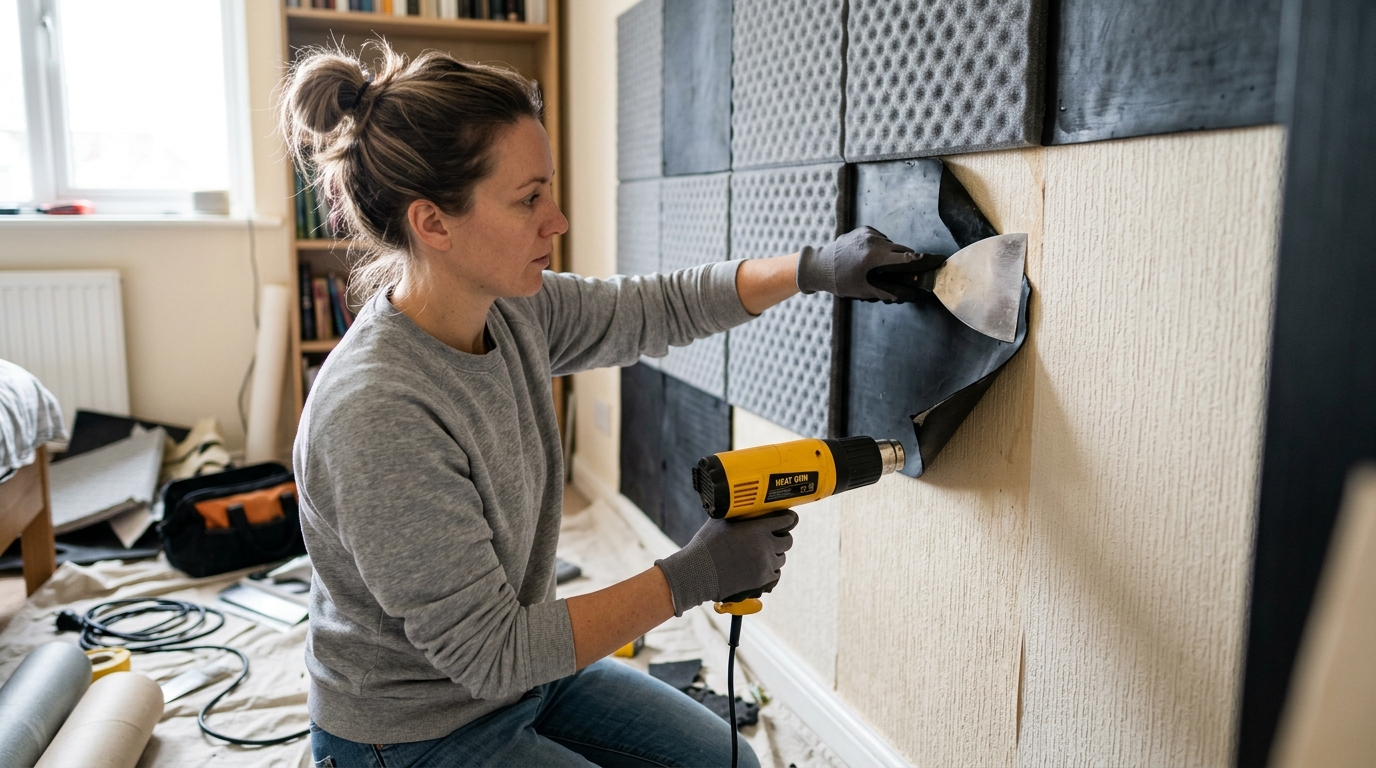
- 3A controlled detachment using a hair dryer heat technique and wide putty scrapers is essential.
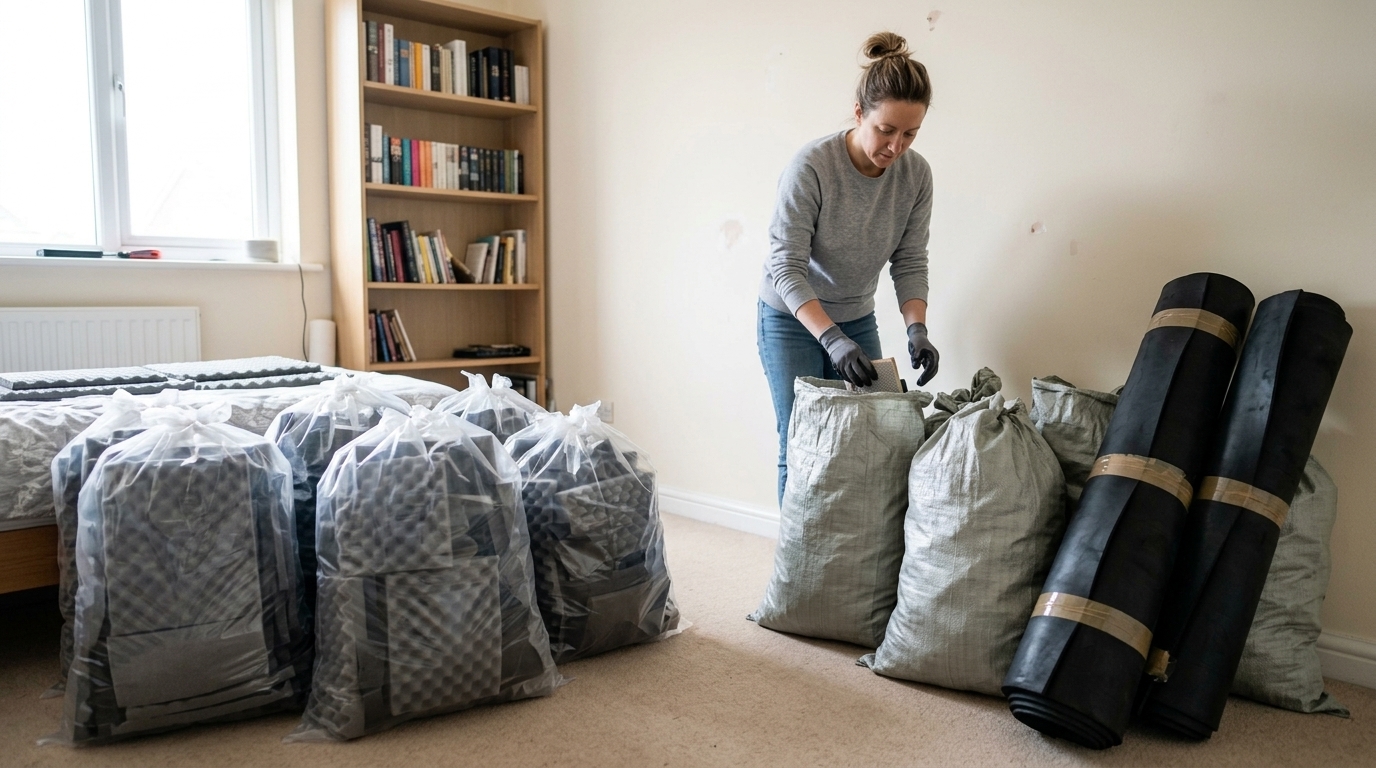
- ✓Furthermore, while lightweight polyurethane foam and polyester acoustic boards are incinerated municipal waste, dense asphalt-rubber sound barrier sheets are exceptionally heavy and easily rupture standard plastic bags, requiring weight dispersion into municipal heavy-duty woven sacks (PP bags).
Follow these steps
- 1
Ensure cross-ventilation & protect flooring: Open opposing windows to ventilate adhesive fumes and crumbling foam dust, and lay old sheets or drop cloths across the floor to catch falling glue debris and sticky residues.
- 2
Soften glue with hair dryer & peel at low angle: Direct high-heat air from a hair dryer onto panel edges for 20–30 seconds to liquefy stubborn double-sided tape and hot-melt glue, then gently slide a wide putty scraper underneath at a shallow 15–30 degree angle without gouging wallpaper.
- 3
Dissolve residual foam tape & silicone adhesive: Dampen a microfiber towel with a small amount of adhesive remover or isopropyl alcohol, hold it against stubborn glue residues for 3 minutes to soften, and gently scrape off with a flexible plastic scraper to prevent wallpaper discoloration and peeling.
- 4
Bundle heavy rubber sound barriers into PP sacks: Dense mineral-loaded rubber acoustic sheets weighing 3–5 kg per square meter will burst standard plastic trash bags; cut into manageable strips, roll tightly with packing tape, and place inside heavy-duty municipal woven polypropylene (PP) sacks or small 20L trash bags under 15 kg.
- 5
Compress acoustic foam panels into municipal general waste: Lightweight polyurethane egg-crate foam and polyester fiber acoustic boards are non-recyclable composite materials; compress firmly by hand to expel trapped air, and dispose inside standard municipal general incinerated waste bags.
Frequently asked question
Can acoustic egg-crate foam or sound panels be recycled with household plastics or Styrofoam?
No. Acoustic egg crate foam is made of polyurethane (PU) and soundproof panels are flame-retardant compressed polyester fibers, neither of which are recyclable plastics. Residual adhesive coatings make them strictly municipal general incinerated waste.
If wallpaper tears while removing soundproofing glued with heavy adhesive, must the tenant pay for full room repapering upon moving out?
Adhering soundproofing panels with permanent glues constitutes tenant alterations beyond normal wear-and-tear, establishing restoration liability. However, according to standard tenancy dispute guidelines, liability is typically limited to the damaged single wall surface rather than the whole room, factored against wallpaper depreciation over its typical 6-year lifespan.
Can heavy rubber sound barrier sheets be tied together and discarded with a bulky waste sticker?
Yes. Most municipalities permit tightly rolled and tied heavy sound barriers (under 1 meter in length and under 20 kg) to be registered under general interior debris or bulky waste pickup for a nominal sticker fee ($3–$5). Alternatively, use heavy-duty municipal woven PP sacks.