Kitchen Sink Foot Pedal Water Valve Removal and Controller Disposal Guide
- 1Electric kitchen foot pedal valves commonly fail after 5–10 years due to worn pedal microswitches, stuck solenoid valves causing continuous running water or sudden shutoffs, and hidden cabinet leaks.
- 2When original manufacturers are defunct, save costly replacement bills by self-removing the assembly: unplugging power, turning off hot and cold angle stops, disconnecting the solenoid valve block, and reconnecting the faucet's braided supply lines directly to the wall valves.
- ✓Also learn how to properly recycle the heavy brass valve body as scrap metal and dispose of the electronic control box and AC adapter as free small e-waste.
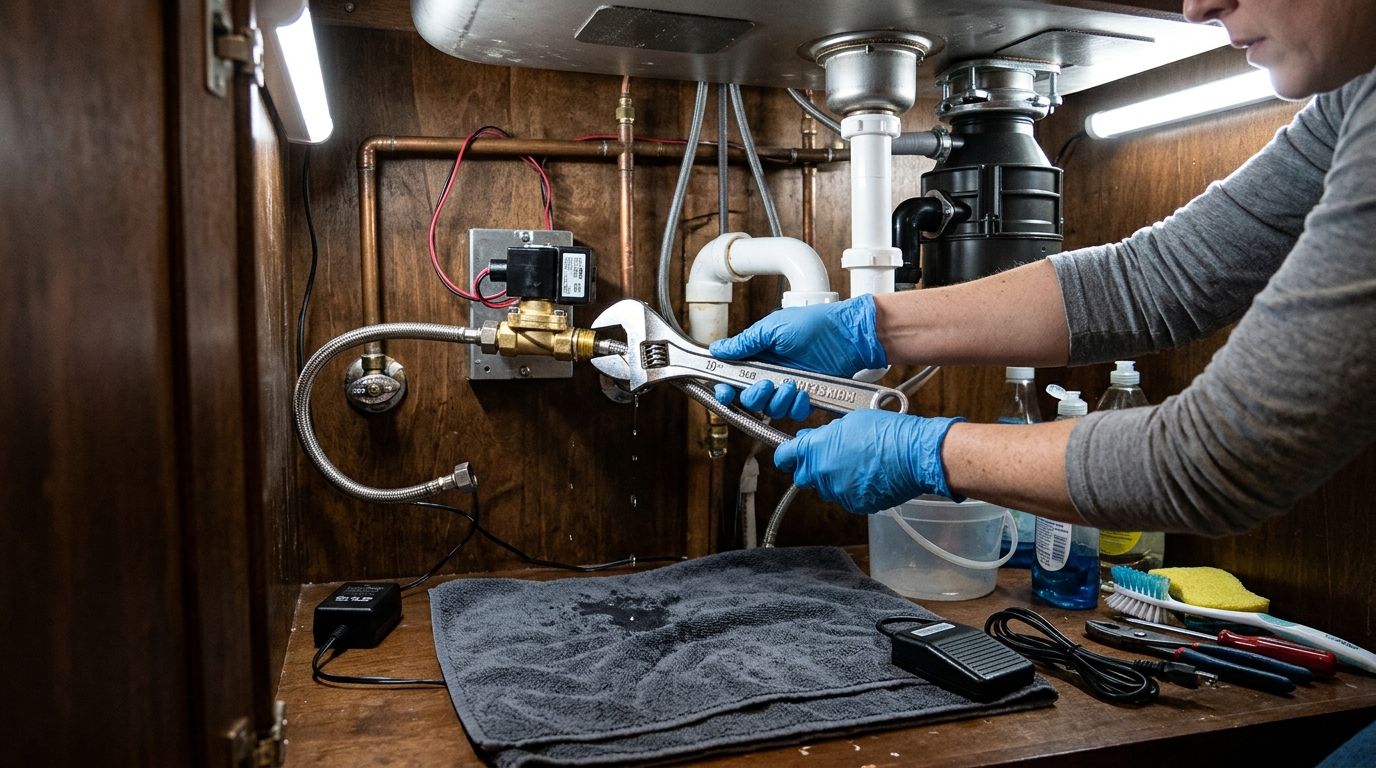
Follow these steps
- 1
Unplug Power Adapter and Secure Electrical Safety: Unplug the foot valve's 12V/24V wall AC adapter from the under-sink outlet to eliminate electrical hazards. Hang loose cables and plug heads safely above the floor to avoid contact with residual water during plumbing disconnection.
- 2
Shut Off Hot and Cold Angle Stop Valves Completely: Turn both the hot and cold water angle stop valves on the back wall clockwise until fully closed using an adjustable wrench or flathead screwdriver. Open the sink faucet handle fully in both directions to verify water flow is dead and drain internal line pressure.
- 3
Disconnect Braided Supply Hoses from Solenoid Valve: Place a shallow pan and dry towels beneath the plumbing. Use an adjustable wrench to loosen the compression nuts connecting the braided stainless steel hoses to the inlet and outlet ports of the heavy solenoid valve block, wiping away 1–2 cups of draining water.
- 4
Restore Native Direct Faucet Hose Connections: Reconnect the faucet's mixed-water supply hose directly in its factory bypass loop (or thread cold/hot braided lines directly to the wall angle stop valves), ensuring the internal black rubber sealing washer is properly seated before tightening with a wrench.
- 5
Open Angle Stops and Inspect Thoroughly for Leaks: Slowly reopen the hot and cold wall shutoff valves counterclockwise to restore water pressure. Turn on the sink faucet to test continuous flow, and press dry paper towels against every threaded joint for 10 minutes to verify zero micro-droplet leaks.
- 6
Detach Foot Pedal Switch and Controller Box: Peel off the floor foot pedal switch from the toe-kick baseboard using a scraper or putty knife. Unscrew the wall-mounted electronic control box and neatly bundle all loose low-voltage sensor cables and power cords.
- 7
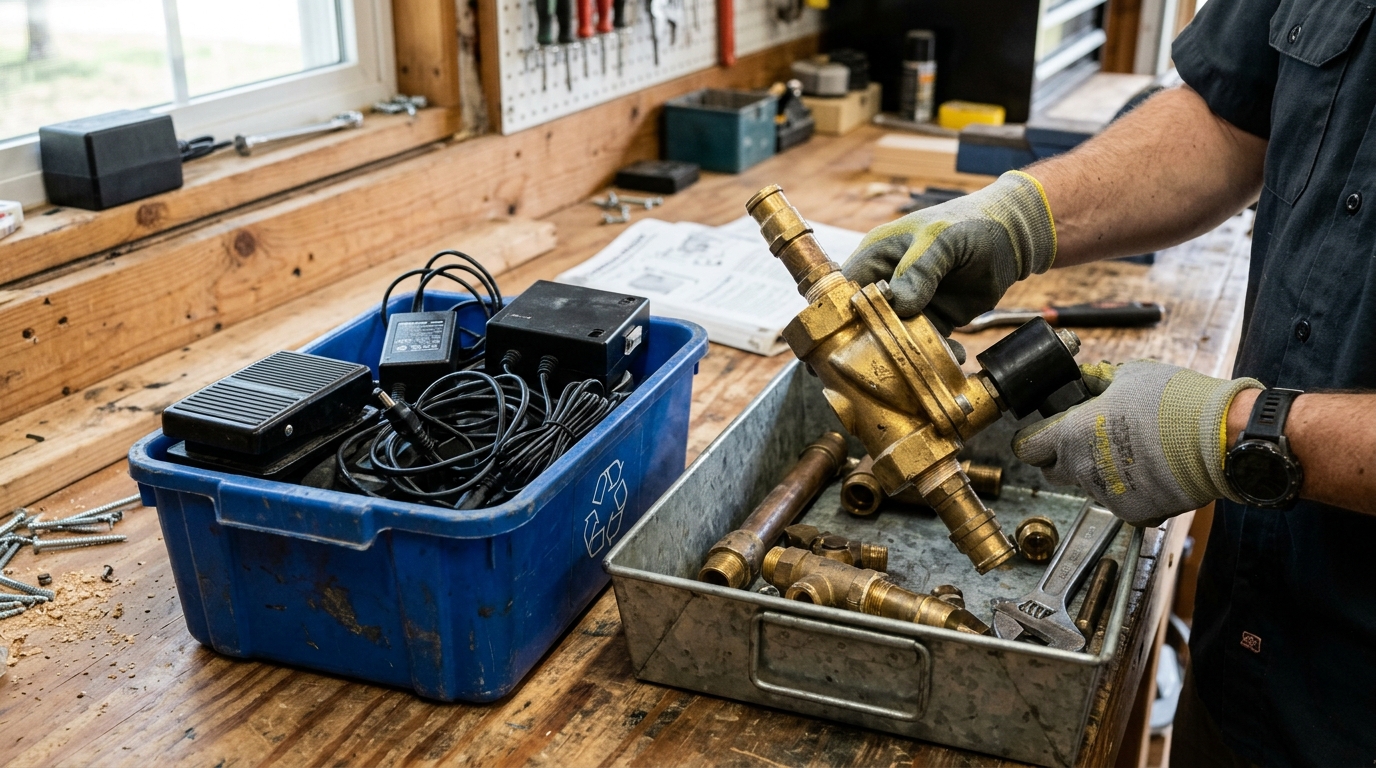
Sort and Recycle Materials Properly: Sort the heavy brass and stainless steel solenoid valve body into curbside 'Cans & Scrap Metal' recycling. Drop off the plastic-cased electronic control module, foot switch, wall adapter, and copper wiring at municipal or apartment 'Small E-Waste' drop-off containers for free disposal.
Frequently asked question
Do I need extra plumbing nipples or adapters when bypassing the foot valve to direct faucet connection?
Most standard kitchen single-hole faucets feature native male-female braided connections designed to couple directly without the foot pedal solenoid in between, requiring only an adjustable wrench. However, if your existing faucet hose cannot reach the wall angle stop directly due to length constraints, purchase an inexpensive 15A brass coupling nipple or flexible extension hose (approx. ₩2,000–₩3,000) from a local hardware store.
If only the foot pedal switch is broken, can I replace just the pedal unit?
If the manufacturer is still in business and sells compatible components, replacing just the foot pedal switch (approx. ₩10,000–₩20,000) is as simple as plugging the audio-style jack into the controller. However, for setups older than 7 years where brands are discontinued, the aging brass solenoid valve poses imminent leak hazards, making full removal and direct faucet bypass the safest, most cost-effective choice.
Can I simply throw all the detached foot pedal parts into a general trash bag?
No, you should not. The heavy solenoid valve body is made of high-value non-ferrous brass or stainless steel and must be recycled under 'Cans & Scrap Metal'. The electronic control box with circuit boards and the wall AC power adapter qualify as small household e-waste and can be dropped off for free at community centers or apartment collection points. Mixing them into household trash wastes valuable metals and risks municipal citation.