Boiler Water Pipe Freeze Protection Insulation DIY and Old Insulation Disposal Guide
- 1During severe sub-zero winter spells, exposed cold and hot water pipes beneath balcony boilers freeze long before the boiler itself, cutting off hot water and bursting pipes.
- ✓Learn how to self-insulate boiler pipes using 15–20mm foil-faced polyethylene foam pipe sleeves and heavy-duty tape, follow vital fire safety guidelines when installing self-regulating heating cables, and cleanly strip down crumbling old foam insulation to dispose of it properly in standard municipal general trash bags without mess.
Follow these steps
- 1
Unplug Boiler and Inspect Pipes for Leaks: Disconnect the boiler power cord for safety and thoroughly inspect the cold water inlet, domestic hot water outlet, and heating lines underneath with dry gloves for micro-cracks or active leaks. (If pipes are already frozen, thaw gently using warm air from a hairdryer before insulating).
- 2
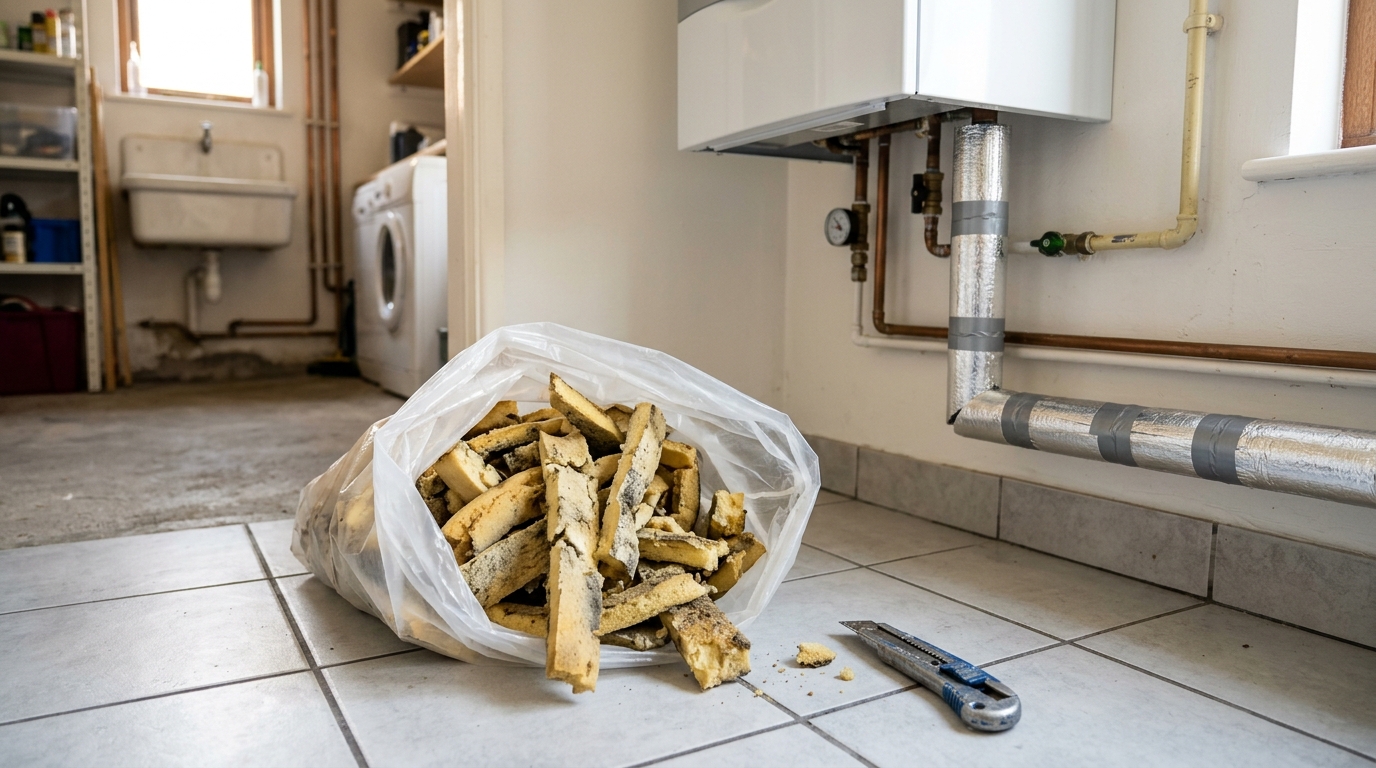
Slice and Strip Off Deteriorated Old Insulation: Carefully slice through brittle old sponge insulation and peeling tape lengthwise using a utility knife without scratching metal pipes. Wipe off loose foam crumbling dust and dry moisture completely with a clean rag.
- 3
Measure and Cut Foil-Faced Artilon Foam Sleeves: Measure pipe runs and cut 15–20mm thick foil-faced polyethylene foam pipe sleeves matching standard 15A plumbing pipe diameters (inner diameter 16–20mm), snipping relief notches at bends and shutoff valves.
- 4
Adhere to Heating Cable Fire Safety Rules (Caution): If applying self-regulating heating cables, secure them straight along the bottom of pipes with fiberglass tape. Never cross, twist, or spiral cables over themselves as overlapping generates extreme heat causing fire hazards, and keep the thermostat sensor exposed outside the foam.
- 5
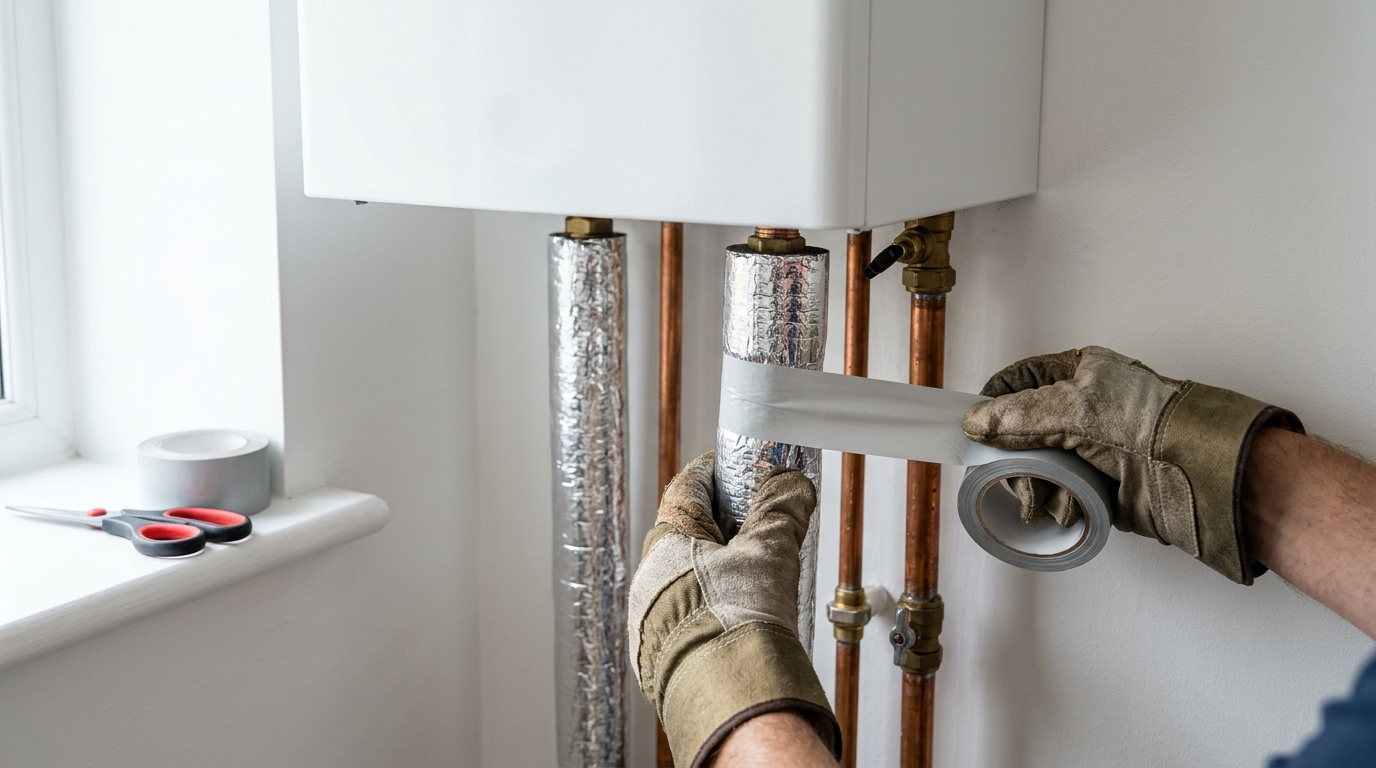
Snap Foam Sleeves Snugly and Spiral-Wrap with Tape: Open the pre-slit foam sleeves and wrap them tightly around copper and brass piping. Starting from the bottom, wrap heavy-duty vinyl insulation tape upward with a 50% overlap under firm tension to completely block cold drafts.
- 6
Dispose of Crumbling Foam Scraps in Standard Trash Bags: Old foam insulation, disintegrating sponges, and stripped tape are contaminated multi-layer polymers that cannot be recycled. Compress the scraps firmly by hand and dispose of them securely inside municipal general volume-based trash bags.
Frequently asked question
Which boiler pipe freezes first and requires the highest insulation priority?
Among the 4–5 pipes connected beneath a boiler, the cold mains water inlet and hot water outlet freeze earliest because static potable water stands inside thinner pipes. While heating supply and return lines circulate warmed water, unprotected domestic hot and cold water lines freeze at just -5°C, demanding double-layer insulation.
Can I wrap old clothes or bubble wrap around pipes instead of foam insulation?
While old clothes or blankets seem convenient, they absorb balcony condensation and freeze solid into ice packs, drastically accelerating pipe freezing. Furthermore, dry fabric creates a severe fire hazard. Professional foil-faced closed-cell polyethylene foam sleeves (Artilon) provide superior waterproof insulation and should always be used.
Is there any risk of asbestos exposure when tearing off old pipe insulation?
Standard residential boiler pipe insulation is made of non-hazardous expanded polyethylene (PE) sponge or polyurethane foam containing zero asbestos. Unless dealing with white powdery plaster-like cast insulation in pre-1990 commercial boiler rooms, household foam can be safely disposed of in municipal general trash bags. Always wear a dust mask and gloves to avoid inhaling harmless but irritating foam dust.