DIY Shower Head & Hose Replacement and Scrap Metal Disposal Guide
- 1Bathroom shower hoses and heads endure daily high-pressure thermal shock and calcium buildup, typically suffering fatigue ruptures at bend points, stubborn black mildew inside spiral grooves, and hairline filter body cracks after 2–3 years.
- 2The single most crucial technical detail in DIY hose replacement is the rubber sealing washer (O-ring) seated inside the hex nut.
- 3When unthreading the old hose from the shower mixer valve with an adjustable wrench and installing a new smooth PVC or silicone hose, verify that the rubber washer sits perfectly flat inside the female nut.
- 4If the washer is misaligned or missing, high-pressure water will spray uncontrollably regardless of tightening torque.
- 5Always hand-tighten first, then finish with a gentle quarter to half turn using a wrench to avoid stripping brass threads.
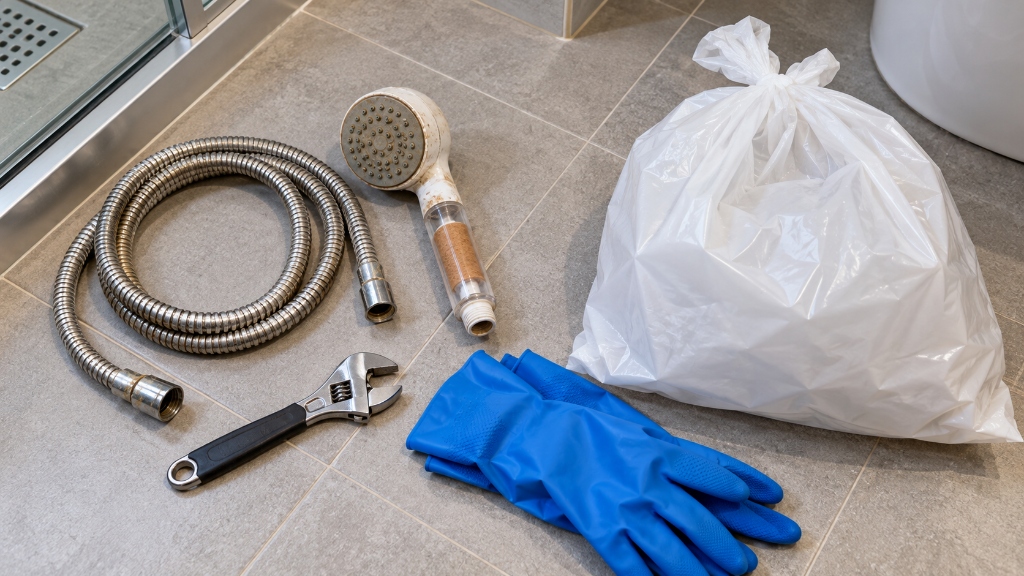
- ✓For disposal, composite hoses with internal rubber linings and fouled polypropylene filter cartridges cannot be recycled and must go into municipal general trash bags, whereas pure detached stainless steel spiral coils and brass nuts should be sorted into scrap metal.

Follow these steps
- 1
Step 1 (Shut Off Faucet & Loosen Hose Hex Nut with Wrench): Shut off the shower mixer handle (no need to turn off the main water meter). Fit an adjustable wrench onto the hexagonal hose connector nut at the base of the shower mixer faucet and turn it counter-clockwise to loosen. Once the initial torque is broken, spin the nut off completely by hand and drain residual water.
- 2
Step 2 (Unthread Shower Head & Clean Limescale from Faucet Threads): Unscrew the old shower head from the top hose cone nut by hand. Inspect the exposed male threads on the shower mixer spout; scrub away crusty white calcium mineral deposits, scale, and grime using a stiff toothbrush and mild bathroom cleaner, then wipe clean with a cloth.
- 3
Step 3 (Verify Rubber Washer Seating & Mount New Hose): Ensure the black rubber sealing gasket (O-ring) is seated completely flat inside the hexagonal nut of your new smooth PVC or metallic shower hose. Hand-thread the nut onto the faucet outlet until snug, then use an adjustable wrench to give it an additional quarter to half turn only (overtightening will crush or pinch the washer, causing leaks).
- 4
Step 4 (Attach Shower Head Washer & Perform Leak Test): Check that the smaller rubber washer is fitted inside the conical hose end, thread on your new filter shower head firmly by hand, and click it into the wall bracket. Turn on the shower mixer to full flow and inspect both connection joints to ensure zero water droplets or misting sprays occur.
- 5
Step 5 (Sort Metal Scraps & Bag Composite Hose/Filters): Segregate the discarded shower hardware by material. Separate pure stainless steel outer spiral coils and brass nuts into scrap metal recycling. Discard internal rubber tubing, composite PVC hoses, dirt-encrusted sediment filter cartridges, and composite plastic head bodies into municipal general trash bags, as recycling sorting centers cannot process contaminated composite plastics.
Frequently asked question
What is the most common reason for water leaking after replacing a shower hose?
Over 95% of leaks are caused by a missing, tilted, or damaged rubber washer (O-ring) inside the connector nut. Before screwing the nut on, verify that the gasket lies flat against the bottom base. Furthermore, over-tightening with a wrench can pinch or tear the rubber, resulting in persistent leaks.
What are the pros and cons of traditional metal spiral hoses vs modern smooth PVC hoses?
Metal spiral hoses offer high flexibility at low cost, but soap scum and black mold accumulate in the crevices, making cleaning difficult, and fatigue can tear the internal rubber core. Modern smooth PVC/silicone hoses feature seamless exteriors that resist limescale and incorporate 360-degree swivel nuts to prevent twisting, making them vastly more hygienic and durable.
What is the recommended replacement interval for shower filter cartridges and how are they discarded?
The typical replacement interval for sediment filters is 2–3 months. However, if the cartridge turns dark brown or water pressure noticeably drops, replace it immediately. Used filter cartridges are non-recyclable composite polypropylene fibers soaked in heavy metals and rust sediment, requiring disposal in municipal general trash bags.
Why can't plastic filter shower heads be recycled in plastic bins?
Shower heads are composite assemblies combining polycarbonate (PC), ABS casings, stainless steel spray hole plates, and silicone seals ultrasonically bonded together. Because disparate materials cannot be separated and are contaminated with mineral scale, recycling centers reject them, classifying them as combustible municipal solid waste.