Bathroom Exhaust Fan Motorized Damper Installation & Waste Guide
- 1Multiple apartment households discharge bathroom moisture through a vertical communal exhaust shaft.
- 2Factory-installed gravity flap dampers on standard exhaust fans feature loose plastic flappers that leak cigarette smoke, cooking grease, and wintry drafts whenever neighboring units vent or stack pressure changes.
- 3A motorized backdraft damper engineered with silicone gasket seals opens via a micro-motor only when the fan powers on and mechanically locks 100% airtight when off.
- ✓This guide details bathroom breaker isolation, parallel AC wiring, airtight aluminum tape application, and compliant disposal of weathered duct hoses and plastic flappers.
Follow these steps
- 1
Shut Off Bathroom Circuit Breaker and Measure Duct Diameter: Switch off the bathroom lighting/fan circuit breaker in your electrical distribution panel to eliminate shock hazard. Open the ceiling access panel and measure the flexible silver duct diameter (universal 100mm standard) to ensure adequate clearance.
- 2
Disconnect Flexible Duct and Remove Flimsy Gravity Flap: Slice through old duct tape with a utility knife and detach the flexible aluminum accordion hose. Unclip or shear off the loose, ineffective gravity-operated plastic flapper from the exhaust fan outlet collar.
- 3
Splice Motorized Damper Wires in Parallel to Fan Power: Strip 10mm of insulation from the fan dual AC supply conductors. Connect the two damper leads in parallel (AC is non-polarized; connect one damper wire to each fan line) using twist-on wire nuts or lever terminal blocks.
- 4
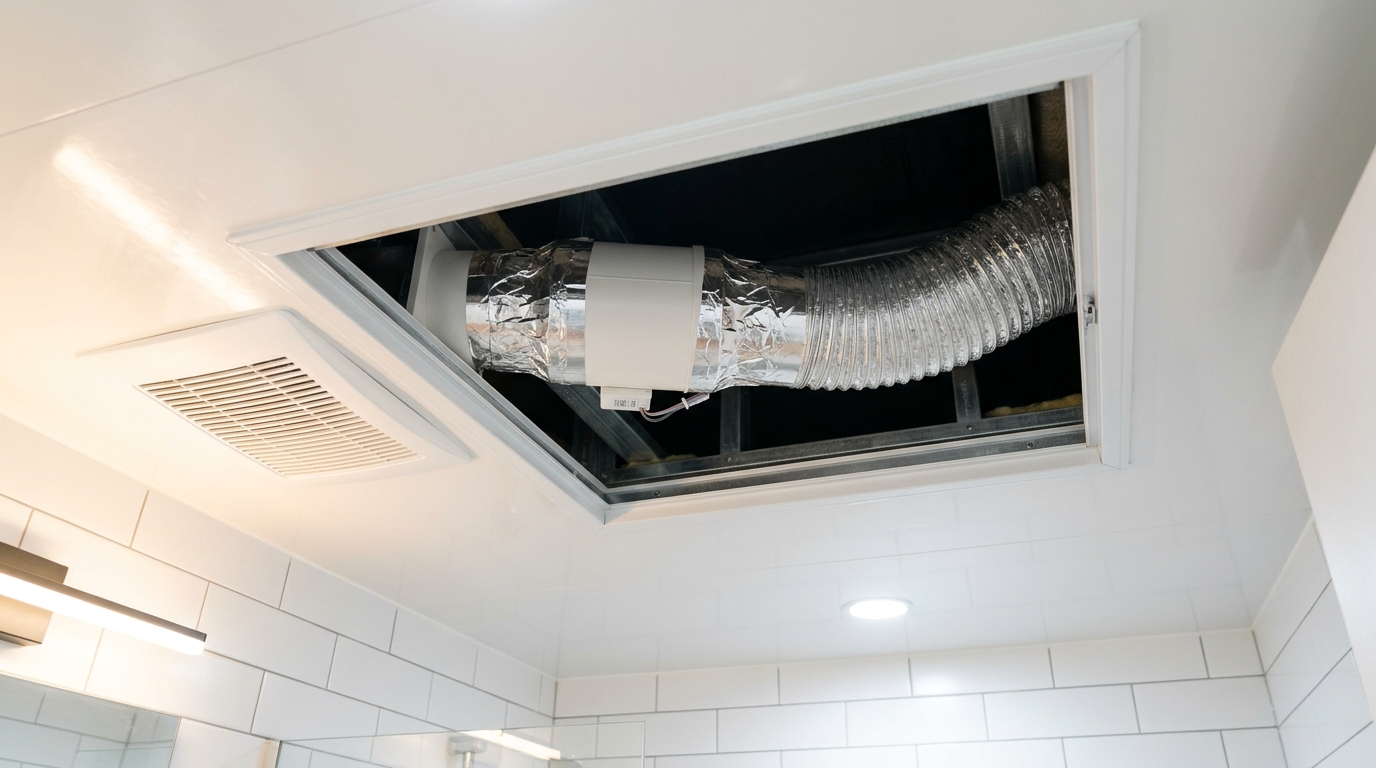
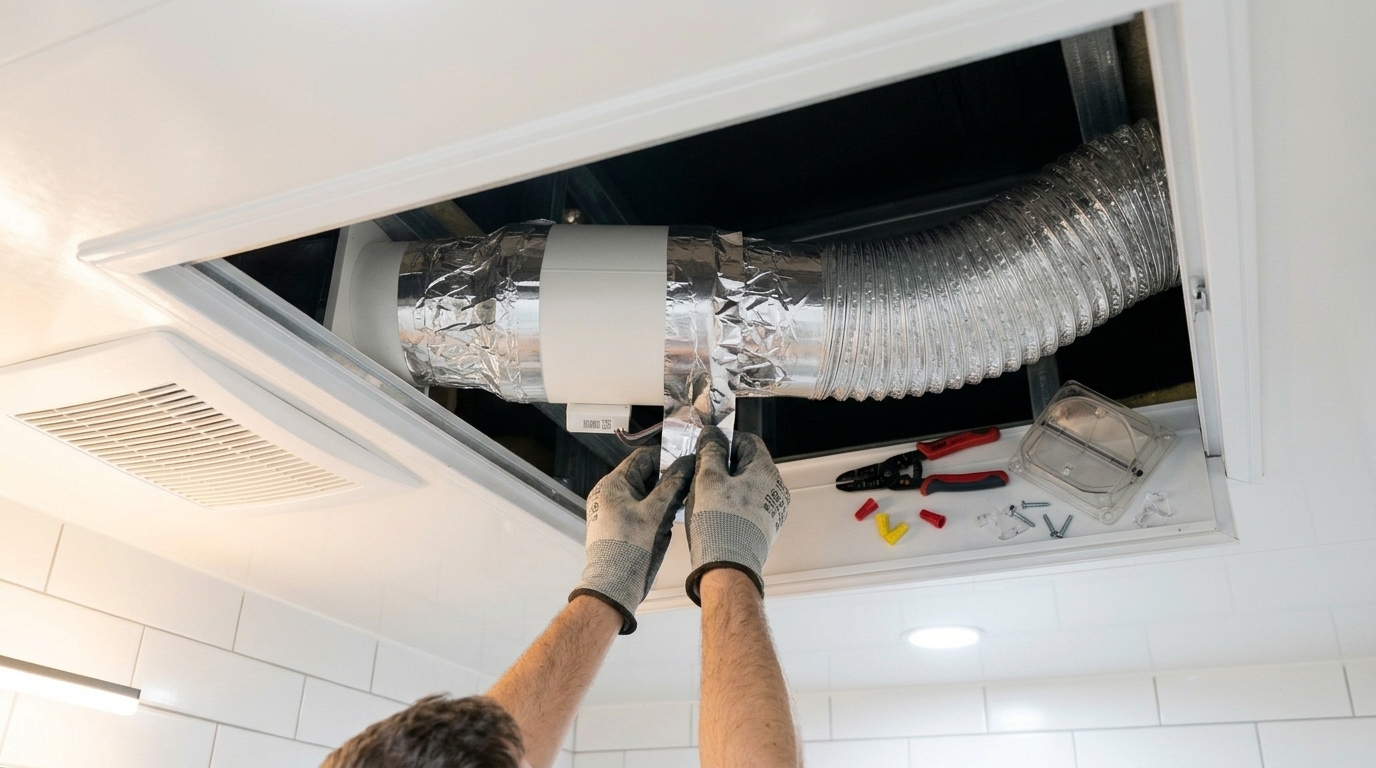
Mount Damper and Seal Joint with High-Tack Aluminum Foil Tape: Align the airflow arrow on the cylindrical damper body pointing outward toward the building exhaust shaft. Slide the damper onto the fan spigot and connect the flexible duct over the opposite end. Wrap heavy-duty aluminum foil tape at least 3 passes around all seams under tension for an airtight seal.
- 5
Verify Motorized Actuation and Dispose of Scrap Debris: Restore breaker power and toggle the bathroom fan switch; confirm the motorized silicone flap swings fully open (green indicator illuminated) and snaps shut within 3 seconds of power cutoff. Place pure plastic flapper pieces into plastics recycling; discard wire-reinforced aluminum foil duct hoses, tape scraps, and wire offcuts into municipal trash.
Frequently asked question
Do the two wires on a motorized backdraft damper have positive (+) and negative (-) polarity?
No. Household exhaust fans and motorized dampers operate on standard 220V alternating current (AC), which has no polarity (+/-). Simply connect each of the two damper wires to each of the two incoming fan supply wires in any order; the internal drive motor functions identically.
Why is there still a faint smell of smoke even after installing a motorized damper?
This faint leakage almost always stems from microscopic gaps in the duct tape joint or pinholes/tears in the aged flexible aluminum duct hose. Run your hand along the entire duct to feel for leaks, and wrap an extra 2–3 layers of high-grade aluminum foil tape tightly around every seam.
How does the motorized damper automatically know when to open and close?
Because the damper is wired in parallel with the fan motor, flipping the wall switch delivers power to both simultaneously. The internal micro-motor swings the silicone-gasketed butterfly plate wide open. When the switch is turned off, power drops and an internal return spring and gear train snap the valve tightly sealed.
Should discarded flexible aluminum ducting go into scrap metal or general trash?
Flexible bathroom duct hoses consist of composite materials—thin aluminum foil bonded to a spiral steel wire core with adhesive film. Because the metal foil cannot be cleanly separated from the inner laminates, scrap yards reject them. Cut the hose down to compact lengths and discard it into standard municipal trash bags.