DIY Shower Enclosure Door Seal Strip Replacement: Sizing 8T Glass & Moldy Profile Disposal
- 1The transparent bottom sweep profile on residential glass shower doors prevents shower spray from leaking onto dry bathroom floors.
- 2Due to continuous contact with warm moisture and body wash residues, the internal PVC channel inevitably suffers from permanent black mold colonization and brittle UV yellowing after 2–3 years.
- 3Because liquid bleach cannot penetrate the sealed channel, periodic replacement is the only hygienic remedy.
- 4Accurate measurement of the frameless tempered glass thickness (standard 8T/8mm, 6T, or 10T) and profile geometry (drip rail sweep vs.
- 5magnetic door jamb) ensures a watertight snap-on fit.
- 6The removed moldy profile combines degraded soft PVC and embedded ferrite magnets, making it non-recyclable composite waste.
- ✓Cutting the rigid strips into 30–40 cm segments prevents punctured trash bags and allows clean disposal in standard municipal general trash.

Follow these steps
- 1
Step 1 (Measure Tempered Glass Thickness & Identify Profile Type): Measure the thickness of your frameless shower door glass using calipers or a ruler (standard residential sizes: 8mm/8T, 6mm/6T, or 10mm/10T). Determine whether you need a bottom sweep with deflector fins (h-type/F-type) or a magnetic door jamb seal (90°/180°/135°).
- 2
Step 2 (Pry Off Old Mold-Encrusted Profile): Wearing protective grip gloves, grasp the lower end of the aged seal strip and pull downward firmly to disengage it from the glass door edge. If mineral scale causes adhesion, gently wedge a flathead screwdriver or utility pliers under the corner to release friction.
- 3
Step 3 (Scrape Glass Edge & Sterilize Mold): Scrape off dark mildew, soap scum, and calcium crust along the bottom glass perimeter using a safety utility razor scraper and mild bathroom cleaner. Wipe clean with microfiber towels and ensure the glass is completely dry.
- 4
Step 4 (Measure, Trim & Lubricate Snap-On Fit): Measure the bottom width of the glass door against your new profile and trim to size using utility pruning shears or a mini hacksaw. Lightly coat the bottom glass edge with soapy water to serve as an insertion lubricant, align the U-channel, and firmly tap the profile upward into place with your palms.
- 5
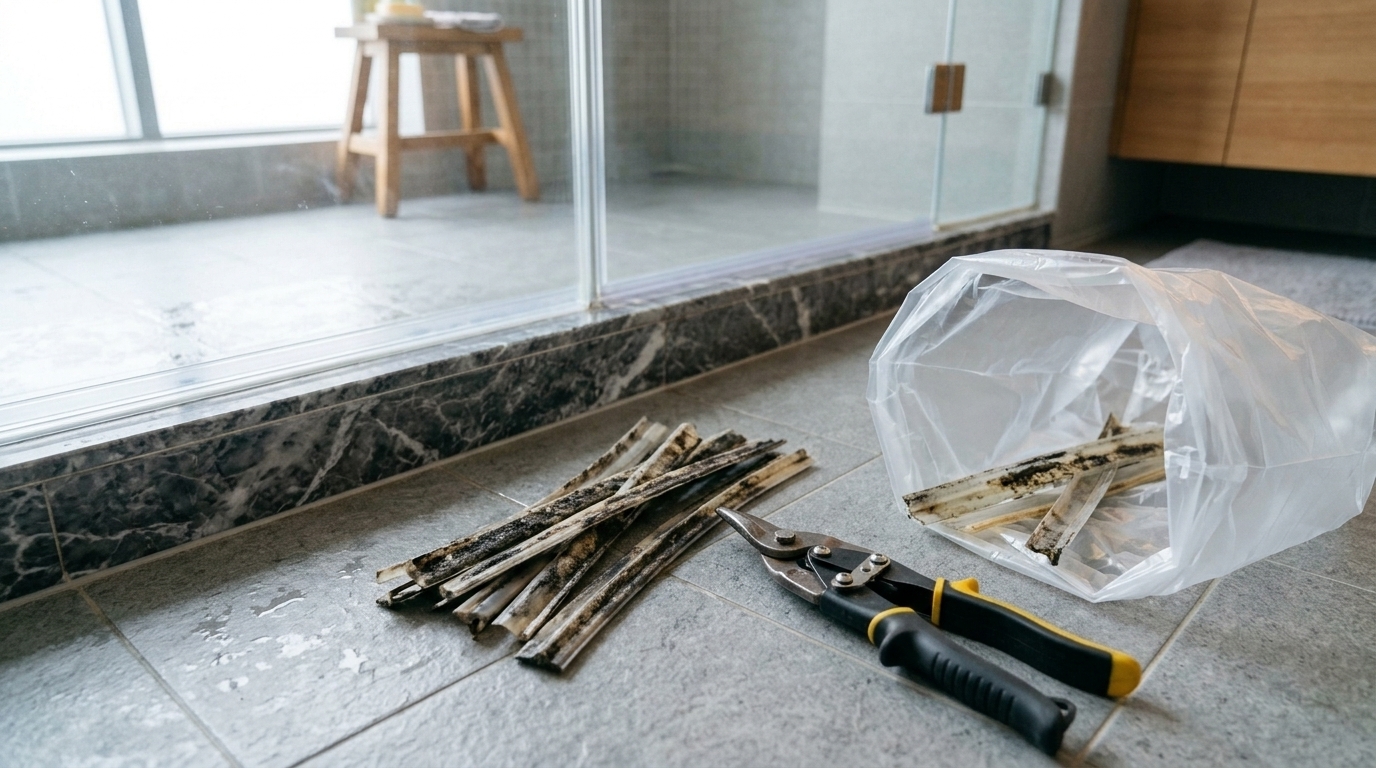
Step 5 (Segment Soiled Strips & Bag into General Trash): Detached PVC sweeps and magnetic strips are contaminated composite plastics that municipal recycling centers reject. Cut rigid long strips into 30–40 cm segments with heavy-duty shears, wrap in newspaper to avoid puncturing trash bags, and discard in municipal general trash bags.
Frequently asked question
How do I easily measure my shower door tempered glass thickness?
The easiest method is stacking coins or using a ruler. A standard 100-won coin is approximately 1.5 mm thick; five stacked coins measure roughly 7.5–8 mm, matching the dominant Korean residential standard of 8T (8 mm). Four coins indicate 6T (6 mm), while six to seven coins equal 10T (10 mm). Most Korean apartment shower doors are 8T.
What is the difference between h-type and F-type shower door bottom profiles?
The distinction lies in the angle and positioning of the deflector fins. The 'h-type' features a vertical drip rail extending directly beneath the glass channel with a diagonal deflector, making it the most common choice for swinging doors. The 'F-type' has horizontal fins protruding from the side, ideal for sliding doors or sealing gaps against adjacent stationary panels.
Can't the black mold inside the profile channel be eradicated with bleach?
While surface mold can be wiped off with bleach, deep fungal hyphae embedded within the narrow U-channel cannot be reached by chemical solutions and permanently discolors the PVC material. Furthermore, aged profiles become brittle and lose elasticity, allowing leaks. Replacing the strip for a few dollars is far more hygienic and effective.
Can the discarded plastic shower sweeps be recycled in plastic bins?
No, absolutely not. Shower profiles are composite plastics combining rigid and flexible PVC, heavily contaminated with mildew and soap scum, which sorting facilities reject as non-recyclable refuse. Magnetic jamb sweeps also contain embedded ferrite magnets. They must be cut and disposed of in municipal general trash bags.