DIY Toilet Paper Roll Window Track Cleaning Guide | Custom Vacuum Crevice Tool for Narrow Grooves
Step-by-step DIY household cleaning guide for thoroughly vacuuming narrow window tracks and frame corners using a flattened cardboard toilet paper roll nozzle without scattering dust or scratching PVC rails.
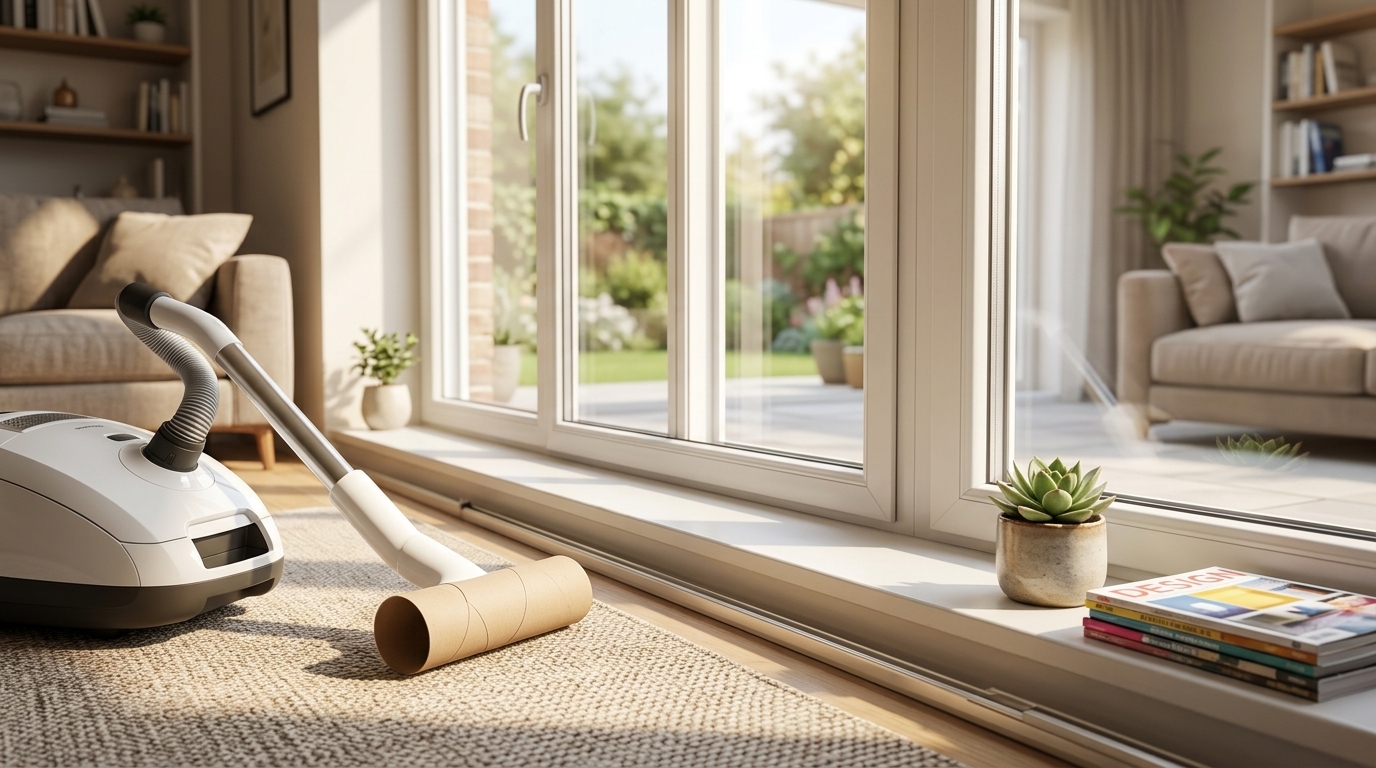
🛠️ Required Tools & Cleaning Agents
🔄 Alternative Detergents & Eco Tips
- Empty Toilet Paper Roll → Alt: Cardboard Paper Towel Tube or Folded Thick Paper Cone (Paper towel tubes provide longer reach and firmer fit for wide cordless vacuum wand openings.)
- Wooden Chopstick → Alt: Old Plastic Credit Card or Small Ruler (Wraps wet wipes securely to exert pinpoint pressure into narrow track corners without scratching PVC paint.)
- Wet Wipes → Alt: Warm Damp Microfiber Cloth with Diluted White Vinegar (Breaks down stubborn condensation mold and sanitizes dark residue from window corners.)
✨ Step-by-Step Care Instructions
Step 1: Prep Empty Toilet Paper Core & Shape Custom Flat Nozzle
- Grab 1 clean, dry cardboard toilet paper roll (or paper towel core).
- Insert one end of the cardboard tube approximately 2–3 cm into the vacuum hose opening.
- Secure firmly by hand or wrap with a rubber band/masking tape to prevent air suction loss.
- Firmly press and flatten the opposite opening with your fingers to create a slender nozzle under 1 cm wide.
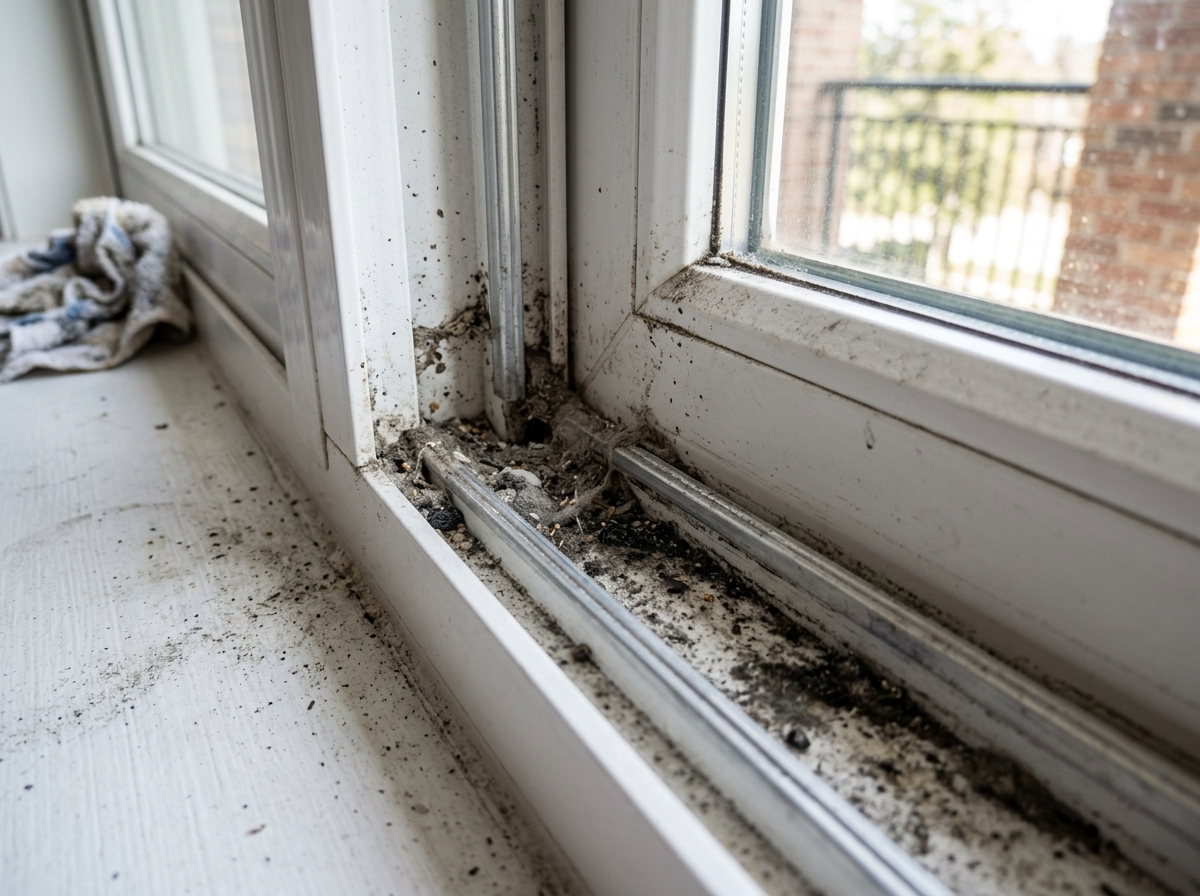
Step 2: [Before Inspection] Verify Dry Surface & Identify Heavy Dust Zones
- Slide open window fully and inspect corner grooves where fine dust gathers.
- Keep the entire window track completely DRY before vacuuming (adding water turns dust into sticky mud).
- Cardboard flexibility guarantees zero surface scratches on vinyl or painted aluminum window frames.
Step 3: [Process Deep Vacuum] Vacuum 99% Dry Dust with Flexible Cardboard Nozzle
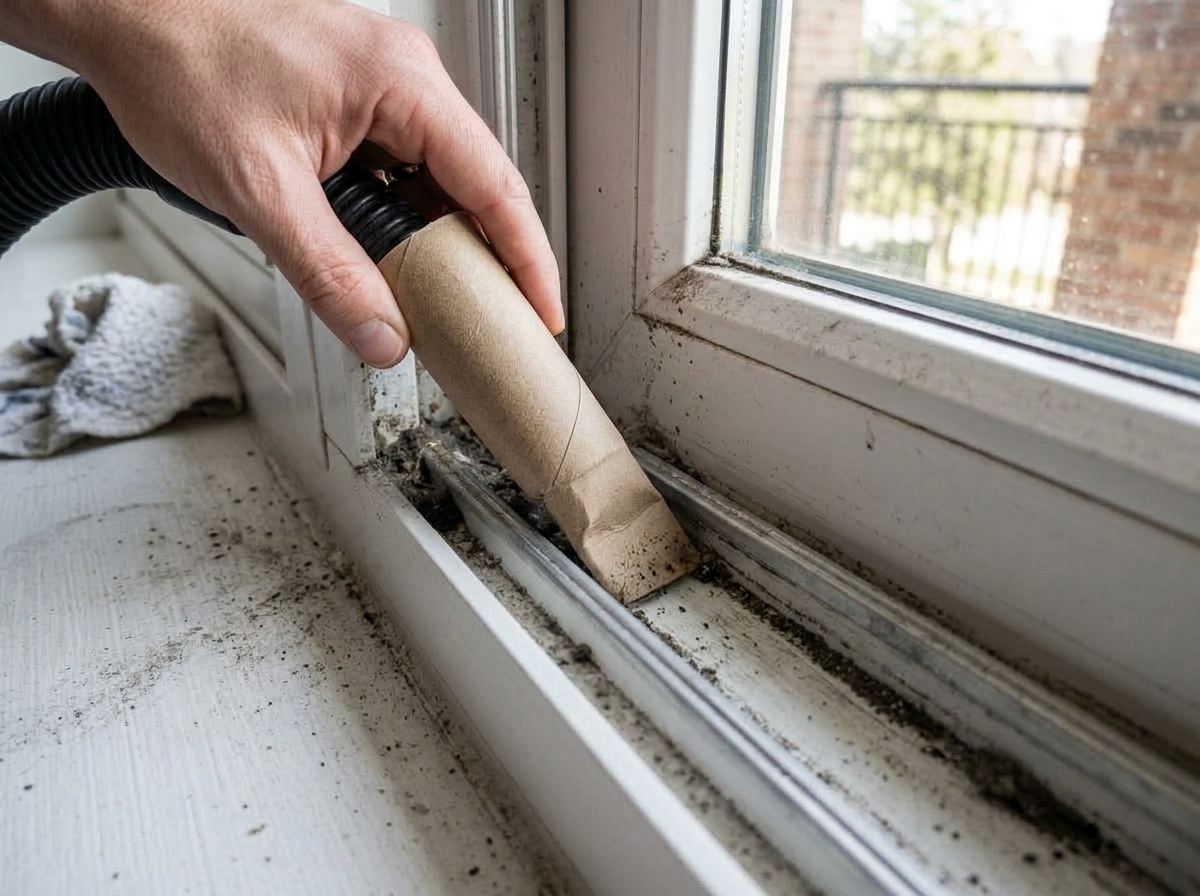
- Turn on vacuum and insert the flattened cardboard tip deep into the narrow sliding track groove.
- Glide smoothly back and forth along the rail to vacuum up trapped road silt, dry leaves, and hair.
- Crease the paper tip into a sharp V-angle to suck up compacted grime inside tight 90-degree frame corners.
- Unlike rigid factory plastic attachments, soft cardboard molds into ultra-narrow 5mm gaps effortlessly.
Step 4: Detail Wipe Corners with Wet Wipe & Wooden Chopstick
- Once loose dry dirt is completely sucked away, drape a moist wipe or microfiber cloth over remaining spots.
- Wrap the blunt tip of a wooden chopstick securely inside the wet wipe.
- Firmly trace the chopstick tip along corner edges and vertical track walls to lift remaining dark streaks.
- For stubborn pollen residue or light mildew, dab a mist of diluted white vinegar onto the wipe.
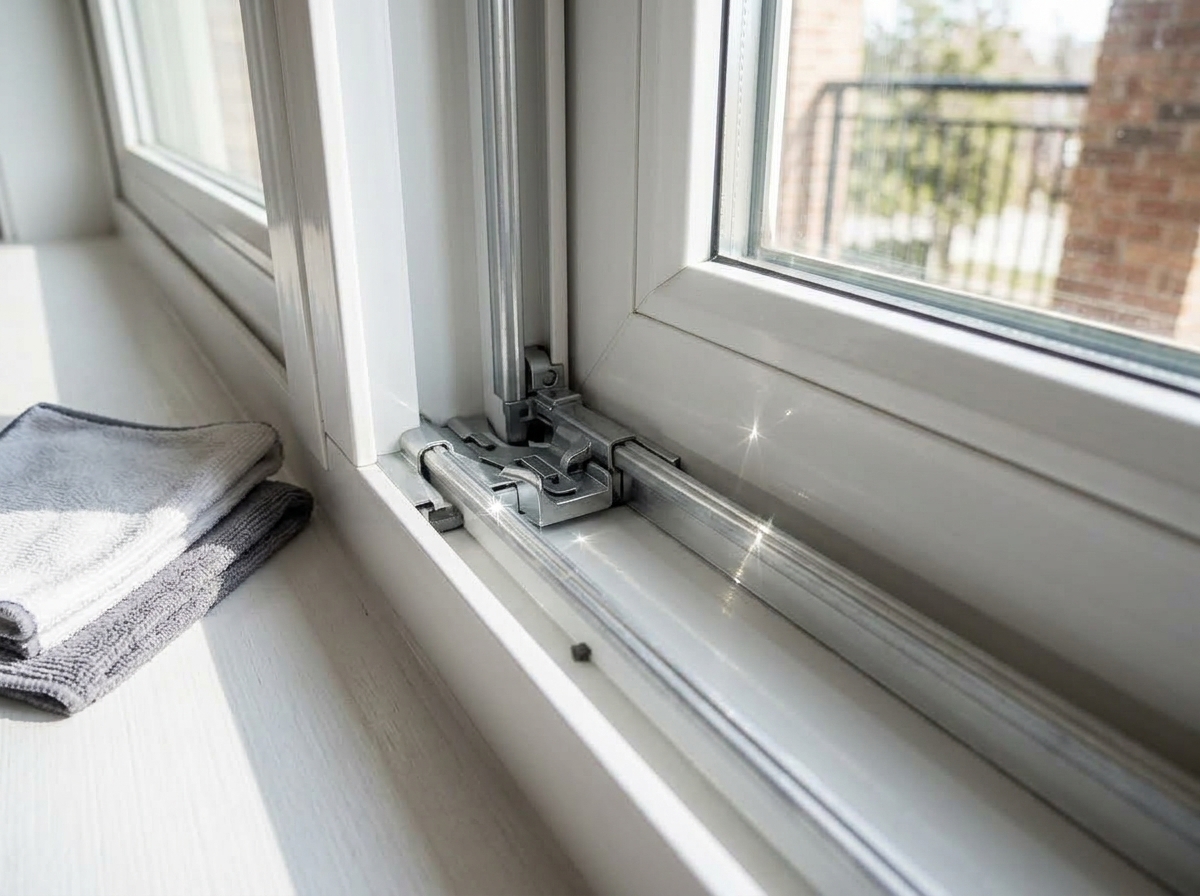
Step 5: [After Inspection] Dry Finish & Zero-Hassle Cardboard Disposal
- Inspect the restored bright white window track and slide the window to ensure smooth, quiet rolling.
- Give a final wipe with a dry cloth to prevent standing moisture from forming condensation mold.
- Simply slip off the soiled toilet paper tube and toss it directly into general trash (no nozzle washing needed!).
🩺 Self-Diagnosis Guide
✅ Can be restored with care
- Dry gray soil dust, seasonal pollen, and hair accumulated along narrow window tracks
- Window sliding feels gritty or produces scraping noise due to loose dirt on metal tracks
- Light surface water stains or cosmetic dust spots along PVC window sill corners
❌ Reached end of lifespan (Proper disposal required)
- Window frame PVC track cracked, warped, or split causing roller derailment
- Weatherstripping brush seal (mohair) rotted and crumbling into fine black dust
- Black mold deeply penetrated inside the silicone sealant requiring physical re-caulking
⚠️ Important Safety Precautions
- NEVER pour liquid cleaner or water into dirty tracks before vacuuming (turns dry dirt into sticky immovable sludge).
- Avoid using metal screwdrivers or knives to scrape corners as they permanently scratch PVC vinyl coatings (always use wooden chopsticks).
- Hold the cardboard roll securely at the base to prevent strong vacuum airflow from collapsing or swallowing the tube.
💡 Window Sash & Weatherstrip Replacement Guide: 3 Key Technical Specs Before Buying
♻️ Reached end of lifespan?
Check local disposal regulations instead of forcing reuse.
❓ Frequently Asked Questions (FAQ)
Q. Why is a DIY cardboard toilet paper roll nozzle better than standard plastic vacuum attachments?
A. Factory plastic crevice nozzles are rigid and usually measure 2–3 cm in width, which cannot reach the bottom of ultra-narrow 0.8–1.2 cm sliding window tracks. A cardboard toilet paper core can be flattened by hand to under 5 mm or folded into custom diagonal angles to reach deep corners. Furthermore, you can simply dispose of the dirty cardboard tube after use without washing contaminated attachments.
Q. How much does professional residential window cleaning cost, and can this DIY method replace it?
A. Hiring a professional cleaning service for whole-house window and track deep cleaning typically costs between $200 and $450 depending on apartment size. While high-rise exterior glass washing requires specialized safety rigging, interior window track silt, rail dirt, and corner grime can be 100% resolved at zero cost using this toilet paper tube and chopstick technique.
Q. How do I remove hardened mud streaks and black mildew from window sill silicone?
A. Always vacuum the dry silt first using your custom paper tube. Then, place a strip of paper towel directly over the dark mildew, saturate it with a 1:1 mixture of warm water and white vinegar (or mild bleach solution for white silicone), and let it dwell for 10 minutes. Push a wooden chopstick over the towel along the groove to lift loosened grime effortlessly.
Q. What happens if road dust and sand are left sitting in window sliding tracks?
A. Accumulated grit and road sand grind against the bottom roller wheels whenever you open the window. This causes severe friction noises, flat-spots on nylon rollers, and can eventually jam the sliding mechanism. Regular monthly vacuuming protects window bearings and prolongs the lifespan of your sliding window frames by over 10 years.