Induction & Ceramic Glass Cooktop Burnt Stains and Mineral Scale Scratch-Free Cleaning Guide
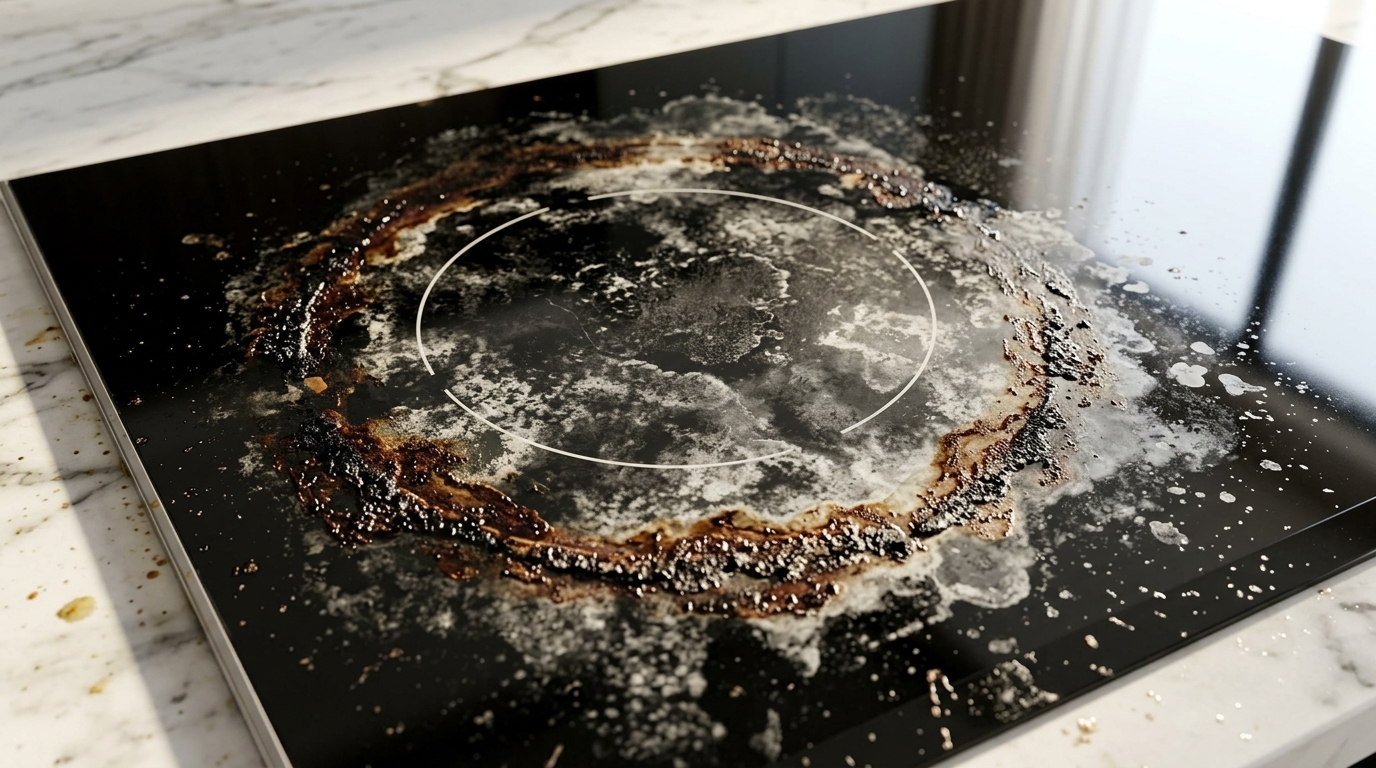
Deep cleaning manual for safely removing stubborn baked-on burnt food grease, sugar crust, and cloudy limescale rings from ceramic glass induction cooktops using toothpaste or specialized glass polish with a 45-degree razor scraper.

🛠️ Required Tools & Cleaning Agents
🔄 Alternative Detergents & Eco Tips
- Ceramic Glass Cleaner → Alt: Toothpaste + Baking Soda (1:1 paste) (Fine calcium carbonate in toothpaste lifts stubborn carbon without scratching glass.)
- Cooktop Scraper → Alt: Discarded Plastic Credit Card Edge (Safely scrapes away softened surface film without any risk of metal scratching.)
✨ Recommended Cleaning Supplies & Tools
※ As part of affiliate programs, a small commission may be earned from qualifying purchases.
✨ Step-by-Step Care Instructions
Step 1: Turn Off Power & Allow Complete Glass Cooldown
- Power down the induction cooktop and ensure the residual heat indicator ('H') is completely off.
- Never apply cold liquids or cleaning solutions on a hot stovetop to avoid catastrophic thermal shock cracking.
- Gently wipe away dry crumbs and loose dust using a dry paper towel.
Step 2: Apply Cleaning Paste & Wrap with Plastic Film
- For burnt stains: Apply a generous layer of toothpaste or baking soda paste across the scorched rings.
- For cloudy white mineral scale: Soak paper towels in white vinegar or citric acid solution and lay over the stains.
- Cover the treated area with plastic cling wrap to prevent the active solution from drying out.
- Allow the paste to chemically dissolve baked carbohydrates, sugars, and grease for 15-20 minutes.
Step 3: Precision Scraping at a 45-Degree Angle
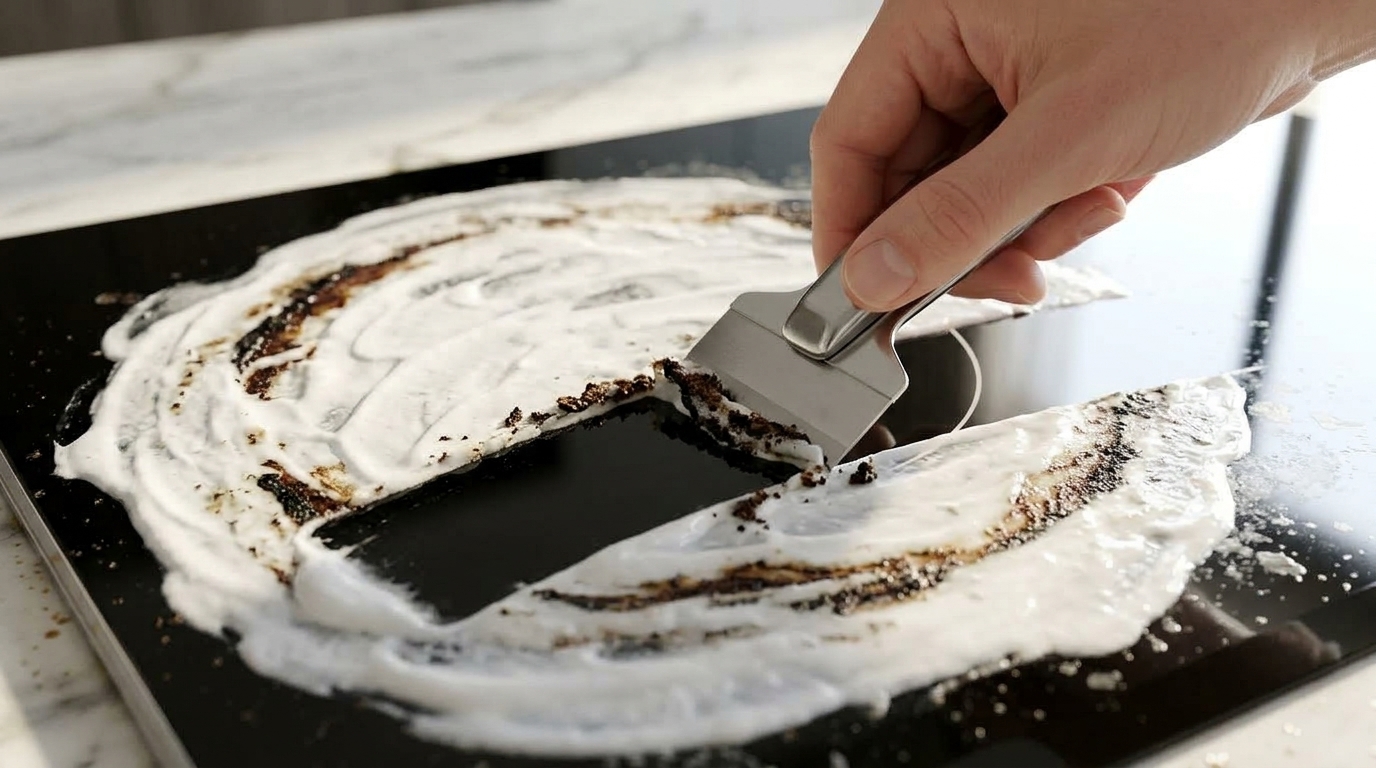
- Peel back the plastic wrap and position the scraper blade firmly at a flat 30 to 45-degree angle against the glass.
- Push forward with steady, even pressure without digging blade corners or tilting vertically (90 degrees).
- The softened carbon and grease deposits will peel cleanly away from the glass surface.
- If a scraper is unavailable, an old plastic gift card or credit card edge serves as a scratch-free alternative.
Step 4: Wipe Residue & Neutralize with Vinegar Rinse
- Use a warm damp microfiber cloth to pick up detached burnt flakes and leftover cleaning paste.
- Moisten a second cloth with a few drops of white vinegar to neutralize alkaline residue and dissolve faint scale.
- Never use harsh green scouring pads or abrasive cloths to preserve the delicate glass polish.
Step 5: Dry Buffing for a Mirror-Like Crystal Finish
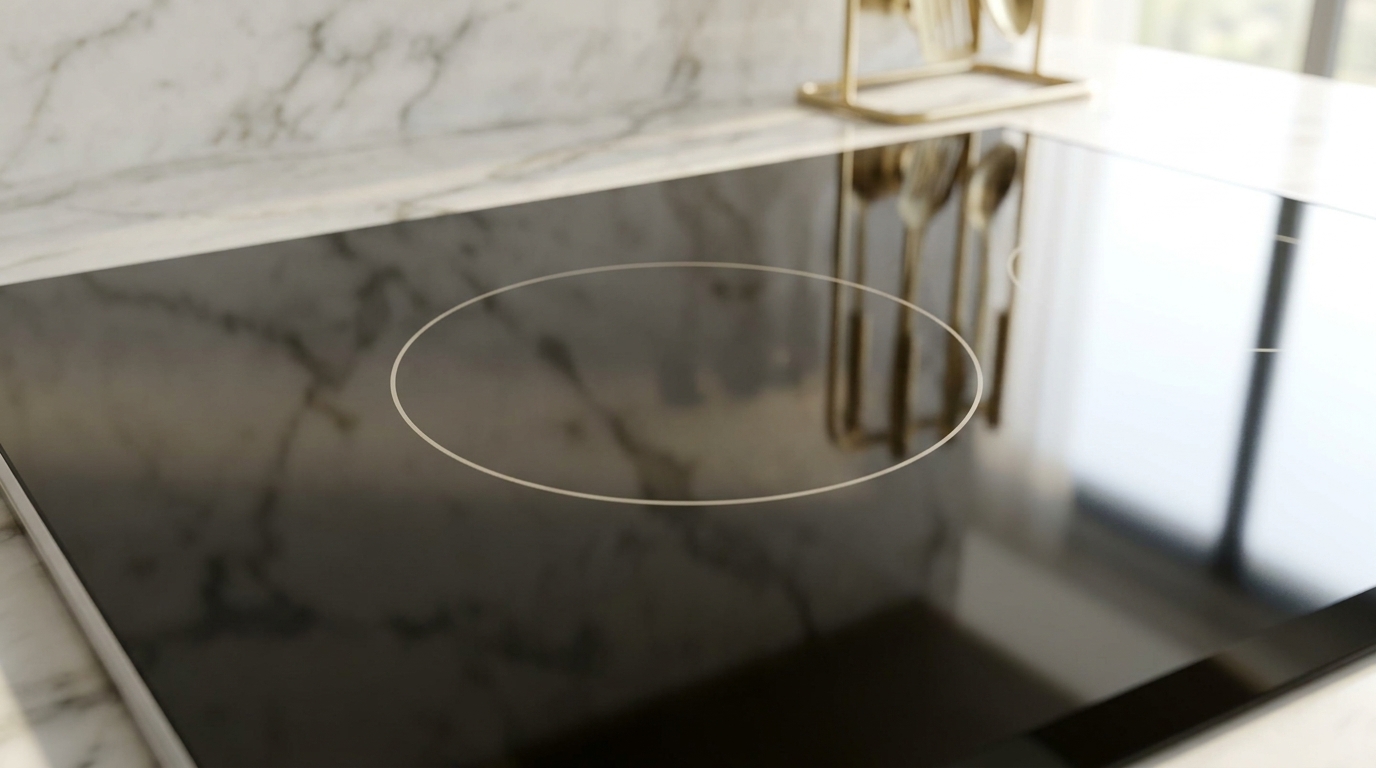
- Buff the cooktop with a clean dry microfiber towel in gentle circular motions to remove all streaks and haze.
- Inspect under overhead kitchen lights to ensure zero scratches, water spots, or residual burnt rings.
- Always wipe cookware bottoms dry and grease-free before placing on the cooktop to prevent future burning.
🩺 Self-Diagnosis Guide
✅ Can be restored with care
- Dark brown or black baked-on food, sauce, and sugar rings around the active burner
- Cloudy white mineral rings caused by hard water boiling over and evaporating
- Light gray metallic friction transfer marks from stainless cookware bases
- Superficial grease glaze with zero deep physical glass fractures
❌ Reached end of lifespan (Proper disposal required)
- Deep structural cracks, starburst fractures, or shattered glass corners caused by heavy pot impacts
- Burning electronic odor accompanied by persistent PCB circuit error codes (E01, E02)
- Unresponsive touch sensor panel due to liquid seepage into the internal induction coils
⚠️ Important Safety Precautions
- Never spray cold water or cleaning liquids on a scorching hot cooktop (causes glass thermal cracking).
- Never use steel wool, abrasive scouring sponges, or sandpaper (permanently scratches glass).
- Always maintain a 30-45 degree angle when using a scraper; never scrape vertically at 90 degrees.
- If the glass cooktop is cracked, discontinue use immediately to prevent electric shock and contact service for replacement.
💡 Cost Efficiency & Professional Inspection Guide
💡 Induction Cooktop Replacement Guide: 3 Key Technical Specs Before Buying
♻️ Reached end of lifespan?
Check local disposal regulations instead of forcing reuse.
❓ Frequently Asked Questions (FAQ)
Q. Can I use melamine foam (Magic Eraser) on an induction glass cooktop?
A. It is not recommended. Melamine foam acts as an ultra-fine micro-abrasive that strips the protective smooth finish off ceramic glass over time, making it dull and prone to deeper grease adhesion.
Q. What causes the white cloudy rings around the induction burners?
A. These are mineral limescale deposits (calcium and magnesium) left behind when tap water or starchy broth boils over and evaporates under high heat. Because it is alkaline, applying mild acid like distilled white vinegar or citric acid dissolved in warm water effortlessly removes it.
Q. Will a razor blade scraper scratch my glass induction cooktop?
A. Ceramic glass has a Mohs hardness of 6 to 7, which is harder than standard stainless steel scraper blades (Mohs 5 to 5.5). When held at a shallow 30-45 degree angle with lubricant (cleaning foam/toothpaste), it will not scratch the glass. Avoid dry scraping or digging corners.