Humidifier Pink Bacteria & Limescale Removal Guide | Food-Grade Citric Acid Sterilization
Safe hygiene sterilization guide for eliminating pink Serratia bacteria slime, mineral water scale, and foul mist odors from ultrasonic and evaporative humidifiers using food-grade citric acid.
🛠️ Required Tools & Cleaning Agents
🔄 Alternative Detergents & Eco Tips
- Food-Grade Citric Acid → Alt: Distilled White Vinegar (1:1 with warm water) (Safe natural descaler that dissolves ultrasonic oscillator calcium buildup)
- Cotton Swab → Alt: Soft Children's Toothbrush (Cleans delicate ultrasonic vibrating transducer plate without scratching)
✨ Step-by-Step Care Instructions
Step 1: Unplug Unit & Discard Remaining Water
- Unplug the humidifier power cord and remove the water tank.
- Discard any remaining stagnant water in the tank and base reservoir.
- Never leave standing water in humidifiers when not in use.
Step 2: Mix Citric Acid Water & Fill Reservoir
- Dissolve 1 tablespoon of food-grade citric acid into 300ml of warm water (40-50°C).
- Pour the solution into the humidifier base tray, submerging the ultrasonic transducer and float valve.
- Fill the water tank halfway with citric acid water and shake thoroughly.
Step 3: Soak for 15 Minutes to Dissolve Minerals & Bacteria
- Let the citric acid solution soak undisturbed for 15 to 20 minutes.
- Mild natural acidity dissolves hard mineral scale and destroys pink bacteria slime membranes.
- Never turn on or run the humidifier while cleaning solution is inside.
Step 4: Gently Clean Transducer with Cotton Swab
- Use a soft cotton swab to gently wipe softened scale off the metal vibrating plate.
- Never scrape with sharp metal tools to avoid damaging the piezoelectric crystal.
- Use a soft bottle brush to scrub inner corners of the water tank and mist chimney.
Step 5: Rinse Thoroughly & Dry Disassembled Parts
- Rinse the water tank and base thoroughly 2-3 times with clean tap water.
- Ensure water does not enter the side air outlet duct during rinsing.
- Wipe dry with a clean cloth and leave disassembled to air-dry completely.
🩺 Self-Diagnosis Guide
✅ Can be restored with care
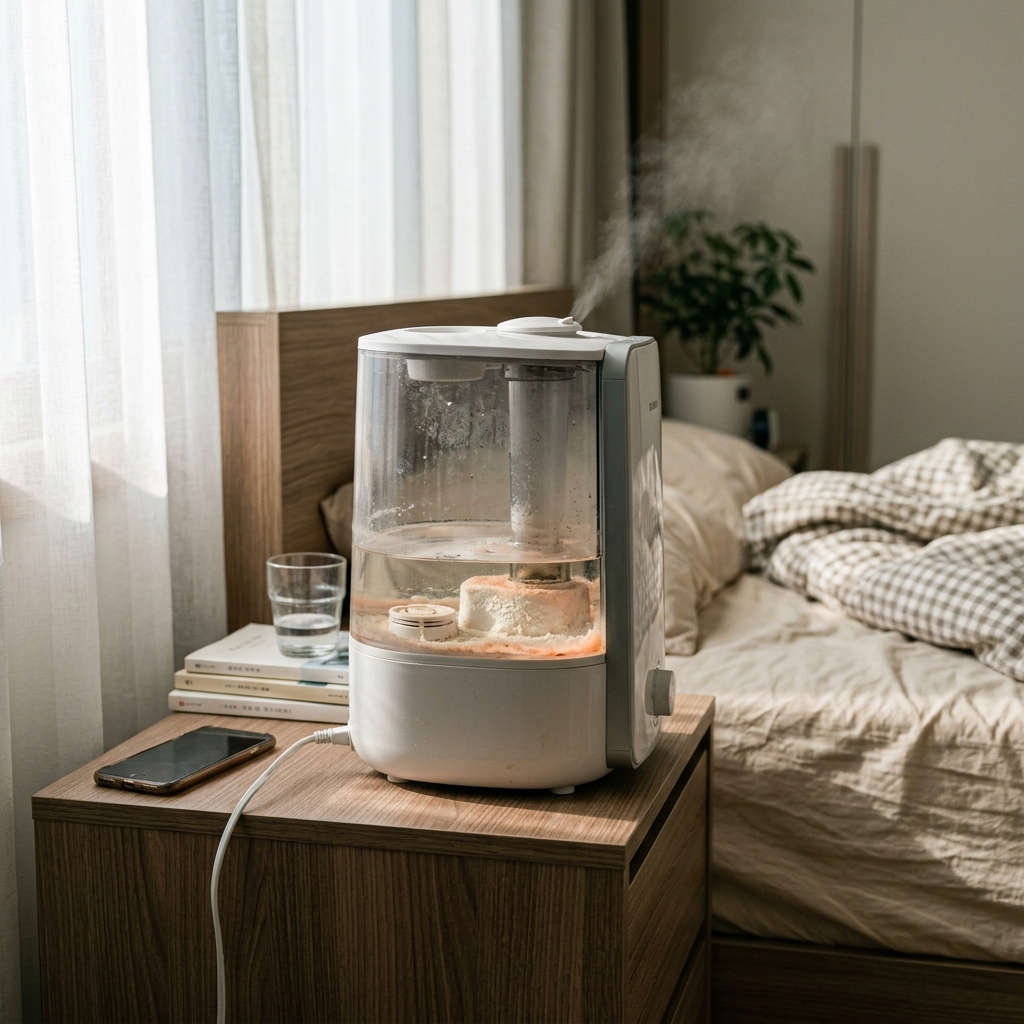
- Pinkish or orange slime forming along water tank seams and float valve
- White chalky mineral limescale crust coating ultrasonic vibrating transducer plate
- Mist output noticeably reduced due to scale buildup on vibrating plate
❌ Reached end of lifespan (Proper disposal required)
- Internal PCB circuit board flooded with water causing electrical short circuit
- Ultrasonic transducer cracked or shattered producing zero mist
- Water tank cracked and leaking water continuously onto table
⚠️ Important Safety Precautions
- NEVER use chemical humidifier disinfectants, bleach, or detergents (inhaled chemicals cause fatal lung injury).
- Do NOT let water enter the air ventilation outlet duct on the base unit (damages motor PCB).
- Do NOT scrape the ultrasonic vibrating plate with metal screwdrivers or knife tips.
💡 Cost Efficiency & Professional Inspection Guide
💡 Humidifier Replacement Guide: 3 Key Technical Specs Before Buying
♻️ Reached end of lifespan?
Check local disposal regulations instead of forcing reuse.
❓ Frequently Asked Questions (FAQ)
Q. Why should chemical disinfectants never be used in humidifiers?
A. Humidifiers aerosolize water into microscopic airborne droplets. Inhaling chemical disinfectant particles deep into lung alveoli can cause fatal pulmonary fibrosis and irreversible respiratory injury. Always use natural food-grade citric acid and rinse completely.
Q. What is the pink slime in humidifier water tanks?
A. It is Serratia marcescens, an airborne waterborne bacterium that thrives in moist environments. While not an immediate danger to healthy adults, it can trigger respiratory issues. Weekly citric acid cleaning keeps it eradicated.
Q. Should I use distilled water or tap water in humidifiers?
A. Tap water contains chlorine that inhibits bacteria growth, but it produces white mineral dust. Distilled or filtered water leaves zero mineral dust but requires daily water replacement because it lacks chlorine.