Home Healthcare Medical Waste Guide: Needles, Linens & Bed Removal
- 1Unlike hospitals and clinics, private residences are not legally designated as medical waste generation facilities under Korea's Waste Management Act, meaning diabetic needles, alcohol swabs, gauze, and adult diapers are technically categorized as municipal general waste.
- 2However, discarding unshielded sharps in thin plastic bags creates catastrophic puncture injury and bloodborne pathogen infection hazards (Hepatitis B/C, HIV, tetanus) for municipal sanitation workers.
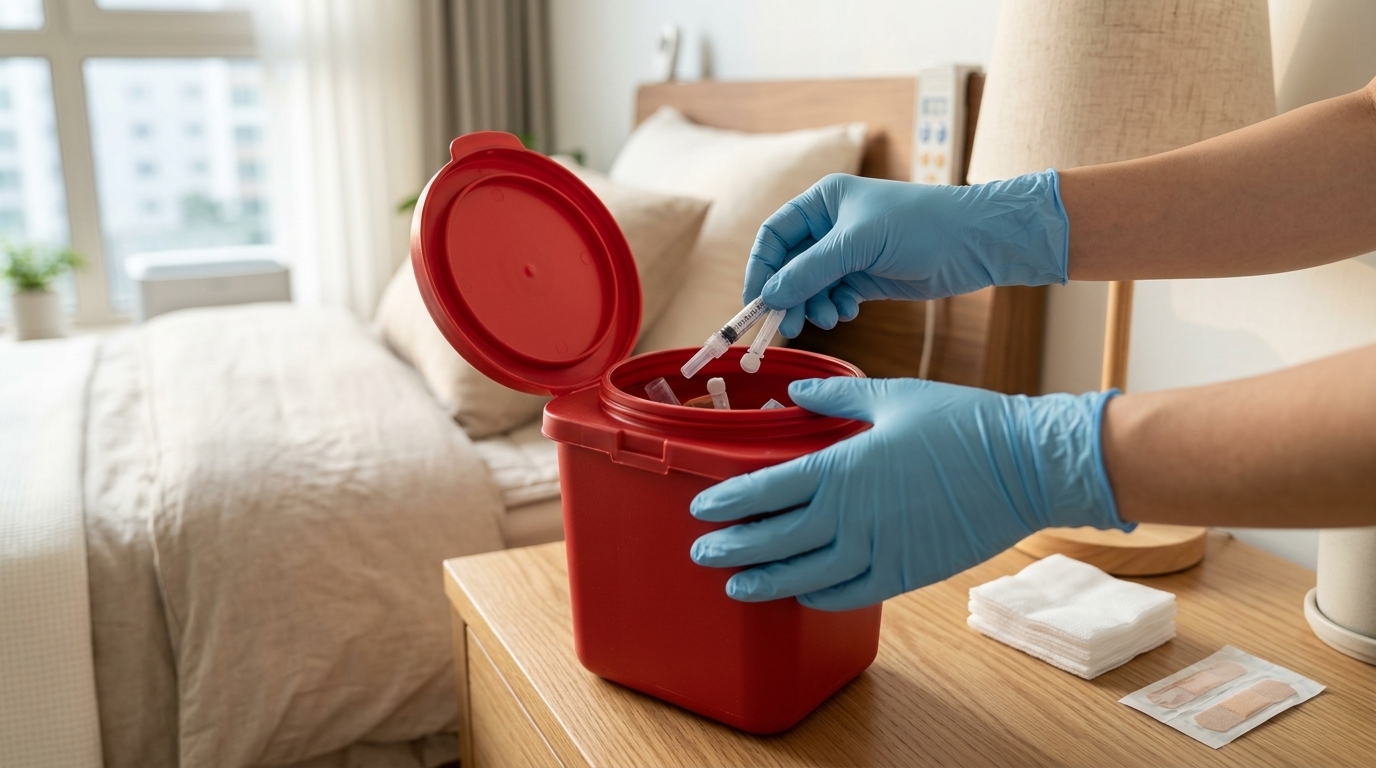
- 3All pen needles and lancets must strictly be collected inside heavy-duty puncture-proof plastic jugs (Sharps containers) with lids taped shut before placing in the core of general trash bags, or returned to local public health centers.
- ✓Furthermore, dialysate and urinary drainage bags must be drained into toilets before bagging, and rental mobility equipment (electric hospital beds, wheelchairs) funded by National Health Insurance must be returned to designated medical supply agencies rather than discarded.

Follow these steps
- 1
Step 1 (Sharps & Lancet Containment in Puncture-Resistant Jugs): Cap all used insulin pen needles, fingerstick lancets, and infusion ampoules, then deposit them into a thick HDPE plastic jug (e.g., heavy laundry detergent bottle or commercial Sharps container); tape the screw cap shut with duct tape before placing inside household trash.
- 2
Step 2 (Fluid Evacuation for Urine & Dialysate Bags): Carefully snip or uncap the drain port of urinary catheter bags (Urine bags) and peritoneal dialysate containers to flush liquid contents directly into the residential flush toilet; rinse empty vinyl bags and tubing, then seal in general municipal trash bags.
- 3
Step 3 (Sanitary Bundling of Incontinence Diapers & Soiled Gauze): Flush solid fecal matter down the toilet; tightly roll soiled adult diapers inward, secure them with side adhesive tabs, seal inside a small bio-barrier plastic pouch to neutralize ammonia vapors, and place into the municipal volume-based garbage bag.
- 4
Step 4 (Arranging Free Pickup for Subsidized Rental Welfare Equipment): Verify if motorized medical beds, manual wheelchairs, or patient lifts are active rental items under Korea's National Health Insurance Long-Term Care service; schedule free home retrieval with your contracted welfare equipment supplier (unauthorized dumping triggers severe indemnity penalties).
- 5
Step 5 (Municipal Bulky Waste Permit for Self-Purchased Hardware): For non-subsidized privately purchased gear, drop the electric air pump motor of alternating pressure mattresses into small e-waste bins, discard deflated PVC mattress cells in general trash, and affix municipal bulky waste stickers (₩3,000–₩10,000) onto broken wheelchairs and shower commodes.
Frequently asked question
Can households return used insulin pen needles and lancets to local public health centers or pharmacies?
It varies by district. Many municipal public health centers and designated diabetes-care pharmacies in Seoul maintain specialized Sharps drop-off bins; call your local health department to verify participation. If no community take-back program exists, seal all capped sharps inside a rigid, heavy-gauge plastic container (e.g., detergent bottle), tape the lid shut, and embed it deep within standard municipal trash bags.
Can emptied peritoneal dialysis bags and urinary catheter tubing be recycled with household plastics?
No, never. Dialysis bags, IV infusion tubing, and urinary catheters are medical-grade composite PVC/silicone contaminated with bodily fluids and therapeutic residues. Recycling facilities instantly reject them as biohazard contaminants. Drain all liquid contents into the toilet, then discard the empty plastic bags and tubes directly into general municipal trash bags.
How do families return subsidized electric hospital beds and wheelchairs borrowed via National Health Insurance?
When the patient is discharged, hospitalized, or passes away, contact the customer service center of the contracted medical supply agency that delivered the unit. Certified logistics technicians will visit your home to disassemble and retrieve the equipment free of charge. Failure to return the equipment halts benefits and incurs full replacement value invoices from the NHIS.
How should leftover prescription narcotic painkillers (fentanyl patches, morphine pills) from home hospice be discarded?
Under the Narcotics Control Act, controlled prescription opioids (Fentanyl patches, oxycodone, morphine) must never be tossed in home trash or flushed down household drains. Unused narcotics must be returned in their original packaging to the prescribing hospital's oncology pharmacy or your municipal health center, where pharmacists supervise formal destruction protocols and issue legal waste verification receipts.