New Stainless Steel Pot Abrasive Removal & Oil Seasoning Guide | 3-Step Vinegar Baking Soda Deep Cleaning
Complete guide to removing silicon carbide abrasive residue from new stainless steel cookware using cooking oil wiping, baking soda adsorption, vinegar boiling, plus rainbow spot removal and oil seasoning.
🛠️ Required Tools & Cleaning Agents
🔄 Alternative Detergents & Eco Tips
- Cooking Oil → Alt: Olive oil or Grapeseed oil (Acts as an oil solvent to dissolve hydrophobic silicon carbide abrasives)
- White Vinegar → Alt: 1 tbsp Citric Acid warm water solution (Instantly neutralizes tap water mineral rainbow films and white calcium spots)
✨ Recommended Cleaning Supplies & Tools
※ As part of affiliate programs, a small commission may be earned from qualifying purchases.
✨ Step-by-Step Care Instructions
Step 1: Primary Oil Wiping with Cooking Oil & Paper Towels
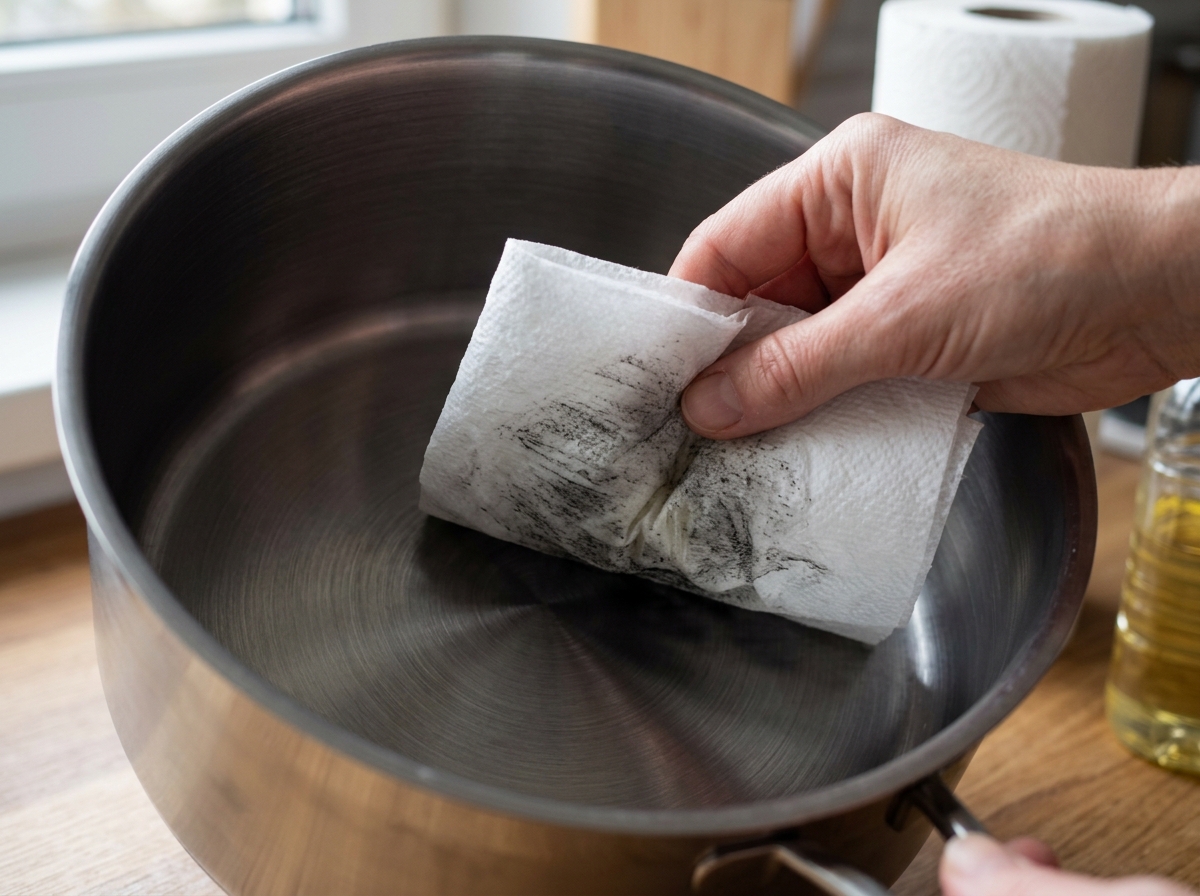
- Dampen a folded paper towel with 1-2 tablespoons of cooking oil.
- Firmly wipe the inner surface, rim curves, and handle rivets of the new stainless pot.
- Silicon carbide polishing compound is hydrophobic (oil-soluble), requiring oil wiping to dissolve it before water washing.
- Repeat 2-3 times with fresh paper towels until no black residue appears on the paper.
Step 2: Inspect Paper Towel Black Residue & Tight Crevices
- Inspect the pot bottom seams and side ridges for any remaining black compound.
- Silicon carbide abrasive is harmful if ingested; thorough oil wiping is essential.
- Use a cotton swab or toothbrush dabbed in oil to reach tight inner rim crevices.
Step 3: Baking Soda Adsorption & Vinegar Boiling Neutralization
- Sprinkle 2 tablespoons of baking soda onto the pot surface and scrub gently with a soft sponge to absorb oil and powder.
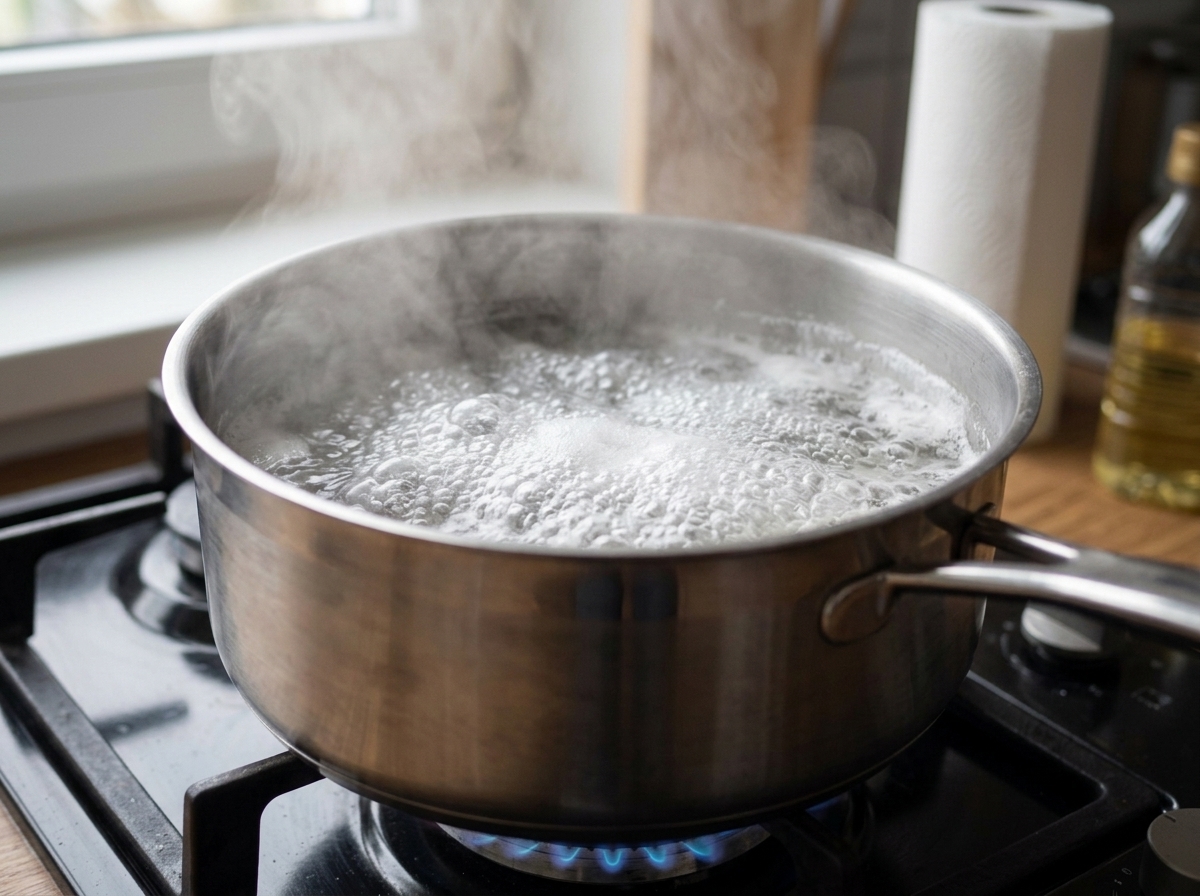
- Fill 2/3 of the pot with water and add 2-3 tablespoons of vinegar.
- Boil on medium heat for 10 minutes to sanitize and float off fine oil and abrasive particles.
- Let cool naturally, then rinse thoroughly with mild dish soap.
Step 4: Dish Soap Rinse & Complete Towel Drying
- Wash with mild dish soap and a soft sponge to remove residual oil film.
- Rinse thoroughly with lukewarm water and dry immediately with a microfiber cloth.
- Dry 100% with a cloth to prevent tap water mineral spots from forming.
Step 5: Low-Heat Oil Seasoning & Mirror-Shiny Restoration
- Preheat the dry stainless pot over low heat for 1-2 minutes.
- Drip 2-3 drops of cooking oil onto the bottom and spread a thin film evenly with a paper towel.
- Creating a thin oil seasoning layer prevents food sticking and blocks rainbow mineral stains.
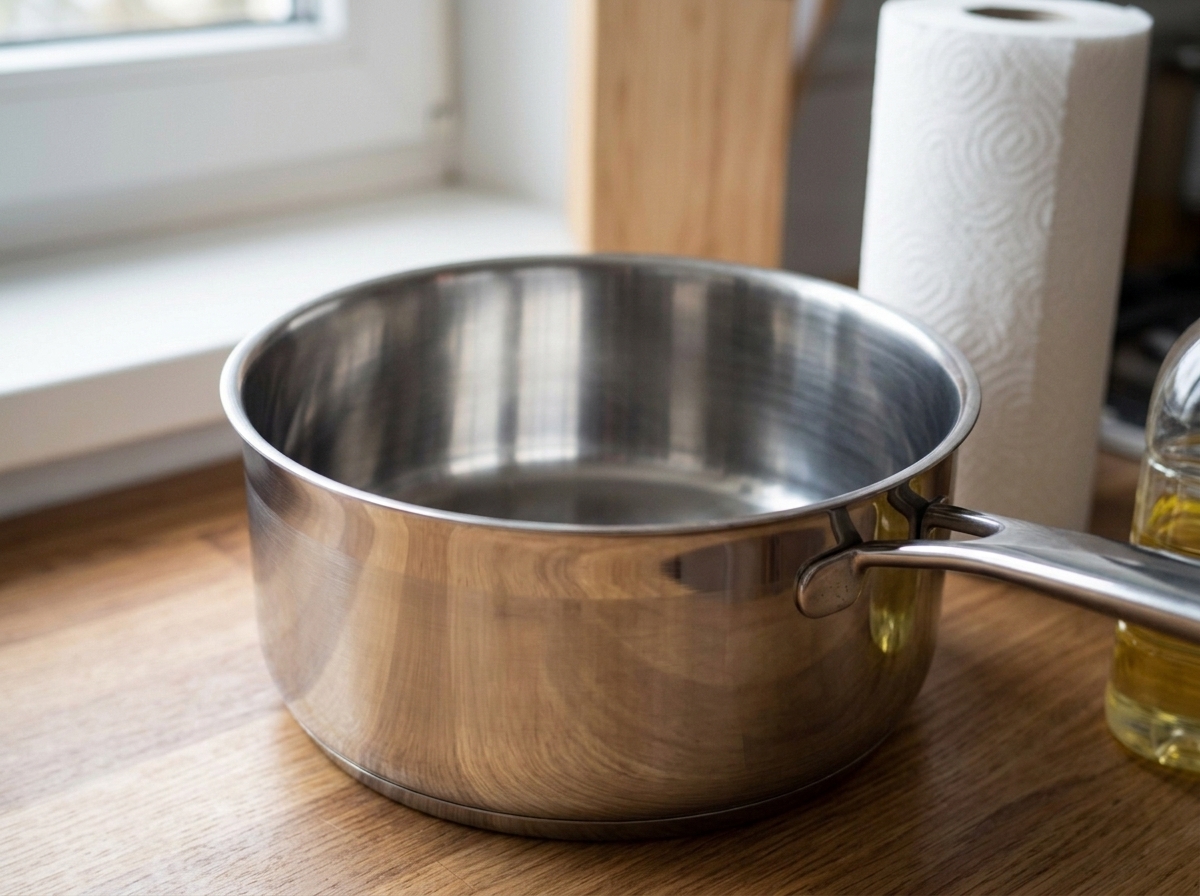
- Inspect the restored, mirror-like polished surface of your stainless cookware.
🩺 Self-Diagnosis Guide
✅ Can be restored with care
- Brand new stainless steel pot or pan with unwashed black silicon carbide abrasive residue
- Rainbow oily films or cloudy white mineral spots caused by tap water calcium reaction
- Yellowish or light brown heat oxidation film (100% restorable with warm citric acid)
- Unseasoned stainless surface requiring light oil coating to activate non-stick Leidendfrost effect
❌ Reached end of lifespan (Proper disposal required)
- Multi-clad (3-ply/5-ply) encapsulated bottom layers gapping or delaminating after heavy impact
- Pitting corrosion and micro pinholes caused by storing salty broth or soy sauce long-term
- Gas flame heat distortion melting handle resin or breaking handle rivet joints
⚠️ Important Safety Precautions
- Do NOT apply water first; silicon carbide abrasive is oil-soluble and will get trapped, so always wipe with cooking oil on a dry surface first.
- Never use steel wool or abrasive metal pads, which scratch polished stainless surfaces and destroy the smooth non-stick barrier.
- Do NOT leave an empty stainless pot over high heat for long periods to prevent thermal warping of the 3-ply/5-ply base.
- Do NOT store salty soups or soy sauce dishes inside stainless pots long-term to prevent pitting corrosion micro-holes.
- Always run the kitchen ventilation fan when boiling vinegar or citric acid solutions to avoid inhaling concentrated acidic steam.
💡 Stainless Steel Cookware Replacement Guide: 3 Key Technical Specs Before Buying
♻️ Reached end of lifespan?
Check local disposal regulations instead of forcing reuse.
❓ Frequently Asked Questions (FAQ)
Q. Can I wash abrasive residue (silicon carbide) with regular dish soap?
A. No. Silicon carbide used in polishing stainless steel is oil-soluble and hydrophobic. Standard water-based dish detergent cannot break it down. You must dissolve it using cooking oil first, then absorb it with baking soda.
Q. Why do rainbow or white spots appear inside stainless steel pots?
A. Rainbow or mineral spots are formed when minerals like calcium and magnesium in tap water react with the protective chromium oxide layer of stainless steel. They are completely harmless and can easily be wiped away using warm vinegar or citric acid solution.
Q. Do I need to oil season stainless steel pots every time?
A. No, performing oil seasoning once after the initial wash creates a light oil coating that reduces food sticking. Afterwards, proper preheating (medium-low heat for 2 minutes before adding oil) keeps it non-stick.