How to Dispose of Cat Tree & Scratching Post
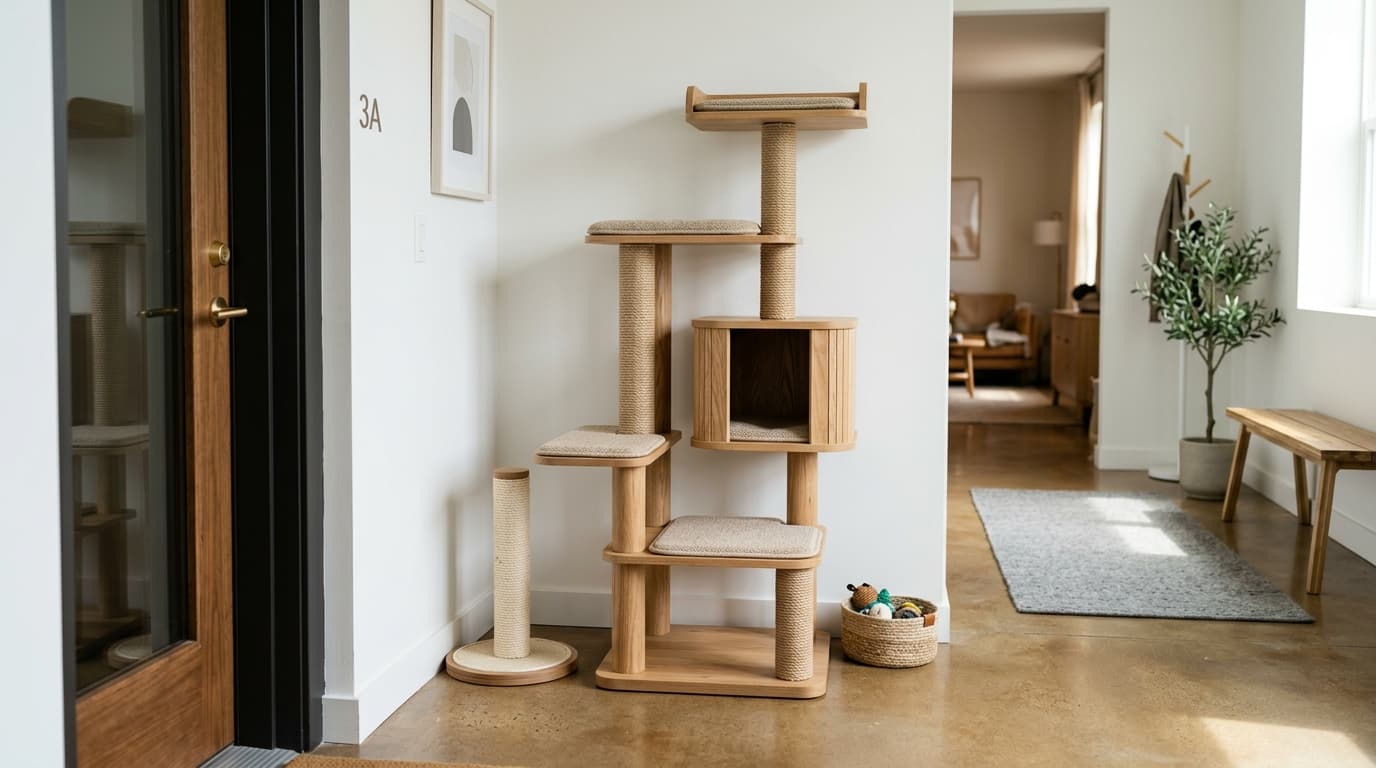
- 1Cat tree towers are multi-material bulky pet furniture assembled with solid wood/MDF board, sisal scratching ropes, felt carpet pads, and metal joining bolts.
- 2Intact units must be disposed of via municipal bulky waste stickers (₩2,000–₩5,000 / $2–$4) or official smart waste pickup apps.
- ✓Disassembled metal bolts go to scrap metal, while sisal ropes and soiled pads belong in general trash; cardboard scratching pads are recyclable as paper only when unsoiled.
How to Dispose (6 Steps)
- 1
Strip fabric hammocks and felt carpet pads: Detach velcro cushions, fabric hammocks, and dangling cat toys; shake off loose fur and discard them into municipal general trash bags.
- 2
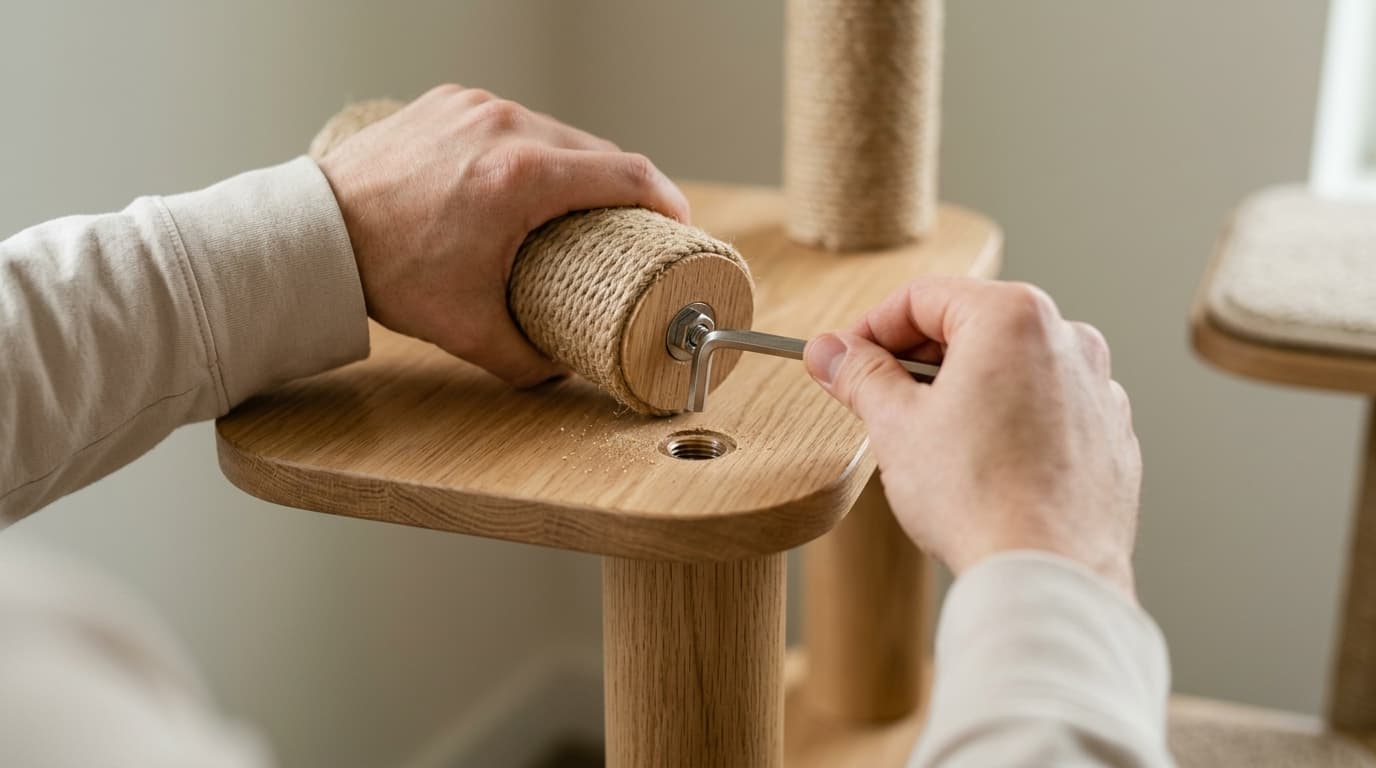
Unbolt post fasteners with a hex key wrench: For manual disassembly, loosen long metal threaded rods between wooden platforms using an Allen wrench; sort steel bolts and washers into scrap metal.
- 3
Discard sisal rope scratching posts in general trash: Scratching posts wrapped in glued natural sisal twine or carpet cannot be recycled as textiles or paper; place them into regular municipal trash bags.
- 4
Sort cardboard scratcher pads by cleanliness: Clean corrugated cardboard scratchers dusted of pet hair can be recycled as paper; pads soiled with cat vomit, urine, or wet food belong strictly in general trash.
- 5
Bulky waste permit registration for intact towers: If dismantling is impractical or for tall tension cat poles (1.5 m+), register online with your district office or use smart waste apps (approx. ₩2,000–₩5,000 / $2–$4 fee).
- 6
Display permit sticker and prevent theft: Tape the physical permit sticker securely to the wooden frame, write the registration code directly on the wood with permanent marker to prevent sticker theft, and place out at curbside.
Real-World Examples
Large Multi-Tier Wooden Cat Tree / Tension Pole: Register via district portal or mobile app as bulky furniture waste (approx. ₩3,000–₩5,000 / $3–$4 fee).
Compact Low Cat Tree (1–2 tiers): Municipal bulky sticker (approx. ₩2,000–₩3,000 / $2–$3), or disassembled parts placed inside 50L general trash bags.
Flat / Bowl Corrugated Cardboard Scratcher: Recycled with paper bundles if clean; tossed into general trash if soiled with pet fluids.
Frequently Asked Questions
Q. Can sisal rope scratching pillars be recycled as natural fiber or paper?
A. No. Sisal twine and cotton ropes on scratching posts are heavily bonded with industrial glues to PVC or heavy cardboard tubing. Material recovery centers cannot separate these glued composites; they must be placed into municipal general trash bags.
Q. How much does a bulky waste sticker cost for a cat tree in Korea, and how do I apply?
A. Fees depend on dimensions and tier height under local municipal ordinances: low trees (under 1m) range from ₩2,000 to ₩3,000 ($2–$3), while multi-tiered high towers or floor-to-ceiling tension poles cost ₩3,000 to ₩5,000 ($3–$4). You can apply via district office portals, Jumin Centers, or smart waste apps (e.g., Ppagi).
Q. Are all cardboard cat scratchers recyclable with paper?
A. Only if free of organic fluids. Clean corrugated cardboard scratched by claws can be recycled with bundled paper waste. However, any scratchers soiled with cat vomit, urine, or food must be disposed of in general municipal trash bags to avoid contaminating paper recycling pulpers.
Q. Can people steal the bulky waste stickers from items left outside?
A. Yes, sticker theft occasionally occurs on public curbsides. Always snap a timestamped photo of the affixed sticker and write the numeric booking code directly onto the wooden frame using a permanent marker; sanitation teams cross-check electronic records to ensure reliable collection even if the adhesive tag is peeled.