How to Dispose of Stepladder & Step Stool
- 1Household stepladders and step stools are disposed of based on their dimensions and material composition.
- 2Most 2-to-4-step folding aluminum or steel ladders exceed regular trash bag dimensions and require a municipal bulky waste disposal sticker (₩2,000–₩4,000).
- 3However, if you completely strip off rubber foot grips and plastic hinges using tools to leave 100% pure aluminum or steel framing, it can be tied with twine and recycled free of charge in municipal scrap metal bins.
- 4Compact plastic folding step stools made of single PP resin can be sorted into plastic recycling; if fitted with non-removable rubber anti-slip pads, place them inside 20L–50L general municipal trash bags.
- ✓Oversized wooden or hard resin stools that exceed trash bag capacities must be discarded with a bulky waste sticker.
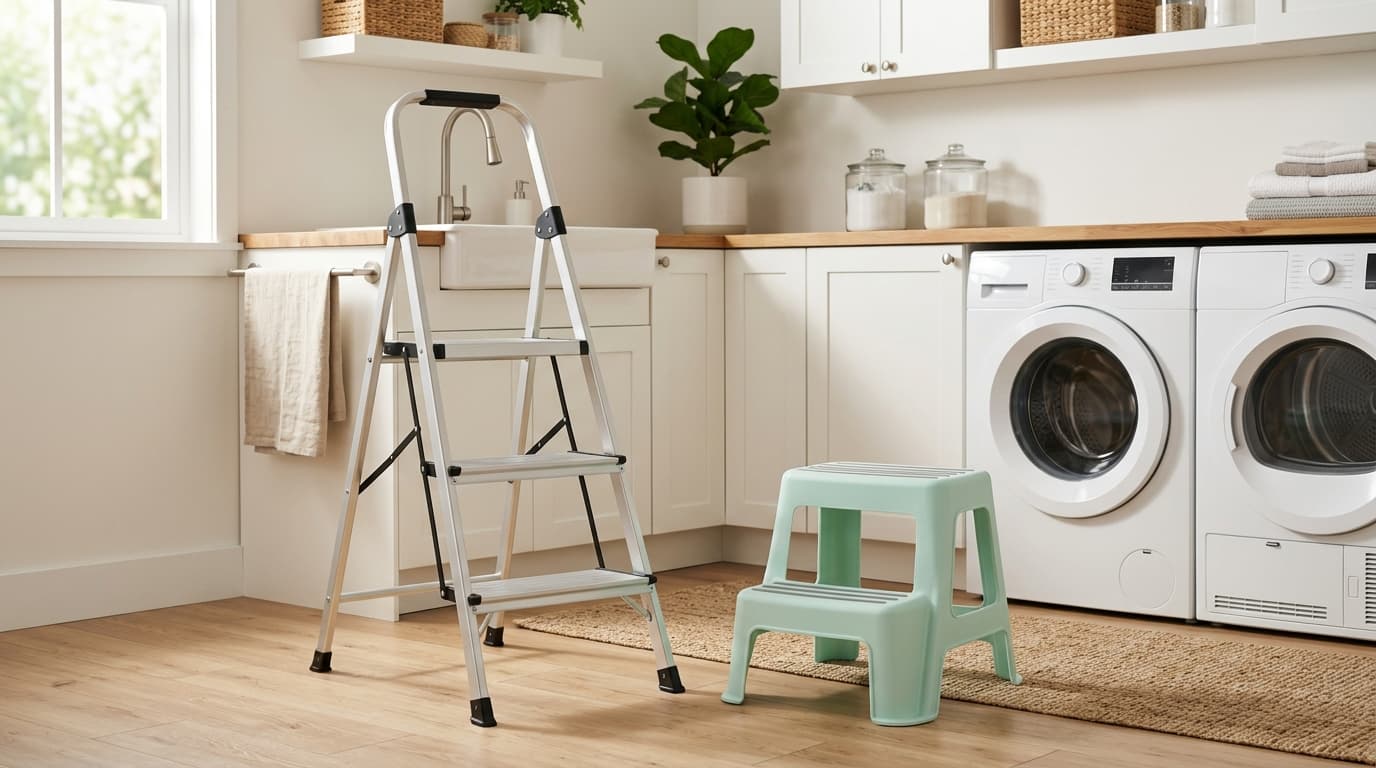
How to Dispose (6 Steps)
- 1
Fold and tightly bundle the ladder frame: Collapse the stepladder flat and securely tie the legs with twine or tape to prevent accidental unfolding during municipal handling
- 2
Check eligibility for scrap metal recycling: If rubber non-slip feet, plastic step caps, and hinges can be completely disassembled to leave pure aluminum or steel framing, tie it up for scrap metal recycling
- 3
Purchase municipal bulky waste sticker for composite ladders: Riveted ladders with fused rubber footings and plastic hinges cannot be separated at home; purchase a municipal bulky waste sticker (₩2,000–₩4,000)
- 4
Recycle single-resin plastic step stools: Mono-material polypropylene (PP) utility stools free of rubber grips or screws can be rinsed and sorted into the municipal plastic recycling stream
- 5
Discard small composite stools in regular trash bags: Compact folding stools with glued rubber treads or cracked 1-step risers that fit comfortably into 20L–50L municipal trash bags can be discarded in general waste
- 6
Set out at designated collection zones: Affix the bulky waste sticker or disposal reservation number and place the ladder at your residential curbside or apartment bulky waste area
Real-World Examples
Household 2-3 Step Aluminum Folding Ladder: Attach municipal bulky waste sticker (₩2,000–₩3,000); sort into scrap metal only if 100% stripped
4-6 Step Heavy-Duty A-Frame Ladder: Purchase municipal bulky waste sticker (₩3,000–₩5,000) due to large volume
Compact Plastic Toddler / Bathroom Step Stool: Sort pure PP into plastics; discard models with fused rubber grips in general trash bags
Decorative Wooden 2-Step Riser: Classified as wooden furniture, dispose of using a municipal bulky waste sticker (₩2,000)
Frequently Asked Questions
Q. Can aluminum stepladders simply be recycled as scrap metal?
A. Although aluminum carries high scrap recovery value, typical household utility ladders tightly integrate non-slip rubber boots, plastic top-step moldings, and locking handles riveted into the metal frame. Unless these synthetic components are 100% stripped using tools, sorting centers condemn them as contaminated scrap, meaning they require a municipal bulky waste disposal sticker.
Q. How much does a municipal bulky waste sticker cost for a stepladder?
A. Disposal sticker fees vary slightly by municipal district ordinances, but standard 2-to-3-step utility stepladders typically cost ₩2,000 to ₩3,000, while larger 4-step or taller A-frame ladders range from ₩3,000 to ₩5,000. Stickers can be purchased online via district websites, at local convenience stores, or through mobile apps like Ppagi or Yeogiro.
Q. Can a broken plastic step stool be thrown inside a general municipal trash bag?
A. Yes. If a broken 1-step or 2-step compact toddler or bathroom utility stool fits entirely inside a 20L or 50L general pay-per-bag garbage sack without ripping it, municipal general waste disposal is permitted. Wrap sharp jagged fracture edges in newspaper to prevent puncturing the bag.
Q. What is the safe lifespan and retirement criteria for household ladders?
A. The recommended structural lifespan for domestic aluminum ladders is approximately 5 to 7 years under normal conditions. Condemn and discard a ladder immediately if side rails show dents, rungs wobble underfoot, locking spreaders slip, or footing rivets loosen, as structural compromise presents catastrophic fall hazards.