Small Pet & Reptile Habitat Cleanout Guide: Sawdust, Sand & Enclosures
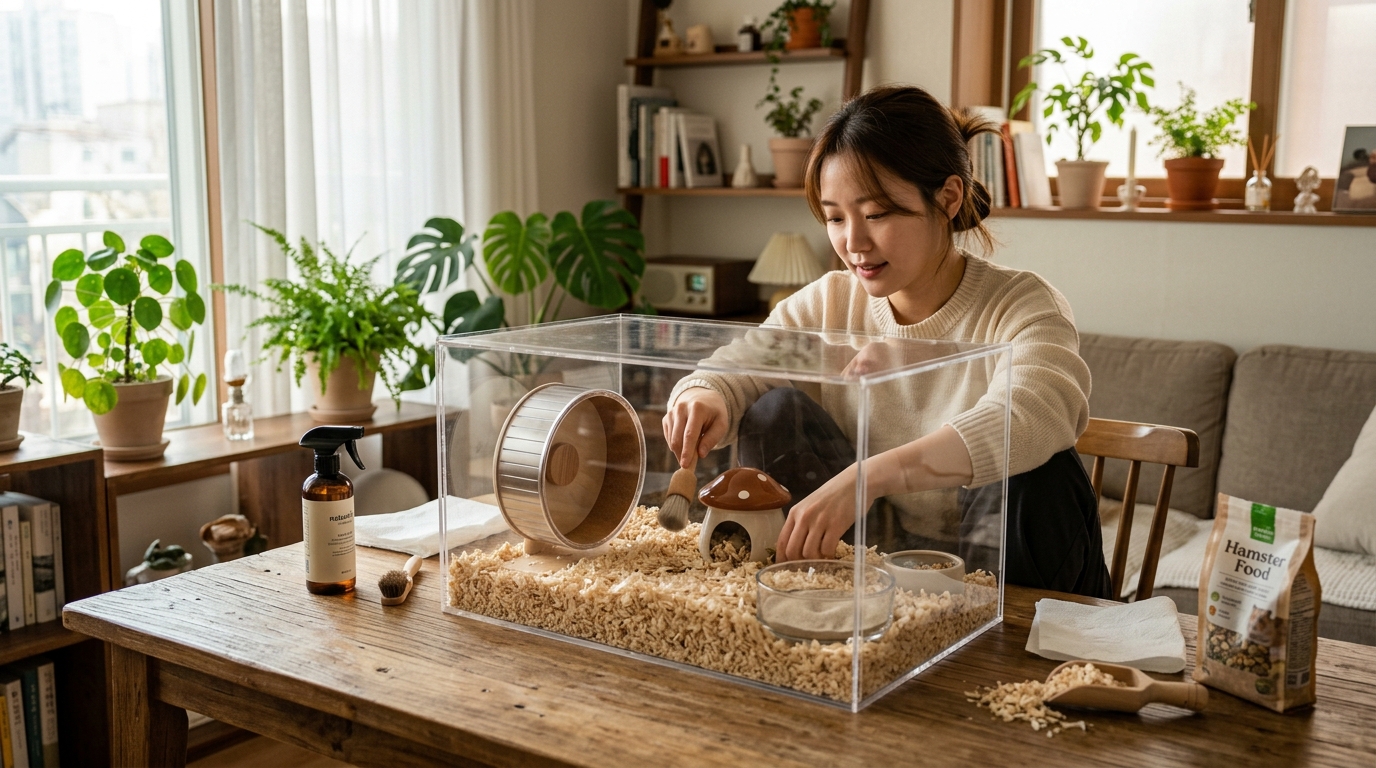
- 1Waste generated during enclosure cleanouts for small pets (hamsters, guinea pigs, hedgehogs, rabbits) and reptiles (geckos, bearded dragons, turtles) contains deceptive materials prone to severe plumbing clogs and environmental hazards.
- 2The most damaging error is flushing soiled aspen shavings, wood pellets, or paper bedding down toilets; compressed cellulose fibers rapidly expand upon water contact, creating impenetrable blockages in toilet traps that require emergency plumbing snaking ($150–$300).
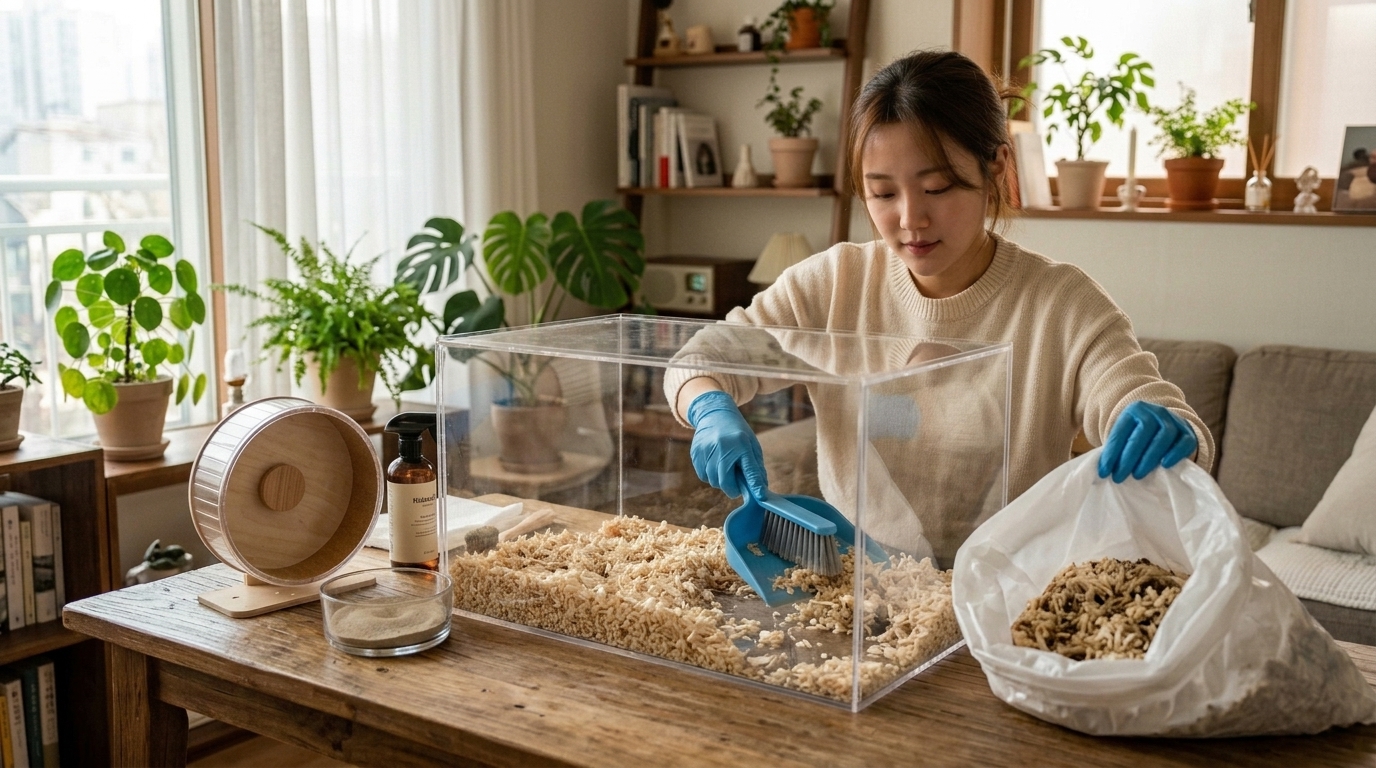
- 3Soiled bedding must strictly be bagged into standard municipal trash bags.
- 4Mineral waste such as calcium reptile sand, walnut shells, and desert sand will never dissolve in water and settles inside pipe elbows like concrete, meaning they must also be thrown into general trash.
- 5Heating spot lamps (incandescent/halogen) should be wrapped in newspaper and discarded in general trash, whereas fluorescent-tube UVB reptile lamps contain mercury and must be dropped into municipal fluorescent bulb recycling bins.
- ✓Cracked acrylic vivariums and plastic wheels are composite plastics destined for general trash, while detached bare wire grids can be recycled as scrap metal.
Follow these steps
- 1
Discard soiled aspen shavings & paper bedding in general trash: Wood shavings, compressed pellets, and paper bedding expand drastically in water and instantly choke plumbing traps; never flush down toilets and sweep directly into standard volume-based municipal trash bags.
- 2
Wrap calcium sand, desert sand & walnut shells in newspaper for trash: Heavy mineral reptile sands do not dissolve in water and settle into subterranean pipe bends like mortar; seal scooped soiled sands inside plastic bags or thick newspapers and discard in general household trash.
- 3
Sort incandescent basking spot lamps vs fluorescent UVB tubes: Halogen/incandescent spot bulbs should be wrapped in newspaper and discarded in general trash; mercury-containing fluorescent UVB specialty reptile bulbs must be dropped into municipal fluorescent tube drop-off bins.
- 4
Separate bare wire mesh from acrylic habitats and plastic accessories: Detached metal wire cage panels can be recycled with scrap metals; cracked acrylic vivarium bodies, plastic hamster wheels, and water bottles are composite plastics that belong in general trash (or bulky waste if exceeding bag size).
- 5
Dispose of heating pads in general trash & broken ceramics in non-combustible sacks: Low-voltage pet heat mats and thermal film pads containing internal heating wires belong in general trash; chipped ceramic hideouts and food dishes belong in non-combustible sacks.
Frequently asked question
Can eco-friendly flushable corn or wheat-based bedding be flushed in small batches?
Strongly not recommended. Even if packaged as 'biodegradable/flushable', residential plumbing in Korean apartments features horizontal pipe runs where starch fibers lodge and congeal into sticky sludges. Saturated bedding swells into gel-like clogs; always bag them into municipal general trash.
Is a reptile ceramic heat emitter considered a light bulb, scrap metal, or general trash?
Ceramic heat emitters feature nichrome heating wire coils encased in solid ceramic pottery. Because they emit no light and contain no mercury, do not place them in bulb drop-off bins; wrap safely in newspaper and discard in general household trash.
How should large 120L acrylic hamster cages or custom tanks be discarded?
Large acrylic habitats measuring 60cm to 100cm+ do not fit inside standard trash bags. Never smash them manually as brittle acrylic creates razor-sharp shards; purchase a municipal bulky waste permit sticker under 'Plastic Storage/Tank' (₩2,000–₩3,000) for safe curbside pickup.