Ancestral Rite Supplies Disposal Guide: Candle Wax, Vessels & Screens
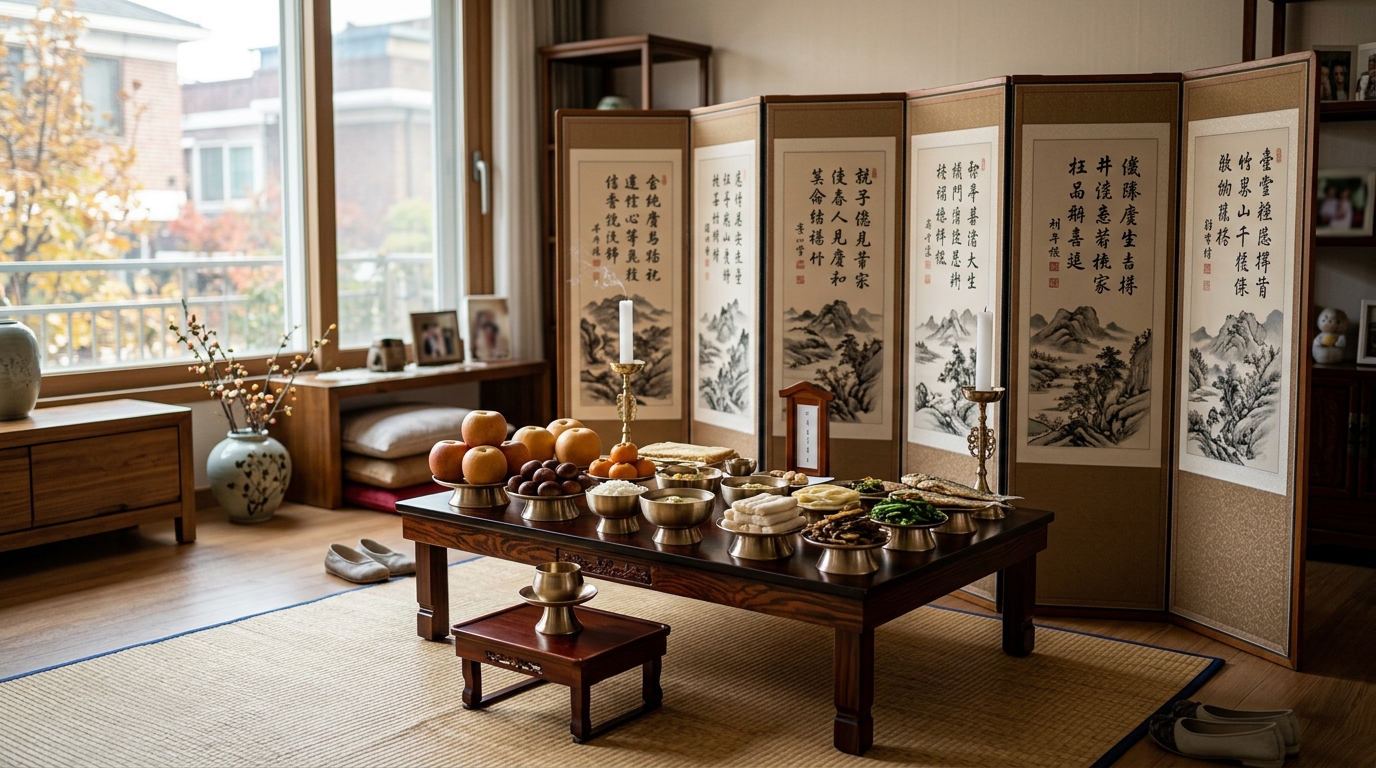
- 1Ceremonial goods remaining after Korean ancestral memorial rites (Charye and Gijesa) present serious fire hazards and severe plumbing risks if mishandled.
- 2The most damaging household mistake is melting leftover candle wax with hot water down kitchen sinks or bathroom drains; liquified paraffin instantly congeals upon hitting colder subterranean pipes, forming rock-hard blockages that require expensive professional hydro-jetting ($150–$300).
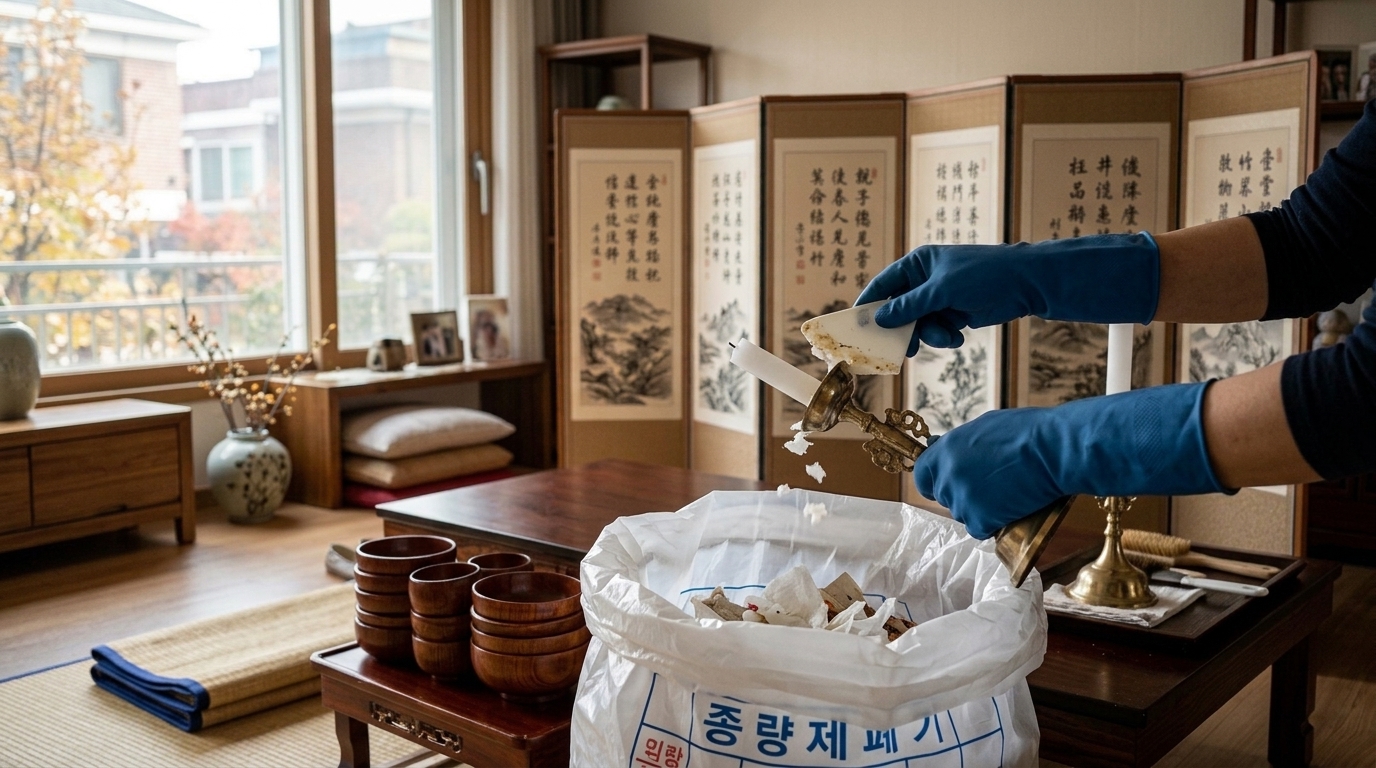
- 3Always chill the candlestick with ice, scrape off hardened wax using a plastic spatula, and discard in standard general trash bags.
- 4Chipped or split traditional lacquered wooden ritual food bowls (Jaegi) feature thick polyurethane and traditional urushiol varnish that cannot be pulped as clean wood, requiring general trash disposal (or non-combustible sacks for broken ceramics).
- 5Folding screens (Byeongpung) and large ceremonial tables must be registered with district offices for bulky waste permits (₩2,000–₩4,000).
- ✓Lastly, incense ash and burnt sticks must be lightly misted with water to extinguish dormant embers before trash disposal, and synthetic tomb memorial flowers belong in general trash due to fused wire stems.
Follow these steps
- 1
Scrape hardened candle wax into general trash to protect plumbing: Never flush liquid wax with hot water down sinks as it solidifies instantly inside cold pipes causing catastrophic blockages; chill with an ice pack, scrape off wax flakes using a plastic scraper, and discard in general trash.
- 2
Sort lacquered wooden vessels and cracked ceramics properly: Lacquered ritual bowls (Jaegi) coated with urushiol or polyurethane varnish cannot be recycled as clean lumber and belong in regular municipal trash; wrap broken porcelain plates in newspaper and discard in non-combustible waste bags.
- 3
Register folding screens & ceremonial tables for bulky waste pickup: Multi-panel folding screens and wooden banquet tables are composite bulky items; purchase a municipal bulky waste permit sticker (₩2,000–₩4,000) online or via municipal disposal apps and attach it before curbside placement.
- 4
Mist incense ash with water to extinguish embers before bagging: Sift clean sand or rice from the incense burner for reuse; lightly spray water onto burnt incense sticks and residual ash to eliminate hidden embers before sealing inside general household trash bags.
- 5
Discard synthetic tomb flowers and woven straw mats correctly: Cemetery memorial bouquets blending polyester petals and steel wires cannot be recycled and belong in general trash; roll up woven bamboo/rush floor mats and dispose of in general trash if fitting, or tag with bulky stickers if oversized.
Frequently asked question
How can I cleanly remove stubborn candle wax stuck to brass candlesticks without scratching?
Place the brass candlestick in the freezer for 20–30 minutes or apply ice packs directly; the cold causes paraffin wax to shrink and detach cleanly from the metal. Avoid sharp steel blades that scratch antique brass; gently nudge the chilled wax off using an expired credit card or plastic scraper.
Can old brass ritual bowls and brass candlesticks be recycled as scrap metal?
Yes. Traditional Korean bronzeware (Yugi) and brass candlesticks crafted from copper, tin, and zinc alloys are high-value non-ferrous metals. You can recycle them in your apartment's scrap metal bin or sell them to local scrap yards for cash at favorable non-ferrous metal rates.
How should real withered flowers versus artificial flowers from cemetery visits be discarded?
Real withered chrysanthemums cannot be digested as animal feed, so they must be thrown into general municipal trash bags rather than food waste. Synthetic artificial flowers containing wire-reinforced stems are also non-recyclable and belong strictly in general trash.