Office Food Delivery Waste Disposal Guide | Pantry Odor Prevention & Workplace Recycling Rules
Official corporate workplace waste management guide for sorting food delivery takeout packaging in office buildings and pantries. Dumping leftover soups and food scraps into office pantry sinks causes sewer clogs, foul odors, and fruit fly infestations. Drain food waste liquid before sealing in food waste bags. Rinse chili-oil stained plastic bowls with warm water for plastic recycling, and dispose of grease-soaked pizza boxes, wooden chopsticks, sauce packets, and dirty wrap films in general waste bags to keep office pantries spotless.
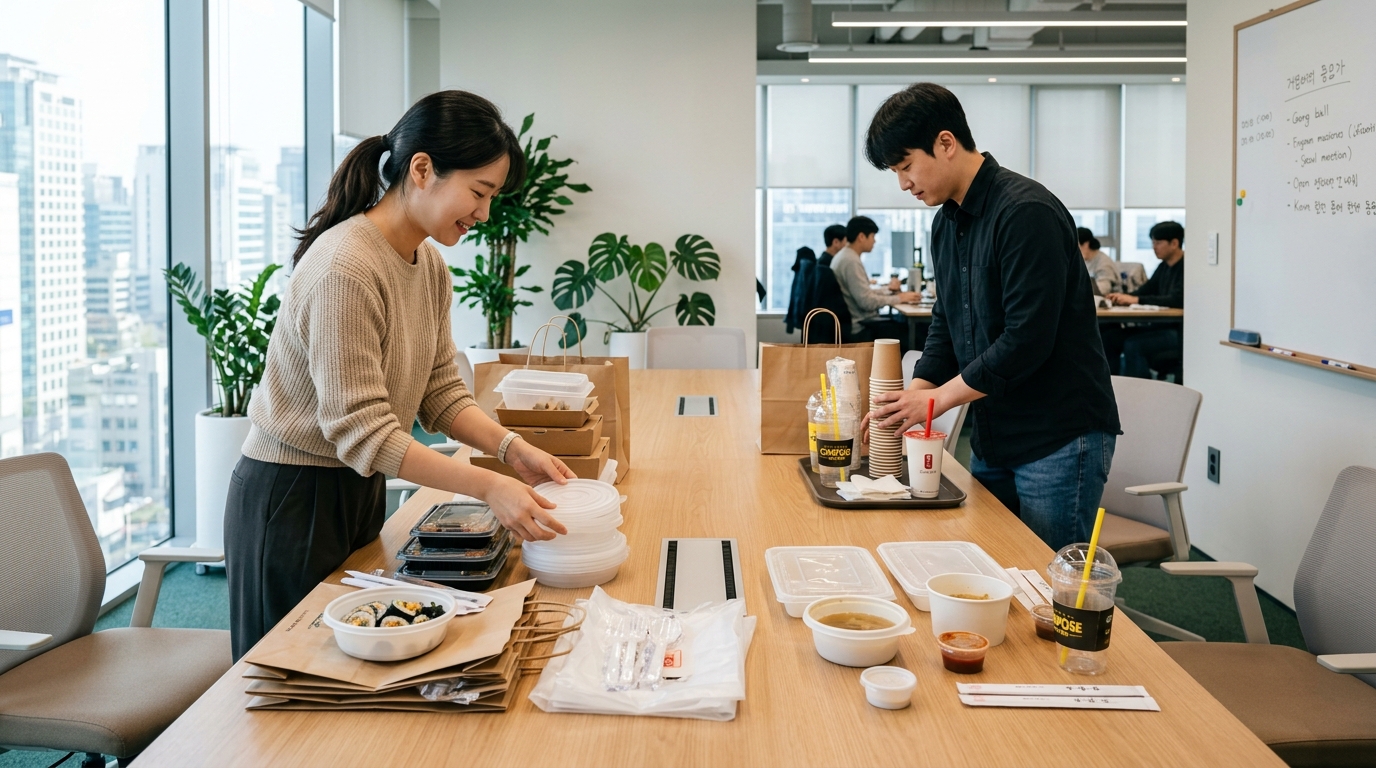
Follow these steps
- 1
Step 1: Drain Soup Liquids and Never Dump Food Scraps into Pantry Sinks: Pour broth liquid carefully through a sink strainer into drains, but never let solid food chunks, bones, or seafood shells slide down office pipes. Discard all solid leftovers into designated food waste bags or building collection bins.
- 2
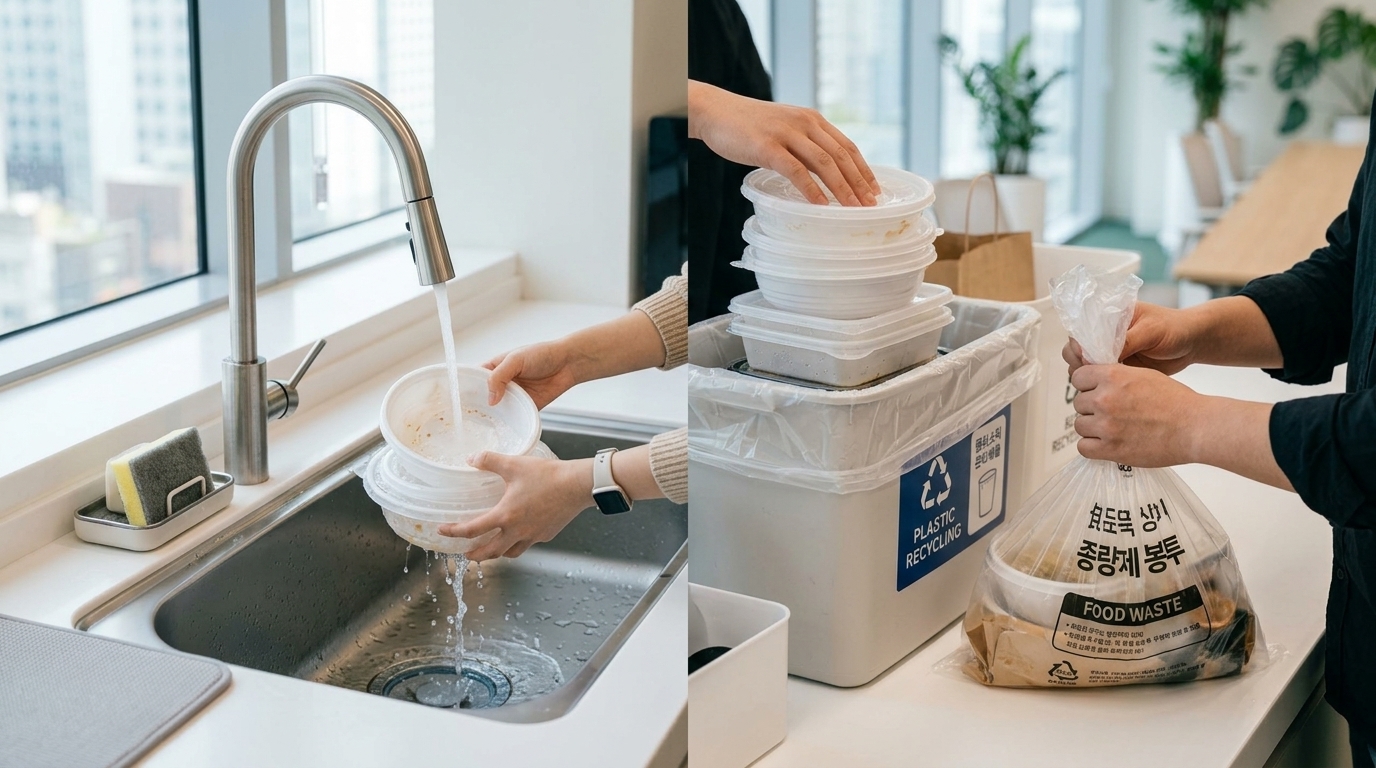
Step 2: Rinse Plastic Takeout Bowls and Strip Sealing Films: Peel off all plastic cling wrap, heat-sealed lid films, and paper receipt stickers completely. Rinse spicy chili oil residue lightly with warm water and a drop of dish soap before placing clean containers into the plastic recycling bin.
- 3
Step 3: Discard Greasy Pizza & Fried Chicken Cardboard in General Trash: Waxed paper liners and cardboard boxes deeply soaked with grease or seasoning sauce cannot be recycled into paper pulp. Tear off and recycle only clean, unsoiled cardboard lids, and discard greasy box bottoms into standard general waste bags.
- 4
Step 4: Sort Disposable Chopsticks, Plastic Cutlery & Sauce Packets to General Waste: Disposable wooden chopsticks, contaminated sauce packets, styrofoam instant noodle cups, and single-use plastic spoons (OTHER multi-layer resin) are non-recyclable and must be thrown into general trash bags.
- 5
Step 5: Nest Plastic Containers to Save Space and Seal Pantry Waste Bins: Stack rinsed matching plastic bowls inside one another to reduce bin volume by over 70%. Keep pantry trash can lids tightly closed to stop fruit flies and odors, and carry foul-smelling food bags to the floor's central collection room immediately.
Frequently asked question
Can plastic takeout containers stained red from spicy tteokbokki or mala soup be recycled?
Yes. As long as solid residue and heavy grease are rinsed off with water, containers with light cosmetic chili pigment stains can still be recycled as plastics (PP, PS). However, containers left unwashed with raw food grease are rejected at recycling facilities—either rinse them once or discard them in general waste bags.
Why are disposable plastic spoons and forks not accepted in plastic recycling?
Takeout disposable cutlery is too small to be sorted on automated conveyor screens and is typically made from mixed composite resins (marked OTHER) with zero recycling value. Always discard them in standard general waste bags.
Can delivery pizza and fried chicken boxes be recycled with regular paper?
Only completely clean cardboard without grease can be recycled. Box bottoms heavily stained with cheese grease or chicken frying oil cannot break down during paper pulping and ruin the entire recycling batch. Discard oil-soaked sections in general waste; you may tear off and recycle unsoiled cardboard lids.
Can coffee grounds or loose tea leaves be poured down the office pantry sink?
Never pour coffee grounds down sinks. Coffee grounds do not dissolve in water; they bind with natural coffee oils and form rock-hard sludge that clogs commercial building plumbing. Dry coffee grounds and tea leaves thoroughly and dispose of them in general trash bags.